Smart-Home Technology in South Florida New Developments: What Three Towers Specify
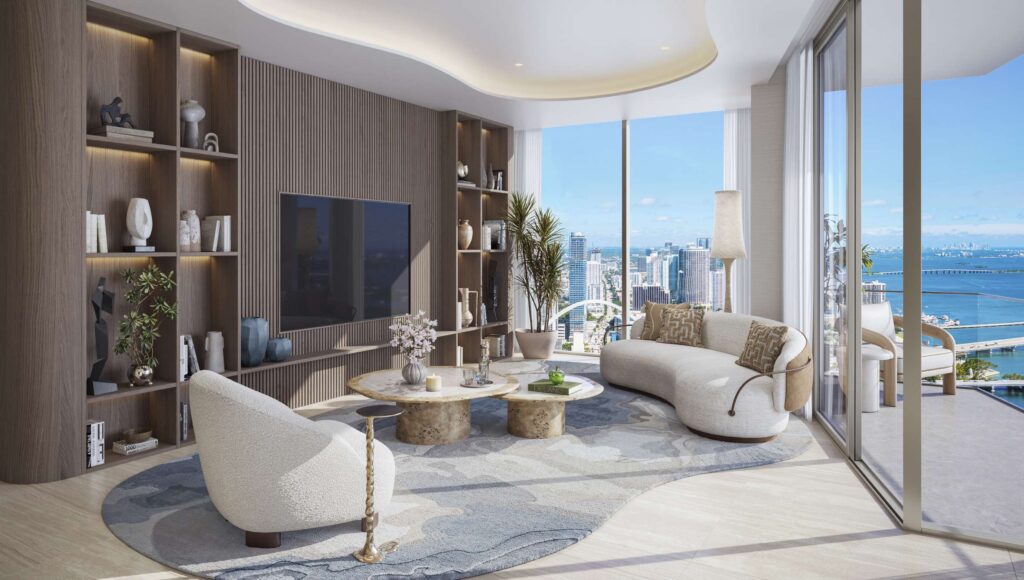
Three South Florida new developments describe smart-home and building technology on their own pages and spec sheets: what each developer lists, where the published detail stops and what to ask before you reserve.
“Smart home” appears in almost every new-development brochure, and it can mean anything from a dimmer on an app to a full automation system that runs lights, shades, climate, entry and building services. The useful question is what the developer actually specifies, by name, for the residence. This guide looks at three South Florida new developments whose own websites, brochures or fact sheets describe residence technology in some detail: 619 Brickell in Brickell, Four Seasons Private Residences Coconut Grove and Waldorf Astoria Residences Miami in Downtown Miami. It reports what each developer publishes, names a manufacturer only where the developer does, and says so when a page stops at a general phrase. The developer pages, brochures and fact sheets were read on October 12, 2026. Prices are the building-level “from” figures on our new developments cards, not prices for any residence. Confirm unit pricing and availability with each sales gallery.
What “smart home” covers on a spec sheet
A residence technology package is several systems that may or may not talk to each other. Reading a feature list is easier with the layers in mind.
- Lighting control. A central processor, wall keypads and dimming, so scenes can be set by room or for the whole residence.
- Climate and humidity. Thermostats that can be scheduled or adjusted remotely, and in some buildings humidity control, which matters in a home left empty for part of the year.
- Entry and access. Keyless locks, intercom and elevator access, sometimes linked to the building’s front desk.
- Audio, video and shades. Integrated sound, screens and motorized window treatments run from the same interface.
- Air and water. Filtration and purification equipment built into the residence’s mechanical systems.
- Wiring and network. The cabling and pre-wiring behind everything above, which is hard to change once walls are closed.
- Building services. An app or touch screen that connects the residence to concierge, valet and other services run by the building.
No two developers describe these layers the same way. Two of the three towers below name the equipment, and one describes it only in general terms.
1. 619 Brickell, Brickell
Price: from $3M per our new-developments card (subject to change).
619 Brickell publishes a detailed, itemized residence technology list. The residence features on the developer’s residences page, repeated in the purchaser’s guide and the interior brochure posted in July 2026, include:
| Layer | What the developer lists |
|---|---|
| Lighting | RadioRA 3 processor by Lutron for smart lighting controls |
| Climate | Smart climate and humidity control system; discreet linear air diffusers in living areas and primary bedrooms |
| Entry and automation | Smart, keyless entry and home automation |
| Air | HEPA air purification |
| Water | Kitchen multi-stage reverse osmosis system |
| Wiring | Electrical system wired with MC cable “for low EMF environment” |
| Kitchen | Gaggenau appliance suite with smart refrigeration and integrated water filtration |
Two points are worth reading carefully. The reverse osmosis system is listed for the kitchen, not as a whole-residence water system. And the low-EMF line describes the type of cable used in the electrical system; it is the developer’s wording, and the purchaser’s guide’s legal notice tells readers to consult a doctor or other healthcare professional on health and wellness matters. Neither the residences page nor the brochure names the brand behind the climate, entry or home-automation layers, so the scope of “home automation” (shades, audio, video) is a question for the sales gallery.
Our card lists 306 residences and estimated delivery in 2031, with a pre-construction status tag. The developer’s legal notice reserves the right to change features and specifications. Our 619 Brickell guide covers the building more broadly.
Suits buyers who want named lighting equipment and built-in air and water filtration on the published list, and who will confirm the full automation scope in the purchase documents.
2. Four Seasons Private Residences Coconut Grove, Coconut Grove
Price: from $5.62M per our new-developments card (subject to change).
The developer’s residences page says the building’s 70 residences, two-, three- and four-bedroom residences plus two sets of penthouses, are “accessed via dedicated elevators and equipped with customizable smart controls.” Its private-residences feature list adds an “integrated smart home automation system,” linear air diffusers, and dedicated elevator access leading to private foyers. The page describes a 20-story building and lists the property services that sit alongside the in-residence technology: an on-site director of residences and residential concierge, doorman and bellman services, private arrival and valet entry, 24/7 security and valet services, and 24-hour on-call emergency maintenance.
The page does not name a lighting, automation or climate manufacturer, and it does not say which functions the automation system covers. That is the gap to close before you compare it with a building that names its equipment: ask for the system brand, the list of controlled functions and whether motorized shades or audio are part of the standard specification. Our card lists estimated delivery in 2028 with a sales-launched status tag. For the building’s wider story, see our Four Seasons Private Residences Coconut Grove guide and the Coconut Grove hub.
Suits buyers who want a small building with automation and staffed services described together, and who will ask for the named system before signing.
3. Waldorf Astoria Residences Miami, Downtown Miami
Price: our new-developments card lists pricing on request.
The developer’s current building and residential features page describes a “smart home technology experience for seamless personalization with the touch of a button,” including integrated audio, video and lighting systems. The same list includes a contemporary lighting package with recessed lighting, dimmers and lighting control, and says residences are pre-wired for high-speed communications. The page describes a 100-story tower in Downtown Miami with 360 residences and hotel guest rooms and suites in the building.
The developer’s English fact sheet, a PDF dated August 2021 on the same website, goes further; the current page does not repeat these items, so they are reported here as that dated document’s wording. Under “Technology” it names Savant premium smart-home systems and says they give residents touch-screen monitor and iPad access, through a custom app, to services including 24/7 room service, spa and fitness treatments, house car reservations, valet and package delivery. It adds that the system covers mood setting through automated lighting controls, natural light adjustment with automated window treatments, automated audio-visual capabilities and temperature control for the central air-conditioning and heating. The current features page does not repeat the Savant name or the automated window treatments, and specifications do move between documents: the 2021 sheet lists Dornbracht and Duravit bath fixtures, while the current page lists Waterworks and Duravit. Ask the sales gallery whether the 2021 technology specification still applies to the residence you are considering.
Our card lists estimated delivery in 2028 with an under-construction status tag. Our Waldorf Astoria Residences Miami guide and the Downtown Miami hub cover the tower and the neighborhood.
Suits buyers who want residence controls tied to hotel-style services through one app, and who will confirm that the earlier published system is still the one being installed.
Side by side
| 619 Brickell | Four Seasons Private Residences Coconut Grove | Waldorf Astoria Residences Miami | |
|---|---|---|---|
| System named by the developer | Lutron RadioRA 3 (lighting) | None named | Savant (August 2021 fact sheet); current page names none |
| Lighting control | Yes | Within “customizable smart controls” | Yes |
| Climate | Smart climate and humidity control | Not itemized | Temperature control (August 2021 fact sheet) |
| Entry | Smart, keyless entry | Not itemized | Not itemized |
| Audio, video, shades | “Home automation” (scope not listed) | Not itemized | Integrated audio, video; automated window treatments (August 2021 fact sheet) |
| Air and water | HEPA; kitchen reverse osmosis | Linear air diffusers | Not itemized |
| Building services through the system | Not listed | Not listed | Concierge services through a custom app (August 2021 fact sheet) |
| Our card “from” (subject to change) | $3M | $5.62M | Pricing on request |
The three developers publish at very different levels of detail, so a named processor on one list is not a like-for-like comparison with a general phrase on another. Use the table as a list of questions, not a ranking.
Building systems and residence systems
Smart-home features sit inside the residence, but some of what makes a building feel connected belongs to the association: access control, cameras, package rooms, elevators, the building network and any resident app. Those systems are run by building staff or management and paid for through the association budget. When a developer describes an app that books valet or room service, ask who owns and operates it after turnover and whether its cost is a line item in the budget. Our HOA fees guide explains how those budgets are built.
Power is the other building-level question. A residence system is only as useful as the electricity behind it during a storm. Our guide to hurricane readiness and building systems covers what an emergency generator may and may not run.
Questions to ask before you reserve
A technology package is easy to compare once you have the same facts for each building. Before you commit, ask for:
- The system in writing. The brand and model of the lighting processor, the automation platform, the thermostats and the locks, as listed in the purchase agreement or its exhibits.
- The scope by room. Which rooms have keypads or touch screens, which windows have motorized shades, and whether audio is wired to terraces.
- Standard or upgrade. Which items come with the residence and which are optional, with their deadlines for selection.
- Handover and programming. Who programs scenes at closing, and how many visits are included after move-in.
- Warranty and support. The warranty term on equipment and software, and whether the installer offers a service contract.
- Accounts and data. Who holds the administrator account for the residence system and any building app, and what happens to settings and data at resale.
- Network and wiring. What cabling is pre-installed, where equipment racks sit, and whether owners may add their own network gear.
- Changes reserved. How the developer handles substitutions, since each developer’s legal notice reserves the right to change features and brands.
Our due diligence checklist covers the document review, and our luxury condo floor plans guide explains how to read the sheets those specifications attach to.
Living with the system
A detailed specification on paper still has to suit how a residence is used. Seasonal owners often focus on remote climate and humidity control, alerts and remote entry for staff or deliveries. Full-time residents spend more time with keypads, scenes and shades. Families sharing a residence may want guest access codes and simple controls that do not depend on one person’s phone. Ask to see the keypads, touch screens and app in the sales gallery or a model residence, and ask which functions work without an internet connection.
Technology also ages faster than stone and millwork. Ask how software updates are delivered, whether the platform can be expanded later, and what the developer or association plans when equipment reaches the end of its life. The answers belong in writing, alongside the rest of the specification, and a Florida attorney should review the purchase agreement before you sign. You can browse every tracked project on our new developments page, and our Brickell, Coconut Grove and Downtown Miami hubs cover the neighborhoods.
FAQ: Smart-home technology in South Florida new developments
What counts as smart-home technology in a new condo?
On a developer’s spec sheet it usually means lighting control, climate and humidity control, keyless entry, and integrated audio, video or window shades run from keypads, touch screens or an app. Some towers add air purification, water filtration or a building app for concierge services. Ask which layers are included in your residence.
Which lighting and automation systems do these towers name?
619 Brickell lists a RadioRA 3 processor by Lutron for smart lighting controls. Waldorf Astoria Residences Miami named Savant smart-home systems in an August 2021 fact sheet, while its current page does not name a system. Four Seasons Private Residences Coconut Grove describes customizable smart controls without naming a manufacturer.
Is the smart-home system included in the purchase price?
Developers list these systems as residence features, but the purchase agreement and its exhibits decide what is delivered. Ask for the specification in writing, including the brand, the number of keypads or touch screens, which rooms are covered and which items, such as motorized shades, are standard or optional upgrades.
Who maintains the smart-home system after closing?
In-residence equipment is generally the owner’s responsibility after closing, while building systems and any shared app are run by the association or its management. Ask who programs the system at handover, what warranty applies, whether a service contract is offered and whether any technology costs sit in the association budget.