The South Florida Luxury Condo HOA Guide: What You’ll Actually Pay Every Month

Request a Building’s HOA Budget
A South Florida condo’s monthly cost has five parts: the association fee, property tax, the owner’s HO-6 insurance, any special assessment, and club dues where a membership applies. Of the 41 projects on Haute Residence’s New Developments index, two publish an HOA estimate as of October 1, 2026; for the rest, the figure is on request. This guide shows what each fee covers, how Florida’s reserve and insurance rules feed into it, and how to compute the all-in monthly number from published millage.

For a new development, the binding numbers are in the prospectus. Florida law requires it to attach an estimated operating budget with each owner’s monthly and annual expenses, including fees paid to anyone other than the association, and gives buyers 15 days after receiving the documents to cancel. Use that window to run the math below.
South Florida condo carrying costs at a glance (as of Oct 1, 2026)
| Figure and source | |
|---|---|
| Published HOA estimates (New Developments index) | Waldorf Astoria Residences Pompano Beach: $1.61/SF without reserves, $1.74/SF with reserves (developer fact sheet) · Continuum Club & Residences: $1.77/SF (developer brochure, July 2026) · billing period not stated in either; confirm with the developer · all other projects: on request |
| Property tax | Taxable value × total millage ÷ 1,000. Tax year 2025 totals: 14.8690 (Town of Palm Beach) to 21.8955 (North Bay Village) mills among the cities in the tax table below (county property appraisers) |
| Reserves | Required in the budget; a developer-controlled association can’t vote to waive or reduce them (F.S. 718.112) |
| HO-6 | Owner insures interior items the master policy excludes; at least $2,000 of loss-assessment coverage required (F.S. 718.111, 627.714) |
| On the ballot | Amendment 3, November 3, 2026: would lower the non-homestead assessment cap from 10% to 5% for non-school taxes from 2027 if approved |
What do South Florida luxury condo HOA fees cover?
An HOA fee is your share of the association’s budget. In a South Florida luxury building it typically funds the master insurance policy on the structure and common elements, staff such as concierge, valet and security, amenity operations, common-area utilities and maintenance, management, and reserve contributions for major components.
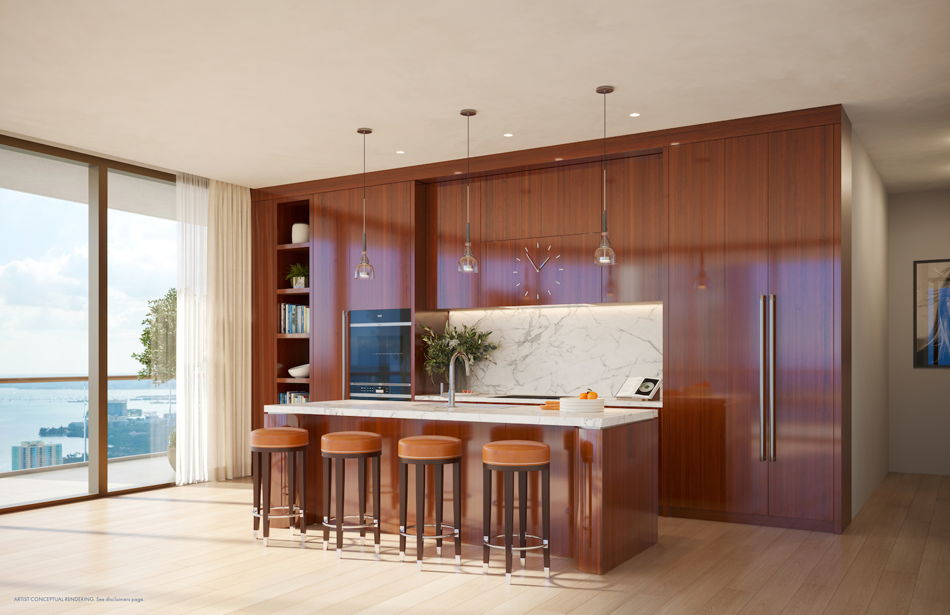
What it doesn’t fund matters as much. Florida law excludes from the association’s master policy the unit’s personal property and interior items such as floor, wall and ceiling coverings, appliances, water heaters, built-in cabinets and countertops, and window treatments; the owner insures those. Unit electricity, property taxes (billed by the county tax collector) and special assessments are separate. In service-heavy buildings, in-residence dining, housekeeping, parking and club memberships may also be billed separately; the prospectus’s schedule of unit-owner expenses must include fees the condominium documents require owners to pay to parties other than the association.
What HOA fees do new developments publish in 2026?
Developers often quote new-building fees as a rate per square foot of the unit. On Haute Residence’s New Developments index (41 projects, checked October 1, 2026), two project pages publish one. Neither developer document states the billing period, so confirm it with the developer before converting a rate into a monthly figure:
| Building | Published estimate (period not stated) | Source | Rate × published size |
|---|---|---|---|
| Waldorf Astoria Residences Pompano Beach | $1.61/SF without reserves · $1.74/SF with reserves | Developer fact sheet and purchaser’s guide, via our project page (updated September 2026) | 2BR + den, about 2,097 SF: about $3,649 with reserves · 4BR + den, about 3,557 SF: about $6,189 (per billing period; confirm the period) |
| Continuum Club & Residences, North Bay Village | $1.77/SF | Developer brochure, July 2026, via our project page | Sizes not published: on request |
| Other projects on the index | On request | — | — |
The Waldorf figures show the reserve share directly: $0.13 per square foot, about $273 per billing period on 2,100 square feet. Developer estimates are projections set before the building operates; once owners control the association, they adopt the budgets.
Why do branded and full-service buildings carry larger budgets?
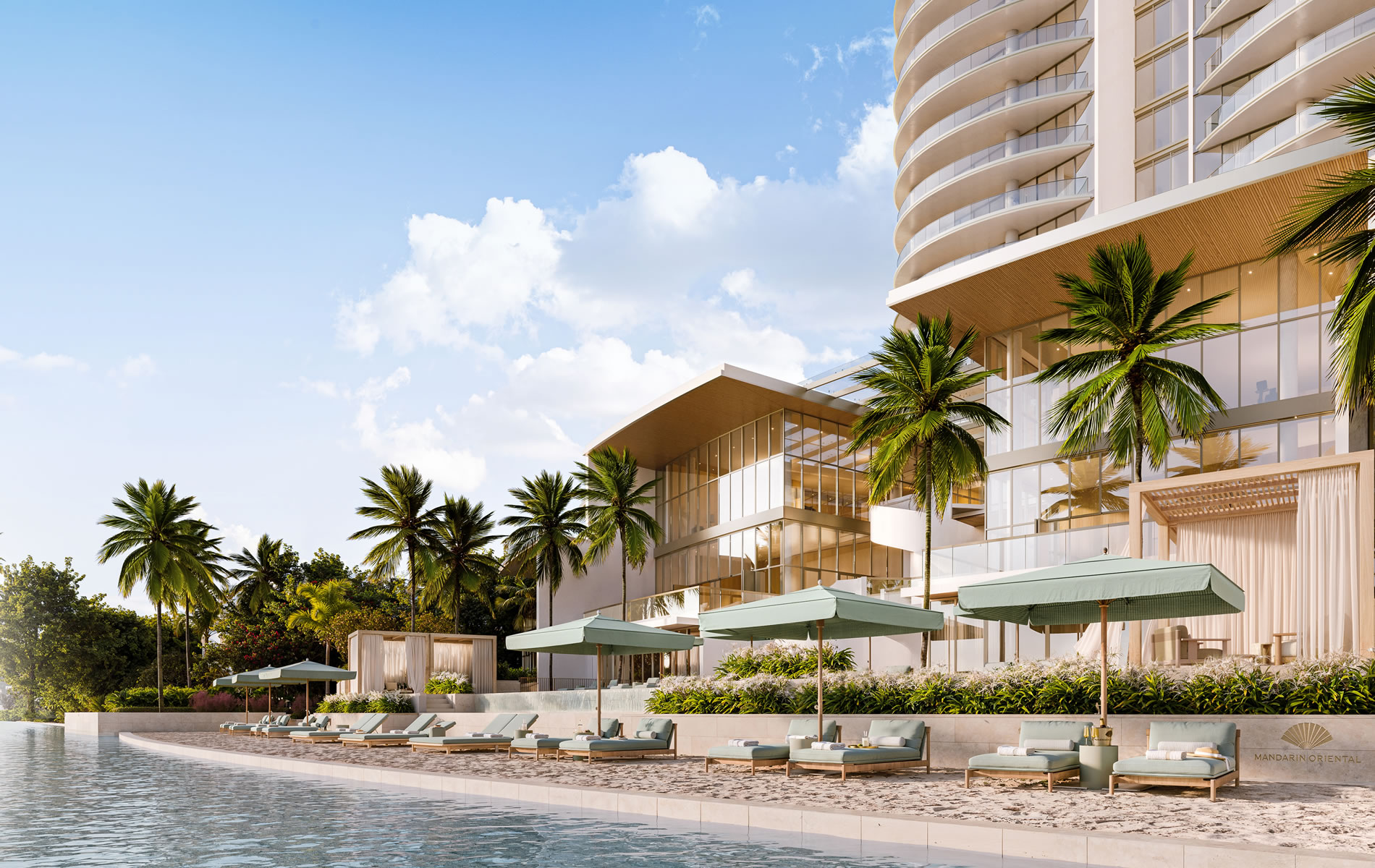
Hotel-style service is staffed service, and staff are a budget line. The difference shows in what a project bundles and what it bills separately. Our project pages show three patterns. At Four Seasons Residences Coconut Grove, ownership includes a Surf Club membership with initiation and first-year dues waived, so ask what dues run from year two. At The Residences at Six Fisher Island, the project page lists Fisher Island Club and Beach Club membership as included. Waldorf Astoria Pompano Beach offers an optional resident Yacht Club membership and boat slips for purchase.
Brand licenses can add terms of their own. At 619 Brickell, the developer’s July 2026 purchaser’s guide says Nobu dining in the common areas depends on a license the association must enter into and maintain, and the developer’s amenities page says some services cost extra and may be provided by third parties. Ask how each service is funded: through dues, separate charges or an operator agreement.
Higher dues are one part of the cost of a brand. For the purchase-price side, see our guide are branded residences worth the premium?
How does insurance affect condo HOA fees in 2026?
Insurance reaches you twice. The association’s master policy on the structure and common elements is paid through the HOA, so its renewal shows up in the budget. Your own HO-6 policy covers what Florida law leaves out of the master policy, and every unit-owner policy must include at least $2,000 of loss-assessment coverage, which pays your share of an association assessment after a covered loss.
The market eased in 2026. In January, the Governor announced approved Citizens Property Insurance rates averaging 8.7 percent lower statewide at renewal from spring 2026, with average reductions for homeowners of 14.0 percent in Miami-Dade, 14.1 percent in Broward and 11.9 percent in Palm Beach County, according to the Office of Insurance Regulation. Ask for the master policy’s latest renewal premium, deductible and wind coverage, and get your own HO-6 quote before signing. Our Florida property insurance guide covers coverage choices in detail.
How do Florida’s post-Surfside reserve laws affect HOA fees?
After the 2021 Surfside collapse, Florida rewrote its condominium reserve rules in four laws: SB 4-D (2022), SB 154 (2023), HB 1021 (2024) and HB 913 (2025). As the statutes read in 2026:
- Reserve study. Associations must have a structural integrity reserve study at least every 10 years for each building three habitable stories or higher. It covers the roof, structure, fireproofing, plumbing, electrical systems, waterproofing and exterior painting, and windows and exterior doors.
- No waivers. For budgets adopted on or after December 31, 2024, owners in those associations can’t vote to skip or reduce reserves for the study’s items. Before turnover, a developer-controlled association can’t vote to waive or reduce reserves at all.
- Funding options. Reserves can be funded by regular or special assessments, lines of credit or loans; the last three need a majority vote of all owners. Through budgets adopted by December 31, 2028, owners may pause or reduce reserves for up to two budgets to pay for repairs from a recent milestone inspection. The pause isn’t available to developer-controlled associations or in the first year after turnover.
- Inspections. Milestone inspections are due by December 31 of the year a building turns 30, or 25 where the local building department requires it, and every 10 years after.
For a new building, reserves sit inside the monthly fee from the first budget, as the Waldorf with-and-without-reserves figures show. Florida also lets a developer guarantee that assessments won’t exceed a stated amount for a stated period and pay the shortfall; ask whether a guarantee exists and when it ends. For a resale, ask for the latest reserve study and milestone report. Our guide to the condo safety law and new construction covers inspections in more detail.

What is the all-in monthly cost of a South Florida condo?
Five inputs make the all-in monthly figure. Here is the formula, followed by where each input comes from.
Monthly all-in = H + (T ÷ 12) + (I ÷ 12) + S + (C ÷ 12)
| Input | What it is | Formula and source |
|---|---|---|
| H, HOA | Your monthly assessment, reserves included | Published rate per SF × interior SF, or the dollar figure on the prospectus budget schedule |
| T, property tax | Annual ad valorem tax plus any non-ad valorem charges on the bill | (Taxable value × total millage ÷ 1,000) + non-ad valorem assessments. Millage from the county property appraiser |
| I, HO-6 | Your annual unit-owner premium | Your insurer’s quote |
| S, assessment | Any special assessment, spread monthly | Assessment ÷ number of monthly installments; zero if none is levied |
| C, club dues | Annual dues for a membership that comes with the residence or that you choose | The club’s or developer’s published dues; on request if not published |
Taxable value. Florida assesses a non-homestead condo at just value as of January 1 after the purchase, and from then on increases for non-school taxes are capped at 10 percent a year. The appraiser’s just value can be lower than your price, so using the price gives a ceiling. A unit that isn’t substantially complete on January 1 carries no improvement value that year, so in a new tower the first full bill usually follows the year of closing. If the residence becomes your homestead, exemptions and the Save Our Homes cap lower the figure; see our homestead and Save Our Homes guide. Bills paid in November, or within 30 days of the tax notice, get a 4 percent discount under state law.
Tax by city on a hypothetical $3,000,000 taxable value (non-homestead, tax year 2025 millage):
| Jurisdiction (millage code) | 2025 total millage | Annual tax | Monthly |
|---|---|---|---|
| City of Miami (0100) | 19.9878 | $59,963 | $4,997 |
| Miami Beach (0200) | 18.7601 | $56,280 | $4,690 |
| Sunny Isles Beach (3100) | 16.7227 | $50,168 | $4,181 |
| North Bay Village (2300) | 21.8955 | $65,686 | $5,474 |
| Fort Lauderdale (0312) | 18.4464 | $55,339 | $4,612 |
| Pompano Beach (1512) | 20.2573 | $60,772 | $5,064 |
| Pompano Beach – Hillsboro Inlet (1511) | 20.3823 | $61,147 | $5,096 |
| West Palm Beach (outside the downtown DDA) | 20.4468 | $61,340 | $5,112 |
| Town of Palm Beach | 14.8690 | $44,607 | $3,717 |
Millage varies within a city by district: in Pompano Beach, parcels inside the Hillsboro Inlet District pay 0.1250 mill more (code 1511). Confirm the code on your parcel’s record. The 2026 rates were set at September 2026 budget hearings; the appraisers had not posted their final 2026 tables as of October 1, so check your TRIM notice.
Worked example (hypothetical, for illustration only). A $2,700,000, 2,100-square-foot non-homestead residence at the Waldorf Astoria Residences Pompano Beach site, which the Broward County Property Appraiser lists under millage code 1511, using the developer’s published estimate of $1.74 per square foot with reserves:
| Line | Calculation | Monthly |
|---|---|---|
| H, HOA | Use the monthly figure on the prospectus budget. Illustration only, if the developer confirms the $1.74/SF estimate is monthly: $1.74 × 2,100 SF | $3,654 (if monthly) |
| T, property tax | $2,700,000 × 20.3823 ÷ 1,000 = $55,032 a year, ÷ 12 | $4,586 |
| I, HO-6 | Your annual quote ÷ 12 | Your quote |
| S, special assessment | None levied (new building; reserves are in H) | $0 |
| C, club dues | None assumed (the Yacht Club membership is optional) | $0 |
| All-in | H + T + S + C, plus your HO-6 | About $8,240 plus your HO-6 quote (if the HOA rate is monthly) |
Property tax is the largest known line here. The without-reserves rate would cut H by $273 per billing period, which is why the reserve line is the first one to check. A homestead owner, or a just value below the price, would pay less tax; non-ad valorem charges on the bill would add to it.
On the ballot. Amendment 3 goes to voters on November 3, 2026 and needs 60 percent approval. If it passes, from January 1, 2027 the cap on yearly assessment increases for non-homestead property falls from 10 percent to 5 percent for non-school taxes, and the homestead exemption from non-school taxes rises to $150,000 in 2027 and $250,000 in 2028. People who aren’t Florida residents on December 31, 2026 would get the larger exemption from their fifth year of homestead. School taxes stay uncapped for non-homestead property.
Request Pricing, Floor Plans & Availability
Request the Waldorf Astoria Residences Pompano Beach Budget
HL Real Estate Group can request a building’s prospectus budget, reserve schedule, insurance summary and any club or service fees, and build the all-in monthly figure for the residences you are comparing.
Complimentary. Discreet. No obligation. Fees, taxes and terms are subject to change and should be confirmed with the development team and your advisors.
How does this compare with the annual cost of a $5 million condo?
This guide works monthly from published millage and building estimates. For the annual view of a $5 million residence, including one-time closing costs and documentary stamp taxes, see What a $5M New-Development Condo in South Florida Really Costs Per Year. If you’re financing, add debt service from our pre-construction financing guide.
What should buyers ask for before signing?
Ask for five documents: the prospectus budget and the schedule of each owner’s expenses, the reserve schedule (and for a resale, the latest structural integrity reserve study and milestone report), the master insurance summary with deductibles, any developer guarantee of assessments with its end date, and the terms and dues of any club or service program. Then get an HO-6 quote and look up your parcel’s millage. Our due-diligence checklist and pre-construction FAQ hub cover the rest of the process.
South Florida Condo HOA Fees FAQ
How much are HOA fees at new South Florida luxury condos?
Two of the 41 projects on Haute Residence’s New Developments index publish an estimate as of October 1, 2026: Waldorf Astoria Residences Pompano Beach at $1.74 per square foot with reserves, and Continuum Club & Residences at $1.77 per square foot. Neither states the billing period. Every other project’s figure is on request; ask for the prospectus budget.
What does a condo HOA fee cover in Florida?
The fee funds the association’s budget: the master insurance policy on the building and common elements, staff, amenities, common utilities and reserves. Florida law leaves interior items such as cabinets, countertops, appliances, floor coverings and personal property to the owner’s HO-6 policy. Services billed separately must be listed in the prospectus.
How do I calculate the all-in monthly cost?
Add the monthly HOA, one-twelfth of the annual property tax, one-twelfth of the HO-6 premium, any special assessment spread over its installments, and one-twelfth of any club dues. Property tax equals taxable value times the total millage divided by 1,000, plus any non-ad valorem charges on the bill.
What property tax rate applies to a South Florida condo?
It depends on the city. For tax year 2025, total adopted millage was 19.9878 in the City of Miami, 18.7601 in Miami Beach, 18.4464 in Fort Lauderdale, 20.4468 in West Palm Beach and 14.8690 in the Town of Palm Beach, per the county property appraisers. Each mill is $1 per $1,000 of taxable value.
Can a new condo association skip reserve funding?
Not before turnover: Florida law bars a developer-controlled association from voting to waive or reduce reserves. After turnover, owners in buildings that need a structural integrity reserve study can’t waive reserves for the study’s items in budgets adopted on or after December 31, 2024. Ask for the reserve line in the budget.
Will my HOA rise after the developer hands over the building?
It can. Florida lets a developer guarantee that assessments won’t exceed a stated amount for a stated period and cover the shortfall, so ask whether a guarantee exists and when it ends. After turnover, owners adopt their own budgets, and the reserve study and insurance renewals drive the changes.
How would Amendment 3 affect condo property taxes?
Amendment 3 is on Florida’s November 3, 2026 ballot and needs 60 percent approval. For non-homestead property, it would cut the yearly cap on assessment increases for non-school taxes from 10 percent to 5 percent from 2027. For homesteads, it would raise the non-school exemption to $150,000 in 2027 and $250,000 in 2028.
Comparing buildings on carrying cost? Browse every tracked project on the New Developments index, or start with a market: Miami-Dade, Fort Lauderdale, West Palm Beach or Palm Beach. New to the process? Read our guide to buying pre-construction in South Florida.
Request HOA Budgets for the Buildings You’re Comparing
Sources: Haute Residence New Developments cards and project pages for Waldorf Astoria Residences Pompano Beach (updated September 2026; developer fact sheet and purchaser’s guide), Continuum Club & Residences (developer brochure, July 2026), Four Seasons Residences Coconut Grove (verified August 30, 2026) and The Residences at Six Fisher Island, checked October 1, 2026; 619 Brickell purchaser’s guide (July 8, 2026) and amenities page; Miami-Dade Property Appraiser, 2025 adopted millage rates; Broward County Property Appraiser, 2025 final millage rates and parcel record 4943 06 56 0010 (1350 S Ocean Blvd); Palm Beach County Property Appraiser, 2025 taxing-authority millage table; Florida Statutes (2026), sections 192.042, 193.1554, 197.162, 553.899, 627.714, 718.111, 718.112, 718.116, 718.301, 718.503 and 718.504, as amended by chapters 2022-269, 2023-203, 2024-244 and 2025-175, Laws of Florida; Florida Office of Insurance Regulation, January 13, 2026; Florida Department of State, 2026 constitutional amendment booklet (updated September 3, 2026). Figures are subject to change. Not legal, tax or insurance advice.