South Florida Has More Million-Dollar Listings Than New York: What the Data Actually Means
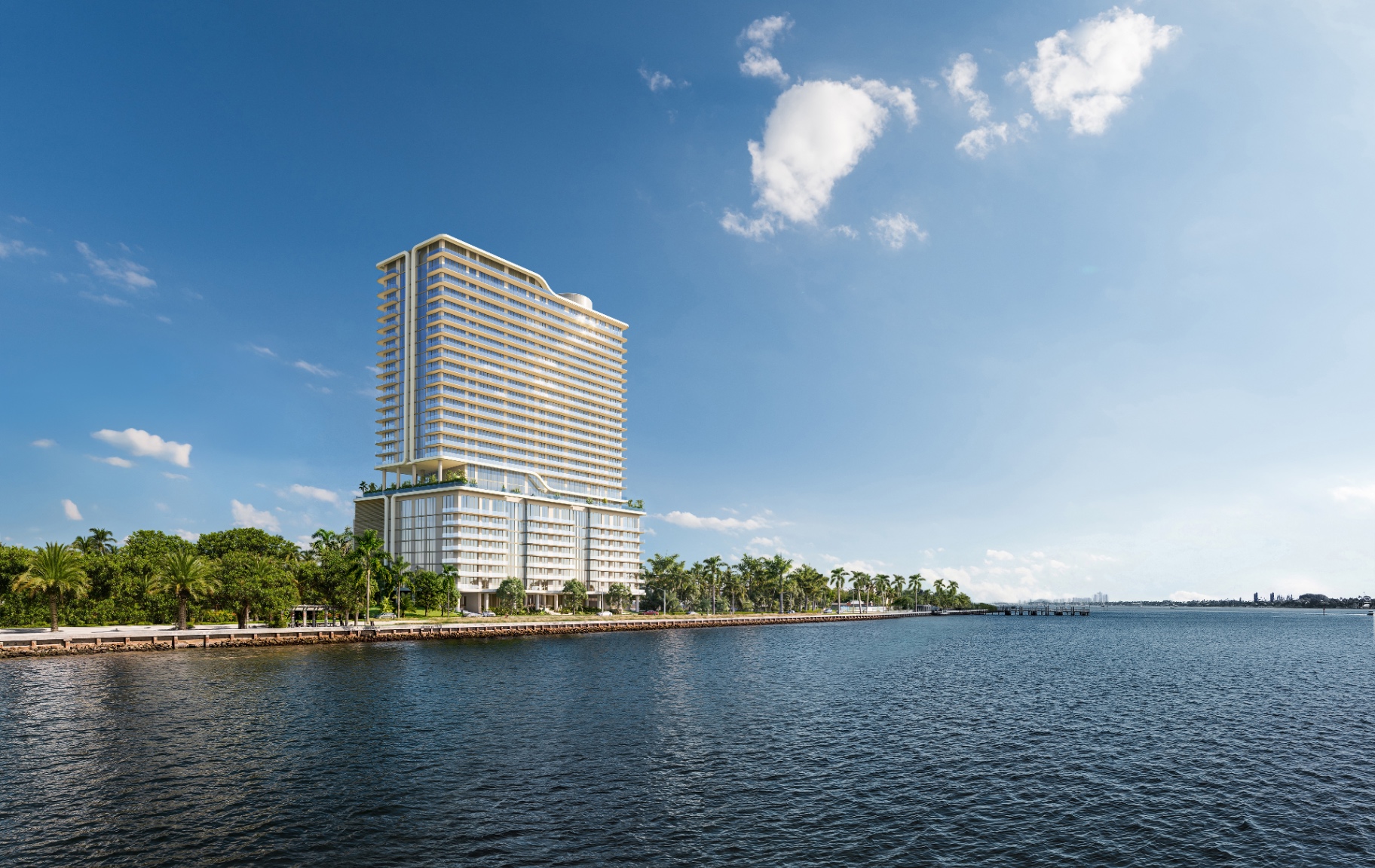
In December 2025, something happened in American real estate that would have been considered implausible a decade ago: the Miami-Fort Lauderdale-West Palm Beach metro became the number one U.S. metro for the most million-dollar homes listed for sale, overtaking New York for the first time in at least a decade. This is not a footnote. It is a structural marker — the moment when South Florida’s transition from a regional luxury market into the deepest high-end real estate market in the United States became documented, official, and cited by national real estate data services.
The Data Behind the Milestone
The Miami-Fort Lauderdale-West Palm Beach metro’s luxury leadership is confirmed by multiple data points:
- Most million-dollar listings: The tri-county region surpassed New York as the #1 U.S. metro for active million-dollar homes for sale as of December 2025 (Realtor.com/national housing data)
- Luxury premium ratio: Luxury listings in the tri-county metro are priced at 4.9 times the local median listing price — a sharper luxury-to-mainstream gap than the national pattern
- $10M+ volume: 361 sales above $10 million in 2025 — the second-highest annual total on record (trailing only 2021’s 444)
- Decade-long appreciation: West Palm Beach luxury +187.3%, Miami luxury +148% over 10 years (Redfin) — both outpacing every New York submarket
For comparison — New York:
- Decade-long luxury price appreciation: approximately 15.4% (Redfin, same 10-year period) — the slowest appreciation of any major U.S. metro
- High-tax environment: combined New York State and New York City income tax at $1M income exceeds 12%
- Development pipeline: limited by zoning, cost structures, and the same overbuilt luxury condo concerns that have plagued Manhattan’s $5M+ market since 2018
The contrast is not subtle. South Florida’s luxury market has grown approximately 10 times faster than New York’s on a decade-long PSF basis, has absorbed more $10M+ transactions per year than any other metro except during New York’s best cycles, and has done so with a tax environment that is structurally superior for the high-income buyer.
How South Florida Got Here: The Structural Drivers
Driver 1: Sustained wealth migration from New York specifically. The single largest source of South Florida’s luxury buyer migration is New York — particularly New York City. The mathematical case is direct: a New York City resident earning $2 million annually saves approximately $260,000+ in combined state and city income tax by establishing Florida domicile. This is not a marginal benefit — it is a significant fraction of the purchase price of a quality luxury residence, delivered annually, indefinitely.
The post-2020 acceleration of this migration — triggered by COVID-era remote work normalization and political sentiment changes in New York — converted what had been a gradual trend into a wave. New York’s loss is measurable: the state lost approximately $25 billion in adjusted gross income to other states between 2020 and 2022 (IRS data), with Florida the primary recipient.
Driver 2: Corporate relocation creating institutional demand. Citadel, Point72, Millennium Management, and dozens of hedge funds and financial services firms establishing South Florida operations have created an institutional buyer pool that purchases at the $5–50M+ tier. These buyers are not lifestyle-motivated retirees — they are actively working principals whose professional activity requires South Florida residency, compounding the residential demand that pure lifestyle migration generates.
Driver 3: International buyer concentration. International buyers account for approximately 49–52% of new South Florida construction sales — 73 countries represented, $4.4 billion in measured foreign buyer activity (42% annual increase). No other major U.S. metro has achieved this level of international buyer integration in its new development market. This global demand base broadens South Florida’s effective buyer pool well beyond any national comparison.
Driver 4: Supply structural constraint. South Florida cannot grow its premium inventory in the ways that New York can (upzoning, air rights transfers, supertall development on smaller footprints). The most valuable real estate in South Florida — oceanfront, island, Intracoastal — is physically finite. When demand accelerates against a fixed supply ceiling, the result is appreciation that outpaces markets where supply can respond.
What This Means for 2026 Buyers
The liquid market advantage: Becoming the deepest luxury market in the United States means that South Florida now has the broadest buyer pool for high-end resale. When you sell a $5M Miami Beach condo, you are selling into a market where 49% of comparable buyers are international cash purchasers, domestic migration remains active, and institutional relocators continue to enter. This is a broader buyer pool than any comparable Manhattan listing accesses.
The pricing benchmark shift: Once South Florida became the #1 million-dollar listing market, global ultra-high-net-worth buyers who compare markets when allocating residential capital have South Florida directly in their comparison set alongside London, Monaco, Singapore, and New York. This accelerates international buyer attention and raises the floor pricing expectations for the region’s most prestigious addresses.
The “relative value” window is closing: One of the consistent arguments for South Florida has been relative value versus global peers — Miami is more affordable than comparable London, Paris, or Monaco product. As South Florida achieves global market status, that relative value argument gradually weakens as pricing converges toward global peers. Buyers who are motivated by relative value have a limited window before South Florida’s premium tier fully converges with comparable global luxury markets.

The New York Comparison: Why the Cross-Over Matters
New York’s luxury market has spent the past decade dealing with the consequences of overbuilding at the $5M+ tier — the “pencil tower” supertall wave that delivered thousands of ultra-luxury units in the 2018–2022 period into a market that proved unable to absorb them at the pricing developers required.
Manhattan luxury condo inventory has been working through this oversupply for years, with price corrections in specific buildings that dramatically underperformed initial sales pricing.
South Florida’s luxury pipeline is characterized by pre-sold positions rather than speculative overbuilding — most major developments are 60–80% pre-sold before significant construction spend is committed. This discipline reflects lessons learned from earlier South Florida cycles and produces a different outcome than Manhattan’s recent experience.
The cross-over — South Florida surpassing New York for million-dollar listings — is therefore a reflection of both South Florida’s genuine growth and New York’s relative stagnation, not just the former. The migration is not merely buyers choosing lifestyle; it is capital making a rational market comparison and moving accordingly.

Need details on these residences?
Our advisory team can share current information on the projects referenced in this guide.
Speak With an Advisor →