The Pritzker Prize Buildings of South Florida: Architecture’s Highest Honor in Residential Real Estate
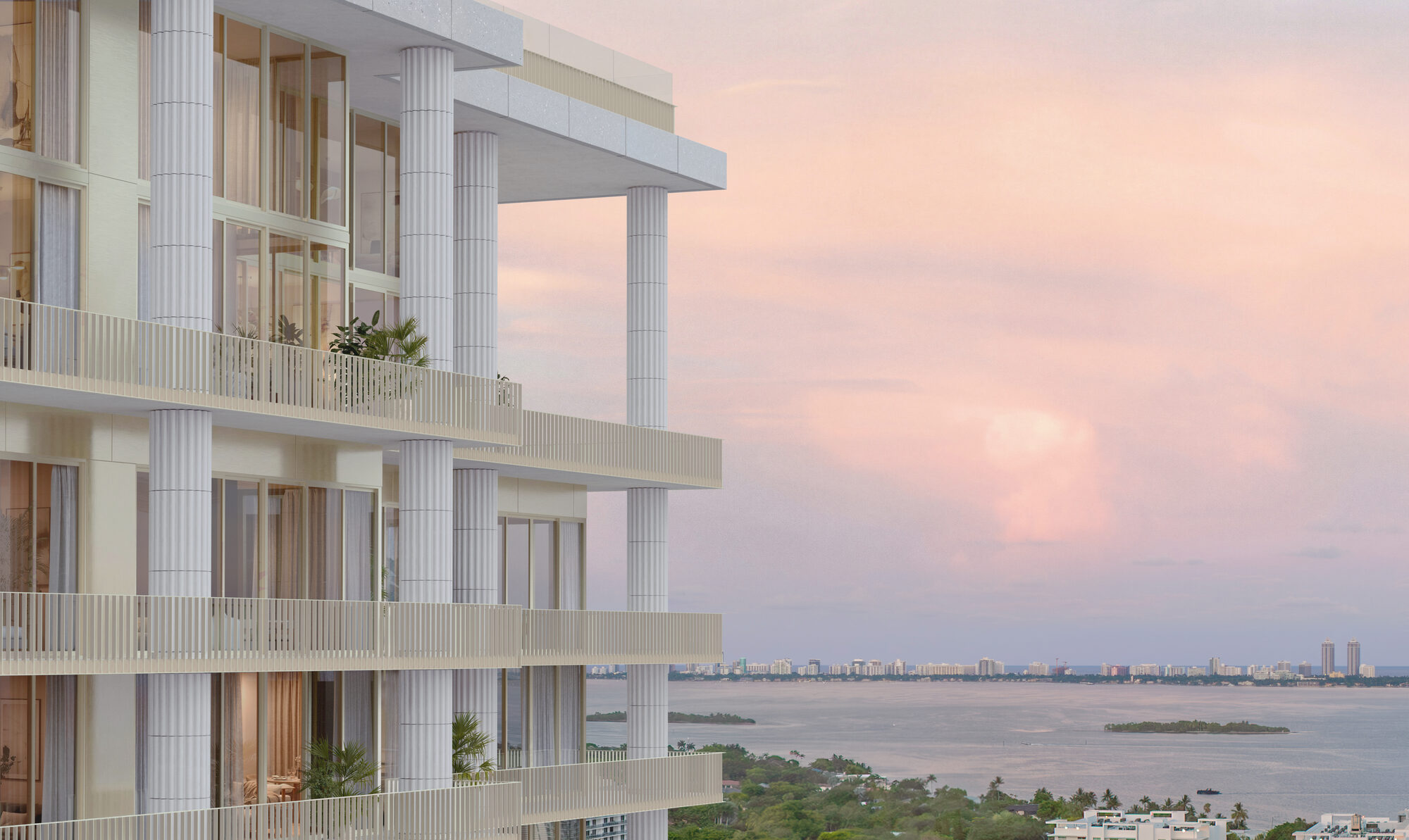
The Pritzker Prize is architecture’s Nobel equivalent — awarded annually since 1979 to a living architect whose body of work demonstrates talent, vision, and commitment to humanity and the built environment. In the 45 years of its existence, it has been awarded to fewer than 50 architects worldwide.
South Florida has managed, improbably, to assemble the most concentrated collection of Pritzker Prize residential architecture of any real estate market in the world — in a city that many of the award’s recipients would not, twenty years ago, have considered a serious architectural destination.
This is the guide to those buildings: what each architect brought to their South Florida commission, why their involvement matters beyond the credential, and what living in a Pritzker Prize building actually produces as a daily experience.
David Chipperfield (2023) — Fouquet’s Hotel & Residences Miami Design District
David Chipperfield received the Pritzker Prize in 2023 — the most recent laureate with a completed or in-progress South Florida project. Chipperfield’s architecture is defined by a quality that is genuinely rare in contemporary practice: the ability to produce buildings that are intellectually rigorous without being cold, materially refined without being ostentatious, and designed to improve with age rather than dating to the moment of their completion.
His most celebrated works — the Neues Museum in Berlin (a Stirling Prize-winning renovation that preserved the museum’s bomb-damage history as an architectural element), the Hepworth Wakefield gallery in England, the Procuratie Vecchie in Venice, and the América’s Cup Building in Valencia — are buildings that scholars and serious practitioners reference when discussing what architecture should do at the highest level of ambition. They are buildings where the design intelligence is available to anyone who looks carefully, but does not shout for attention.
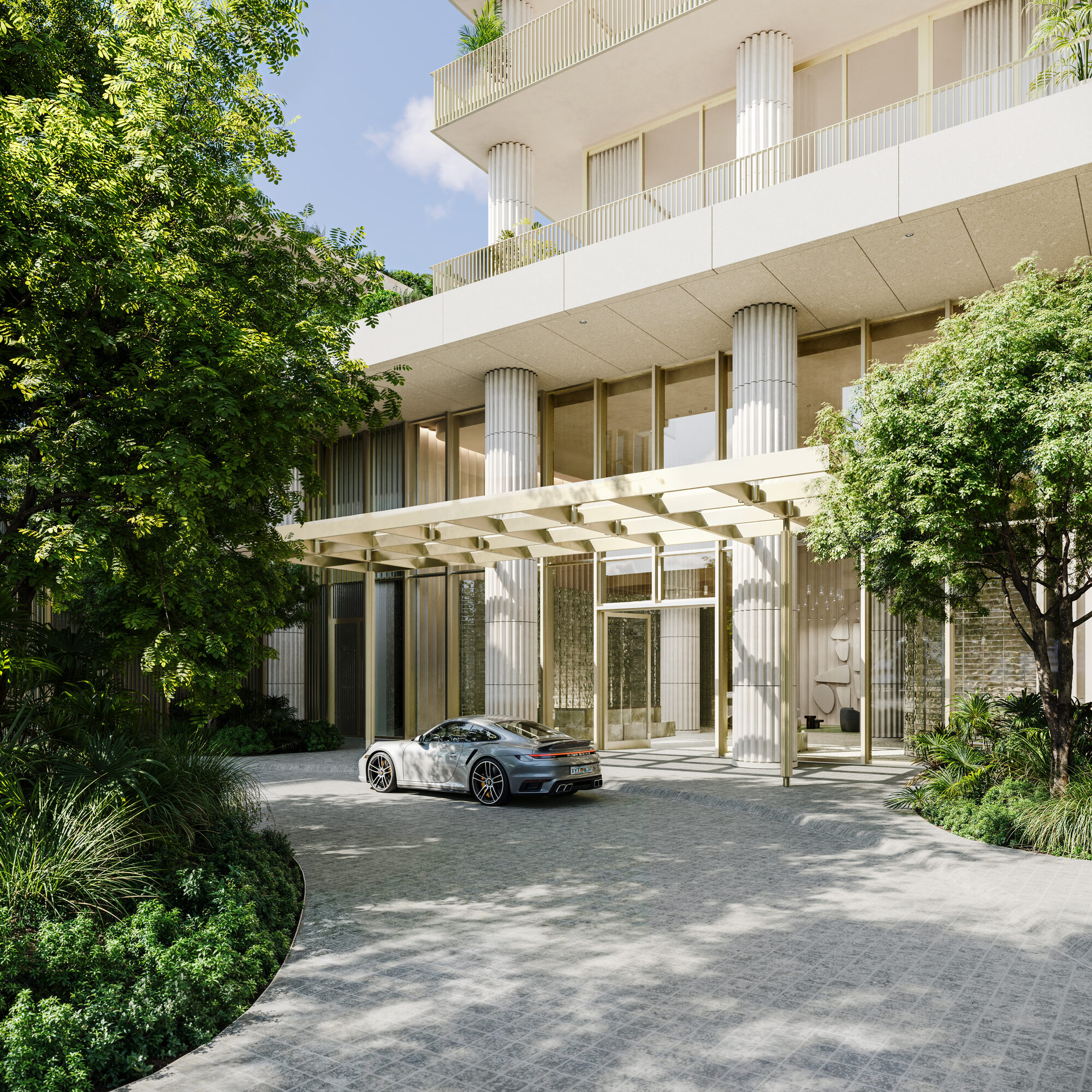
At Fouquet’s Hotel & Residences Miami Design District, Chipperfield’s assignment is to create a 26-story residential tower and adjacent hotel within the Miami Design District’s extraordinary urban fabric — a context that is simultaneously one of the world’s most concentrated luxury retail environments and one of Miami’s most architecturally self-aware districts. His response, based on the project’s published design documents, is a building of studied materiality and refined proportion: characteristic of his approach to site, light, and the relationship between a building and its public realm.
What Chipperfield’s Pritzker means for residents: Buildings by Chipperfield do not become dated because they are not fashionable — they are architectural rather than stylistic. The Neues Museum renovation, completed in 2009, looks as considered and as appropriate in 2025 as it did at completion. The same durability will apply to Fouquet’s.
Renzo Piano (1998) — Eighty Seven Park Miami Beach
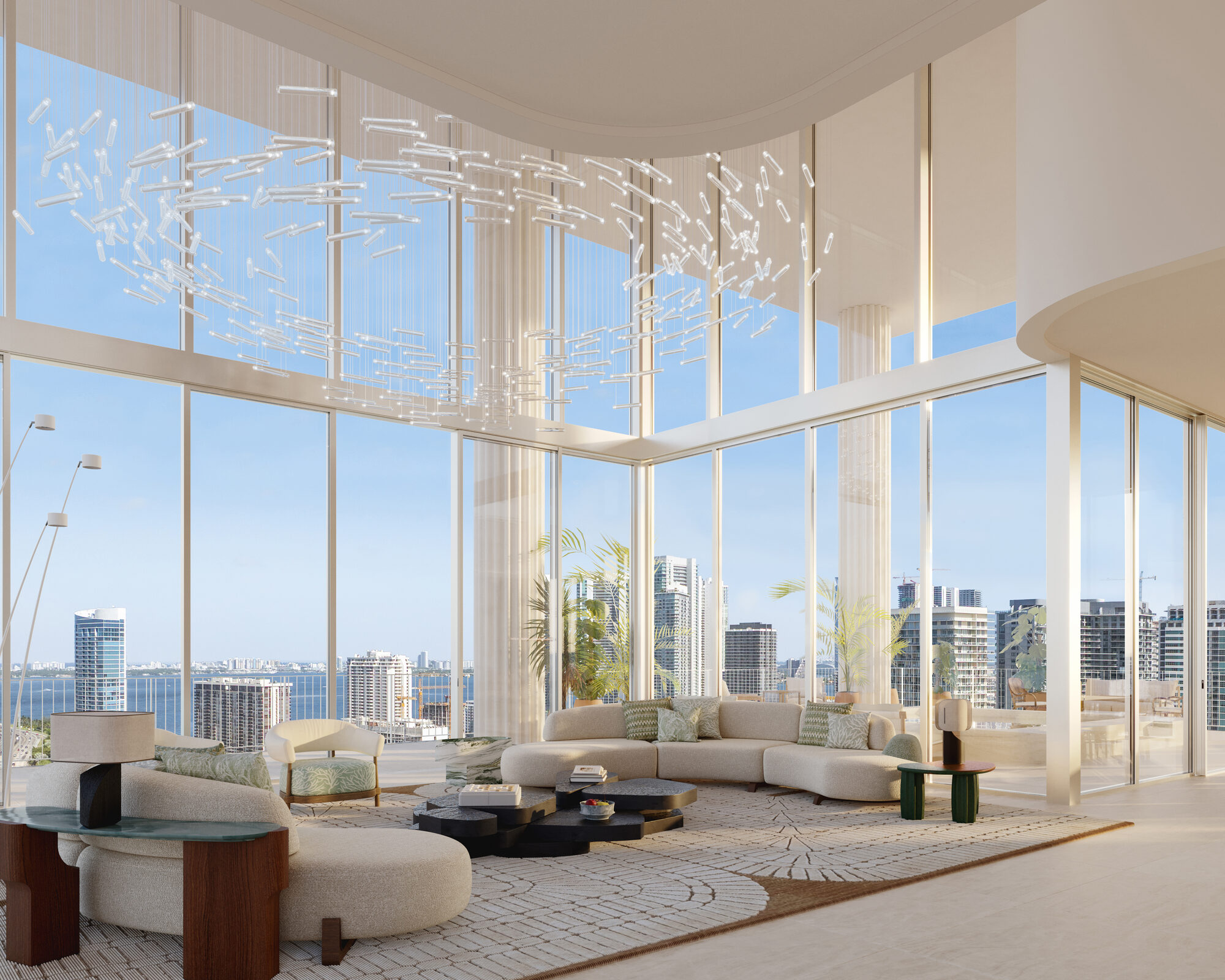
Renzo Piano Building Workshop’s commission for Eighty Seven Park at 87th Street on Miami Beach produced the building that established — definitively and internationally — that Miami Beach is an architectural destination capable of attracting the world’s most serious design practices.
Piano’s Pritzker (1998) recognized a body of work that includes the Centre Pompidou in Paris (with Richard Rogers, 1977), the Menil Collection in Houston (1987), the Kansai International Airport in Osaka (1994), and dozens of subsequent cultural institutions and urban projects that have collectively established his office as one of the most consistently excellent design practices in the world.
Piano’s specific design language — which prioritizes the quality of light in space, the relationship of building to landscape, and the use of materials that age into their context — produces buildings that reward sustained exposure. The Centre Pompidou is more interesting after 50 years than it was at completion; the Menil Collection is still considered among the most successful museum buildings ever designed. Buildings by Piano improve over time, which is a genuinely rare architectural quality.
At Eighty Seven Park, this language produces a residential building that is extraordinary for its restraint. Where a developer might have built a conventional Miami Beach oceanfront tower — maximizing height, maximizing unit count, using the Piano name as a marketing credential rather than a design principle — the RPBW design chooses proportion, landscape integration, and the quality of arrival experience over density.
What Piano’s Pritzker means for resale: Eighty Seven Park’s resale market ($3,000–$4,000+ PSF) is among the strongest of any boutique Miami Beach building — and buyers consistently cite the architectural quality as a primary motivation. Piano’s buildings hold value across market cycles because architectural quality is a finite resource that cannot be replicated by future construction in the same location.
Rem Koolhaas / OMA (2000) — Banyan Tree Residences West Palm Beach and Park Grove Coconut Grove
Rem Koolhaas received the Pritzker Prize in 2000 — accompanied by a jury citation that described him as “an architect of ideas who has built his buildings as if they were books.” OMA — the Office for Metropolitan Architecture that Koolhaas founded in Rotterdam in 1975 — has produced some of the most intellectually significant buildings of the past 50 years: the CCTV Building in Beijing, the Seattle Central Library, the Casa da Música in Porto, the Fondazione Prada in Milan.
OMA has active or recently completed residential commissions in South Florida at two remarkably different scales and contexts:
Banyan Tree Residences West Palm Beach (active pre-construction, Mast Capital developer, Yabu Pushelberg interiors): A West Palm Beach Intracoastal-facing luxury residential development where OMA’s analytical architectural intelligence — applied to the specific brief of a globally branded wellness resort residential building — produces architecture that is more warmly proportioned and contextually responsive than some of the office’s more aggressive sculptural work.
Park Grove Coconut Grove (delivered, Related Group + Terra Group developers, designed by OMA and Arquitectonica): The twin-tower Coconut Grove development that brought OMA’s architectural vocabulary to a neighborhood that responded to it — Coconut Grove’s village character and mature tree canopy providing the contextual foil that OMA’s work often requires. Park Grove’s resale performance has been exceptional.
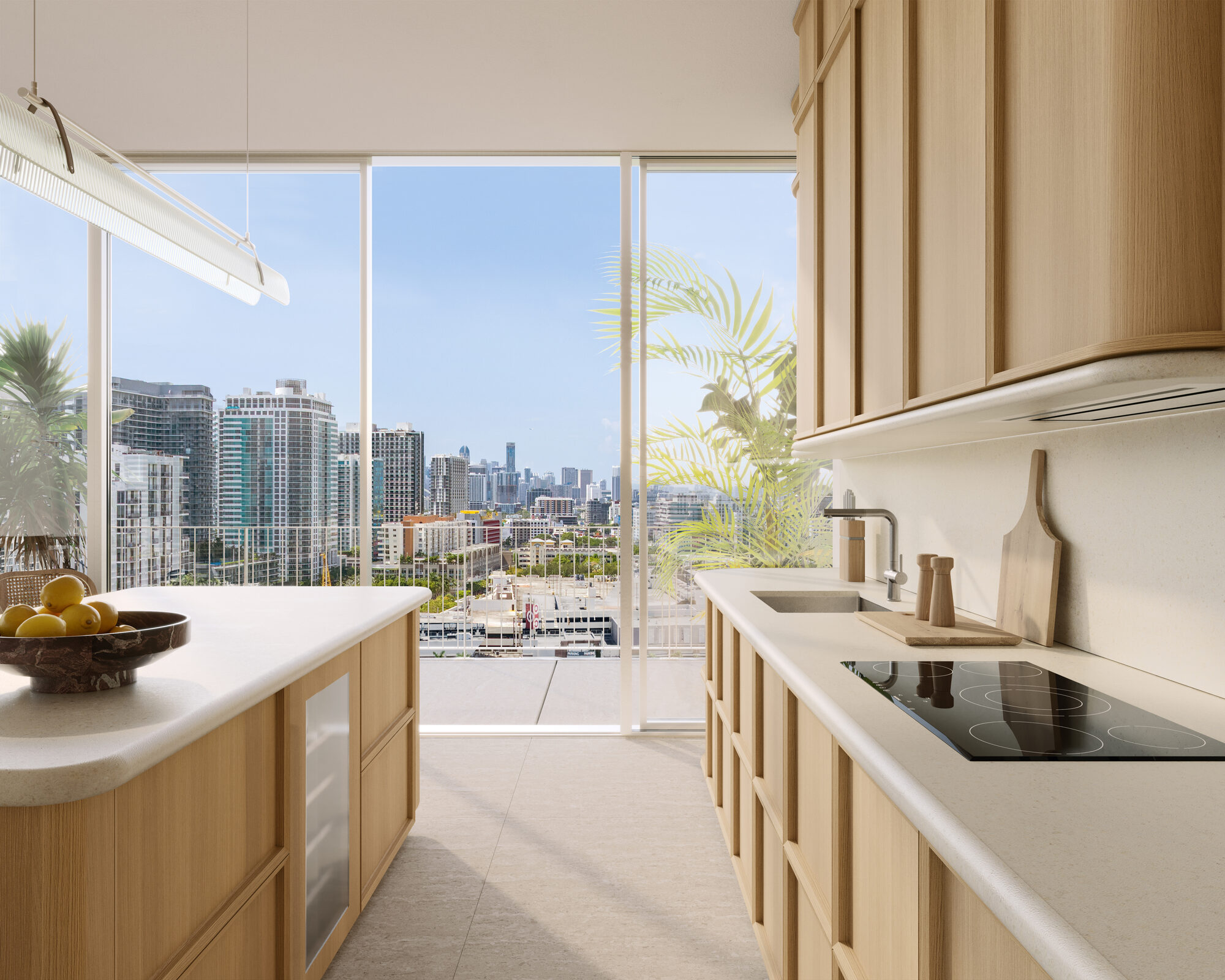
What Koolhaas’s Pritzker means: OMA buildings carry a specific intellectual credential — they are designed by an office that treats every project as an opportunity to advance an argument about how architecture and cities work. For buyers who value the building’s intellectual character alongside its material quality, an OMA building provides a different kind of ownership than a conventionally excellent luxury development.
Richard Meier (1984) — Four Seasons Private Residences at The Surf Club, Surfside
Richard Meier received the Pritzker Prize in 1984 — the sixth laureate in the award’s history. His buildings are among the most internationally recognizable in contemporary architecture: the Getty Center in Los Angeles (1997), the Barcelona Museum of Contemporary Art (1995), the City Hall and Central Library in The Hague (1995), and dozens of private residences that have established his language (pure white forms, natural light, geometric rigor) as one of the most consistently copied in contemporary residential architecture.
The Four Seasons Private Residences at The Surf Club in Surfside — completed alongside the historic 1930s Surf Club restoration — represents Meier’s direct engagement with the South Florida context in a way that his more abstract European buildings do not. The white geometry of the new residential towers, positioned adjacent to Morris Lapidus’s 1930 original Surf Club social club, creates a temporal dialogue between two significant moments in American architectural history.
The Surf Club’s residential towers include Four Seasons Residences that are among the most desirable boutique residential addresses in Surfside — a neighborhood that has been transformed by the concentration of Pritzker Prize architectural authorship (Meier, Piano at Eighty Seven Park 3 miles north, Chipperfield at Fouquet’s 8 miles south) into what is effectively the world’s densest concentration of Pritzker Prize residential architecture within a single coastal corridor.
The Concentration: What No Other Market Has
The Surfside–Miami Beach–Design District corridor — from the Four Seasons at The Surf Club (Meier) through Eighty Seven Park (Piano) through Fouquet’s (Chipperfield) — contains four Pritzker Prize laureates’ active residential work within approximately 10 miles of coastline. OMA (Koolhaas) adds a fifth at Banyan Tree WPB and Park Grove. No other real estate market in the world has assembled this concentration of Pritzker Prize architectural authorship in its active residential portfolio.
For buyers who evaluate residential investment through an architecture lens — who understand that buildings by architects of this caliber hold value across market cycles because architectural quality is a fixed and finite resource — this concentration represents something genuinely extraordinary. The supply of Pritzker Prize buildings is permanently constrained by the number of architects who have received the award. The supply in South Florida is already exceptional and growing.
Need details on these residences?
Our advisory team can share current information on the projects referenced in this guide.
Speak With an Advisor →