Pre-Construction Deposit Structures Compared: 20% vs 30% vs 50%
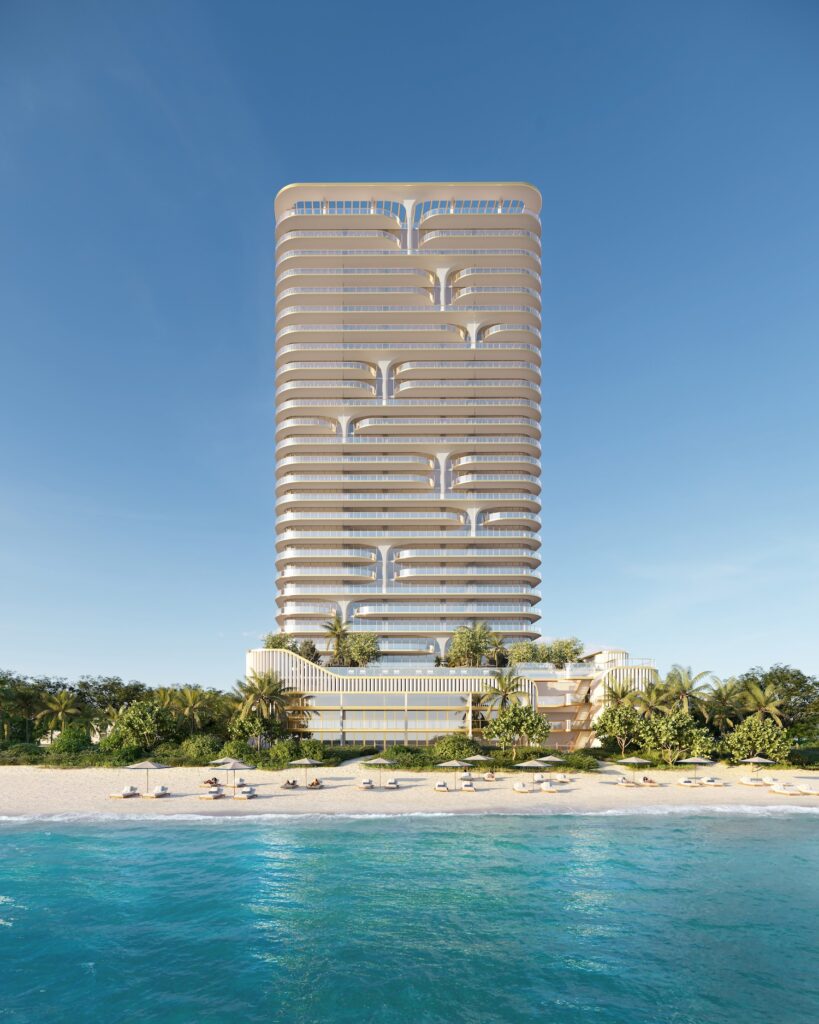
Photo courtesy to Florida YIMBY
A 20% deposit, a 30% deposit and a 50% deposit can buy the same residence on the same day. What changes is how much cash leaves your account before you get keys, when it leaves, and how much of it sits above Florida’s 10% escrow line. This guide compares the three on one hypothetical price.
Sales galleries describe pre-construction deposits in shorthand: “20 percent,” “30 percent,” “50 percent.” Each figure is the total you pay before closing, split across milestones the developer sets in the purchase agreement. The balance is due at closing, in cash or with a mortgage. This guide sets the three structures side by side so you can see the cash, the calendar and the risk trade-offs, then lists the two schedules our project pages publish, with each source and its date. It does not re-explain how Florida escrow works; our guide to what a 50% deposit really means covers escrow agents, interest and draw rules in detail. Our project pages were checked on October 15, 2026. This is general information, not legal or tax advice; a Florida attorney should review any purchase agreement before you sign or wire funds.
The short answer
- 20% before closing. The least cash out during construction. Fewer installments, then 80% at closing. Under Florida law the first 10% of the price sits in escrow until closing, so only 10 points of the deposit sit above that line. The trade-off is a large closing balance that you must fund, often years later, when rates, appraisals and your own finances may look different.
- 30% before closing. The middle case, with 70% at closing. Twenty points sit above the 10% line.
- 50% before closing. Half the price is paid before you take delivery, across several installments. Forty points sit above the 10% line, and the closing balance is the smallest of the three.
In every structure the 10% line is the same. What grows with the deposit is the share above the 10% line, which Section 718.202 of the Florida Statutes treats differently (see below). More cash before closing also means more cash that cannot earn a return elsewhere while the building rises. Less cash before closing means a larger, later bill.
How each structure is staged
The table below uses a hypothetical $4,000,000 purchase price and hypothetical milestone timing (contract in month 0, a second payment in month 4, groundbreaking in month 6, topping off in month 24, closing in month 36). These are illustrations to show the math. They are not any tower’s schedule, and real milestones are set in each purchase agreement.
| Hypothetical structure | Illustrative split | Paid before closing | Above the 10% escrow line | Due at closing |
|---|---|---|---|---|
| 20% | 10% at contract · 10% at groundbreaking | $800,000 | $400,000 | $3,200,000 |
| 30% | 10% at contract · 10% at groundbreaking · 10% at topping off | $1,200,000 | $800,000 | $2,800,000 |
| 50% | 20% at contract · 10% at month 4 · 10% at groundbreaking · 10% at topping off | $2,000,000 | $1,600,000 | $2,000,000 |
Hypothetical example only. The 10% escrow line on a $4,000,000 price is $400,000.
Now the same three structures as cumulative cash out, by month, on the same hypothetical calendar:
| Hypothetical month | 20% structure | 30% structure | 50% structure |
|---|---|---|---|
| Month 0 (contract) | $400,000 | $400,000 | $800,000 |
| Month 4 | $400,000 | $400,000 | $1,200,000 |
| Month 6 (groundbreaking) | $800,000 | $800,000 | $1,600,000 |
| Month 24 (topping off) | $800,000 | $1,200,000 | $2,000,000 |
| Month 36 (closing balance due) | $3,200,000 | $2,800,000 | $2,000,000 |
Hypothetical example only. The last row is the balance due at closing, not cumulative cash.
Three things stand out.
Cash tied up. On this hypothetical price, the 50% structure asks for $1,200,000 more than the 20% structure before closing. That is money you cannot invest, spend or hold as a reserve while the building rises.
Timing. Front-loaded schedules move the bulk of the cash in the first six months. A schedule that saves a payment for topping off pushes part of the outlay toward the end of the build, when you can see the structure.
Risk. A larger deposit means more of your money sits above the 10% line for longer. A smaller deposit shifts the weight to closing: you need to fund 70% or 80% of the price at once, and if you plan to borrow, the loan is underwritten at closing, not at contract. Our guide to financing pre-construction in 2026 covers that side.
Which card projects publish which structure
We checked the project pages for every development on our new-developments boardon October 15, 2026. Two project pages publish a schedule. Neither is exactly 20%, 30% or 50%, a reminder that the shorthand rarely matches a real price sheet.
| Project | Published schedule | Total before closing | Source and date | Our card |
|---|---|---|---|---|
| Waldorf Astoria Residences Pompano Beach | 20% contract · 10% groundbreaking · 5% topping off · 65% closing | 35% | Our project page (checked Oct 15, 2026), citing the developer fact sheet (October 2023) and purchaser’s guide (January 2024) | From $2.71M · est. completion 2027 |
| Continuum Club & Residences | 20% at contract · 10% 120 days after contract · 10% at topping off · 60% at closing (closing est. Q1 2028) | 40% | Our project page (checked Oct 15, 2026); the page cites the developer brochure, July 2026, for pricing, and prints this schedule beside it | From $1.77M · pre-construction |
Read each line with its date in mind.
Waldorf Astoria Residences Pompano Beach. Our project page lists 20% at contract, 10% at groundbreaking, 5% at topping off and 65% at closing, per the developer fact sheet (October 2023) and purchaser’s guide (January 2024). Both documents predate today’s construction stage, so confirm the schedule is current. Our new-developments card lists the tower from $2.71M (subject to change) with estimated completion in 2027. Ask how a contract signed now bills the groundbreaking and topping-off installments; the answer is on the current price sheet.
Continuum Club & Residences. Our project page, which cites the developer’s July 2026 brochure for pricing, lists 20% at contract, 10% 120 days after contract, 10% at topping off and 60% at closing, with closing estimated for the first quarter of 2028. The second payment is tied to a date, not a construction milestone, so it arrives on schedule regardless of site progress. Our card lists the project from $1.77M (subject to change).
Everyone else. The other project pages on our board, checked October 15, 2026, say the deposit schedule is available on request, so we print none for them.
Escrow and Florida law
The Florida Condominium Act sets how deposits are held, not how large they are. In general terms, Section 718.202, Florida Statutes (2026 statutes, Florida Legislature) provides that:
- When construction is not substantially complete, payments up to 10% of the sale price go into an escrow account and, absent a termination or default, are released at closing. The statute allows other assurances, such as a surety bond or letter of credit, in some cases.
- Payments above 10% received before completion go into a special escrow account. If the contract provides for it, the developer may withdraw those excess funds once construction has begun and use them for actual construction and development costs. The statute bars their use for sales salaries and commissions, marketing, loan costs, attorney and accounting fees, and insurance, and it requires a bold-type legend on the first page of a contract that permits construction use.
- Reservation deposits, paid before a purchase contract is signed, go into escrow and are refundable on written request until a contract is executed.
For this comparison, the point is simple. The 10% line does not move. A 20% structure places 10 points of the price above it, a 30% structure 20 points and a 50% structure 40 points. How that money is handled in a specific project depends on the contract and the escrow arrangements in it, which is why a Florida attorney should review the buyer’s contract before signing. Our deposits and escrow guide walks through escrow agents, interest and the remaining sections in depth.
Questions to ask
These questions are about the structure itself. For the wider document review, use our due diligence checklist; for carrying costs after closing, see our HOA fees guide.
- What is the total before closing, and what triggers each payment? A milestone (groundbreaking, topping off) moves with construction. A date (120 days after contract) does not.
- Which milestones have already passed? On a building that has broken ground or topped off, ask whether those installments are due at signing as a catch-up payment.
- Is a reservation deposit credited to the contract deposit? Ask how much it is, who holds it and when it converts.
- Is the schedule the same on every line? Some price sheets vary terms by release, residence type or penthouse collection. Get the schedule for the specific residence.
- Does a different structure change the price? Ask whether a heavier or lighter schedule is offered at a different price, and get any change in writing.
- How will you fund the closing balance? On a 20% structure that may be 80% of the price. Line up cash or financing early.
- What happens to an assignment? If you may need to exit before closing, ask how deposits paid so far are treated when a contract is assigned. Our guide to assignment rights, delay clauses and exit options covers the contract side.
- How will funds be wired? Confirm wiring instructions directly with the escrow agent named in the contract, by phone, before every installment.
Matching the structure to your plans
A 20% structure suits buyers who want to keep liquidity during construction and are prepared to fund a large closing balance, in cash or with a loan, when the building delivers.
A 30% structure suits buyers who want a middle path, with a payment saved for topping off so more of the outlay arrives once the structure is visibly complete.
A 50% structure suits buyers who have the cash available now, are comfortable with more of it sitting above the 10% escrow line for longer, and want a smaller balance at closing.
Whichever you choose, compare towers on the total before closing, the timing and the triggers, not on the headline percentage. Two schedules with the same total can move cash on very different calendars: Continuum’s second payment is tied to a date, Waldorf Astoria Pompano’s to a construction milestone. Browse the new-developments board to see which towers are selling now, then ask each sales gallery for its current price sheet.
FAQ: Pre-construction deposit structures compared
What is the difference between a 20%, 30% and 50% deposit structure?
The percentage is the total paid before closing. A 20% structure leaves 80% due at closing, a 30% structure leaves 70%, and a 50% structure leaves half. Under Florida law the first 10% of the price is escrowed until closing in each case, so higher structures place more of your money above that line.
Do published South Florida schedules match the 20%, 30% and 50% labels?
Not exactly. On our project pages checked October 15, 2026, Waldorf Astoria Residences Pompano Beach lists 35% before closing, citing the developer’s 2023 fact sheet, and Continuum Club & Residences lists 40%. Other towers share schedules on request through their current price sheets.
Is a reservation deposit part of the 20%, 30% or 50%?
It depends on the contract. Florida law requires reservation deposits to be held in escrow and refunded on written request until a purchase contract is signed. After you sign, those funds fall under the contract-deposit rules instead. Ask how much the reservation deposit is, who holds it and how it is credited.
What if a payment milestone has already passed when I sign?
On a tower that has broken ground or topped off, earlier milestones may already be behind it. Ask whether those installments are due at signing as a catch-up payment, which can make the first wire larger than the headline schedule suggests. The current price sheet and contract set the actual terms.
Do all residences in one tower use the same deposit structure?
Not always. Some developers vary deposit terms by release, residence type or penthouse collection, and terms can change between price sheets. Ask for the schedule that applies to the specific residence you are considering, and confirm it in the purchase agreement before you sign or wire funds.