Hotel Service vs. Residential Privacy: Which Branded Residence Model Fits Which Buyer?
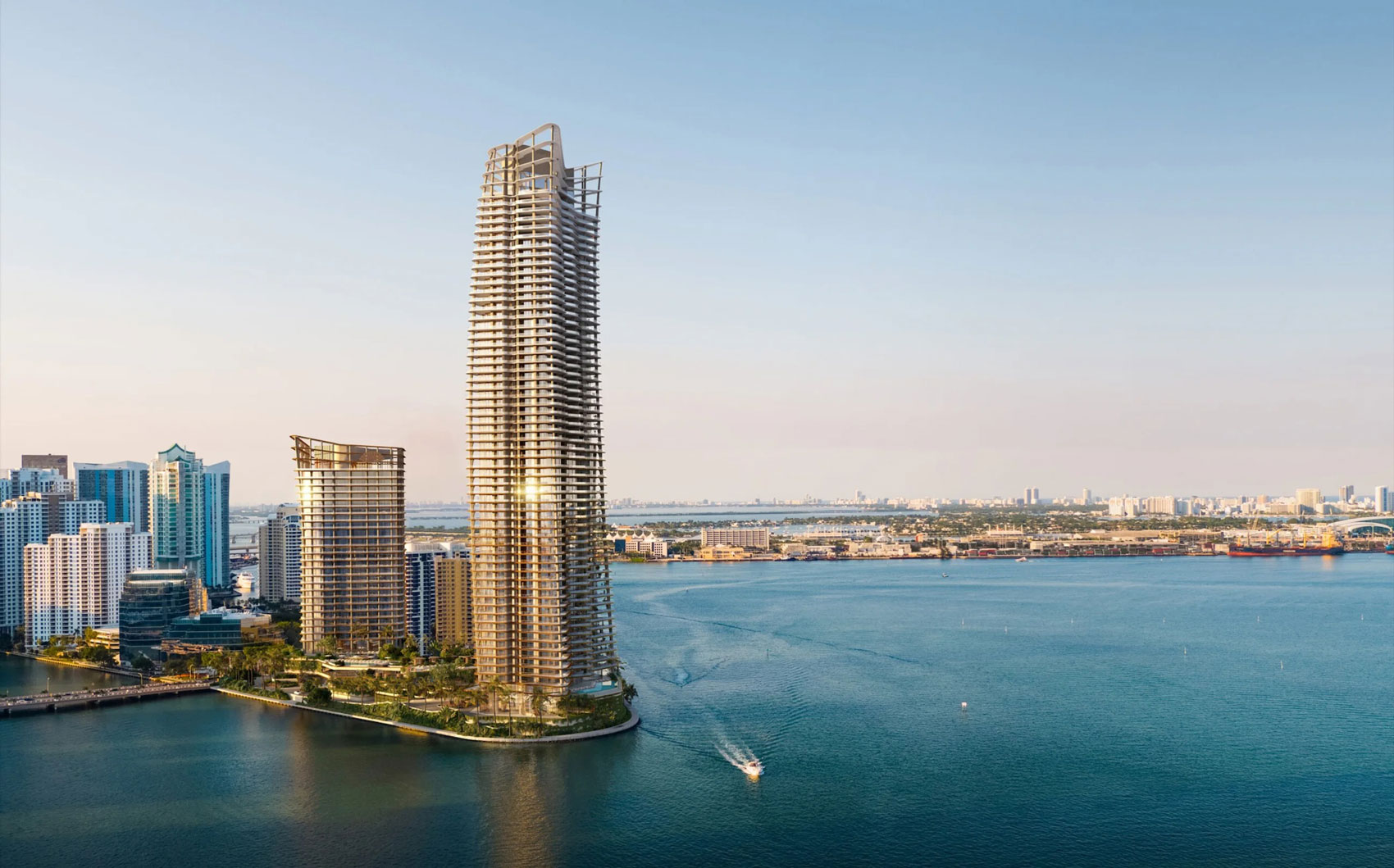
South Florida’s luxury new-development pipeline is now dominated by branded residences — but the branded residence service model beneath each tower varies dramatically. Some buildings function as private extensions of a working hotel. Others carry a hospitality name without the hotel attached. A smaller group is licensed by a non-hotel brand entirely. For buyers evaluating Miami and Palm Beach new construction, the service model shapes daily life far more than the logo on the door.
This guide compares the three dominant models across eight current projects — and outlines how HL Real Estate Group helps buyers match the model to the way they actually live.
South Florida branded residences fall into three service models. Hotel-integrated buildings sit on the same property as an operating hotel run by the same brand (such as The Residences at Mandarin Oriental, Miami and The St. Regis Residences, Miami). Hospitality-branded residential buildings carry a hotel or restaurant brand but operate as residential-only properties (such as Four Seasons Private Residences Coconut Grove, Rosewood Residences Hillsboro Beach, The Ritz-Carlton Residences, Palm Beach Gardens, Cipriani Residences Miami, and 619 Brickell). Private branded residences are licensed by a non-hotel brand (such as Bentley Residences Sunny Isles Beach).
Why the Branded Residence Service Model Matters More Than the Brand Name
“Branded residence” has become shorthand for any luxury condominium with a recognizable name on the door. In practice, the brand on the building is less important to the daily experience than the service architecture beneath it. Two buildings can share a hotel flag and feel entirely different: one humming with arrival traffic and on-demand dining, the other quiet, residential, and discreet. For buyers underwriting an eight-figure decision, that distinction is more relevant than the logo.
The South Florida pipeline currently sorts into three dominant service patterns, each with a distinct rhythm of daily life.
Model 1: Hotel-Integrated Residences
Hotel branded residences in this category sit on the same property as an operating hotel run by the same brand. Residents typically share amenities such as spa, restaurants, and pools with hotel guests, and the residential team is trained — and often staffed — by the hotel operator. Service depth is greatest here: 24/7 staffing, hotel-grade housekeeping, and the operational rhythm of a working flag.
The Residences at Mandarin Oriental, Miami
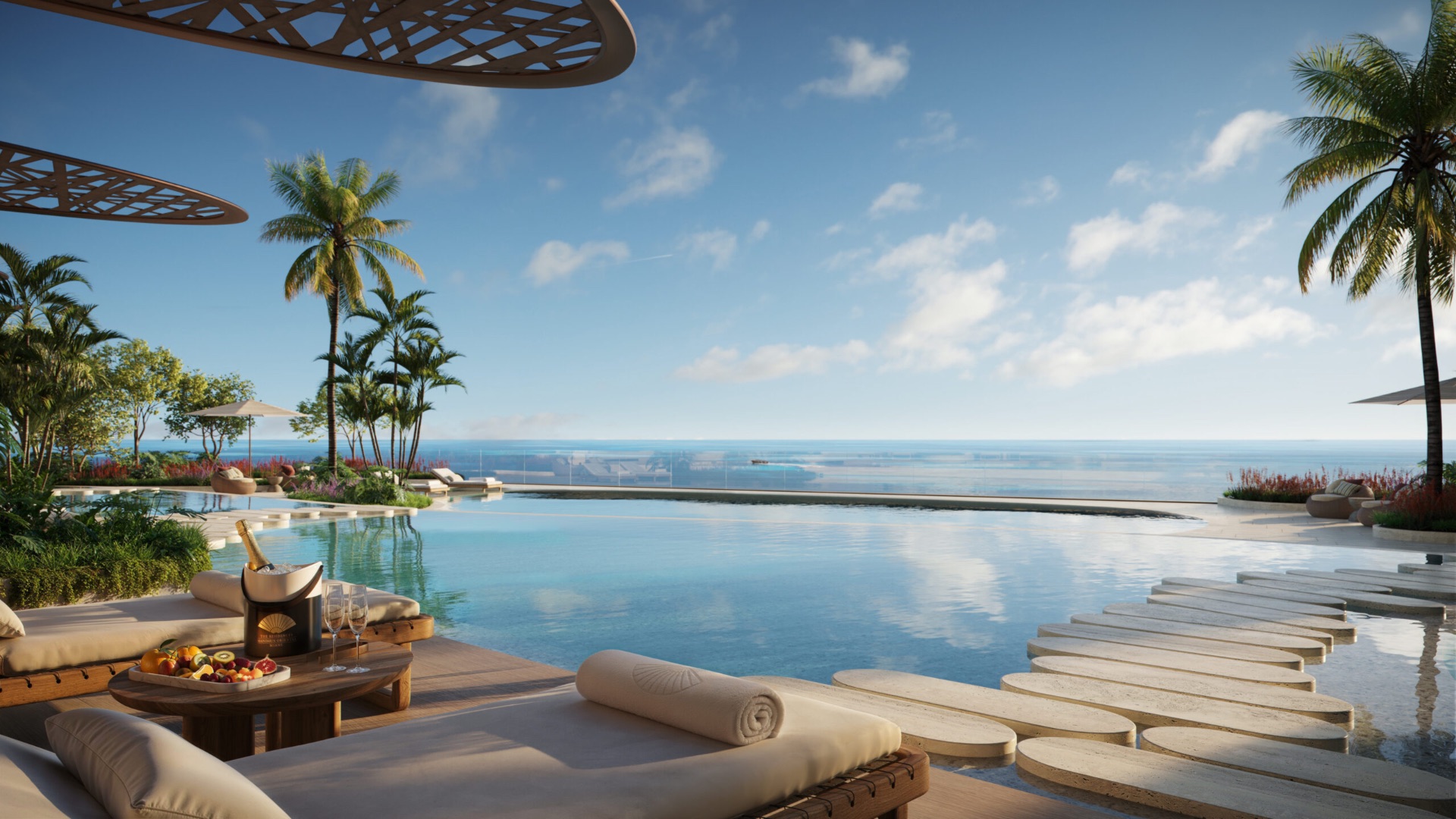
The Residences at Mandarin Oriental, Miami on Brickell Key, developed by Swire Properties and described by the developer as “A Mandarin Oriental Hotel.” The 64-story KPF tower delivers 228 residences with interiors by Tristan Auer and Laura Gonzalez, the Mandarin Oriental Signature Spa, multiple restaurants, a rooftop bar, and a 24/7 dedicated residential team trained by Mandarin Oriental.
The St. Regis Residences, Miami
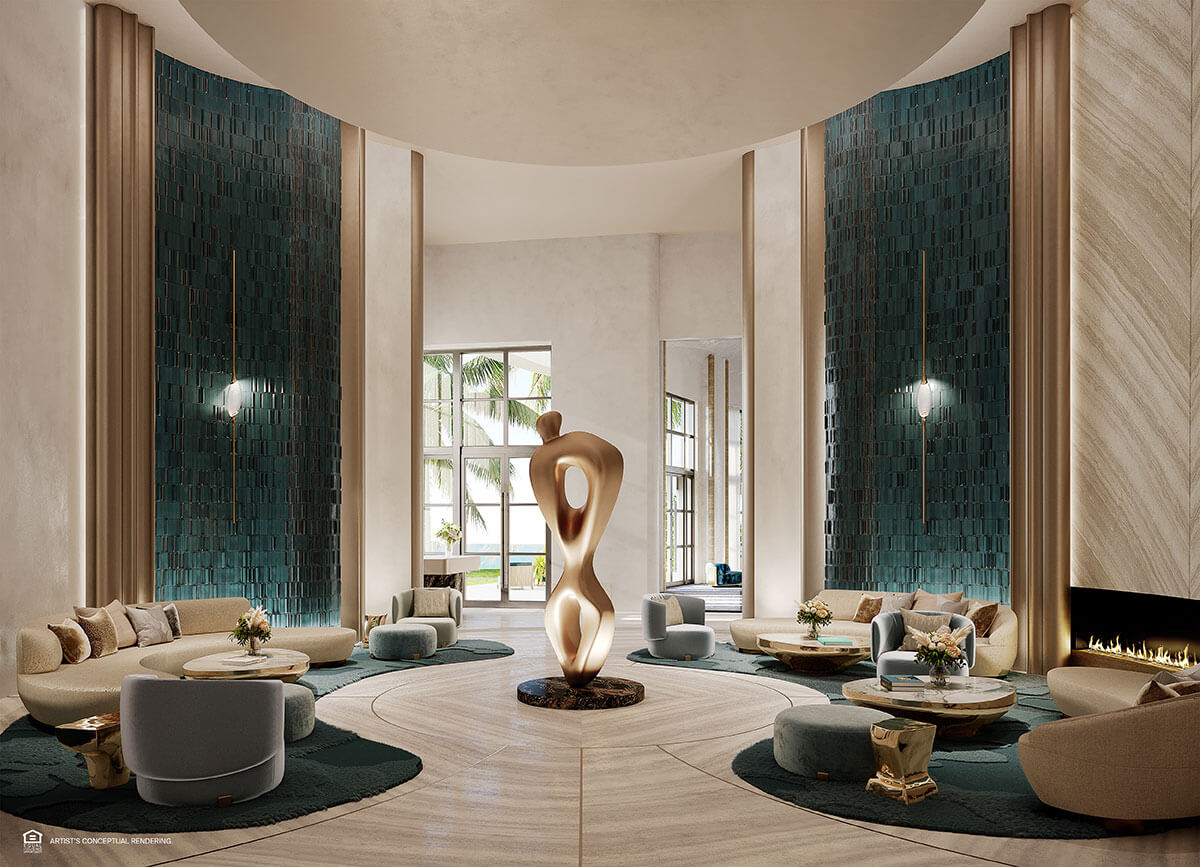
The St. Regis Residences, Miami on Brickell Avenue, a Robert A.M. Stern–designed tower with Rockwell Group interiors. The 152-residence, 50-story building includes a private marina, an on-premises fine-dining restaurant by Michelin-starred chef Fabio Trabocchi, and the St. Regis butler tradition delivered as 24-hour concierge and butler service.
Best fit: buyers who travel frequently, use the residence part-time, entertain in the building, and want luxury residential service on tap.
Model 2: Hospitality-Branded Residential Buildings
Hospitality-branded residences carry the name and service standards of a hotel or restaurant brand but operate as residential-only properties. There is no working hotel on the premises and no transient guest traffic. Dining, spa, and concierge programs are scaled and curated for residents, often through an à-la-carte menu, a residential concierge, and brand-trained staff.
Four Seasons Private Residences Coconut Grove
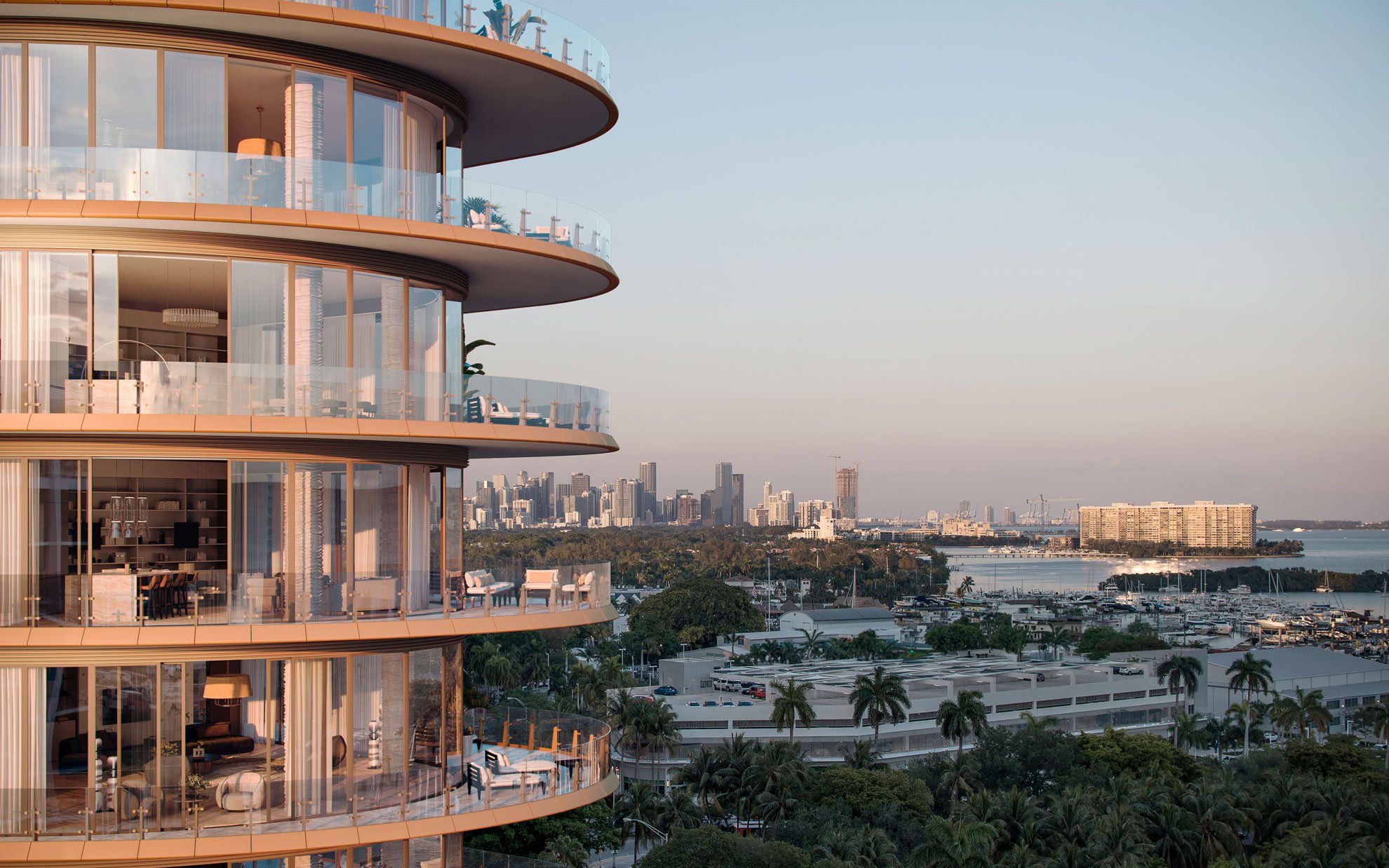
Four Seasons Private Residences Coconut Grove — 70 residences across 20 stories on South Bayshore Drive, developed by CMC Group. The Four Seasons à-la-carte services menu spans in-residence dining and spa, housekeeping, grocery provisioning, butler services, personal trainers, dog grooming, catering, and car detailing. Buyers also receive a Surf Club private membership with initiation fee and first-year dues waived, subject to approval.
Rosewood Residences Hillsboro Beach
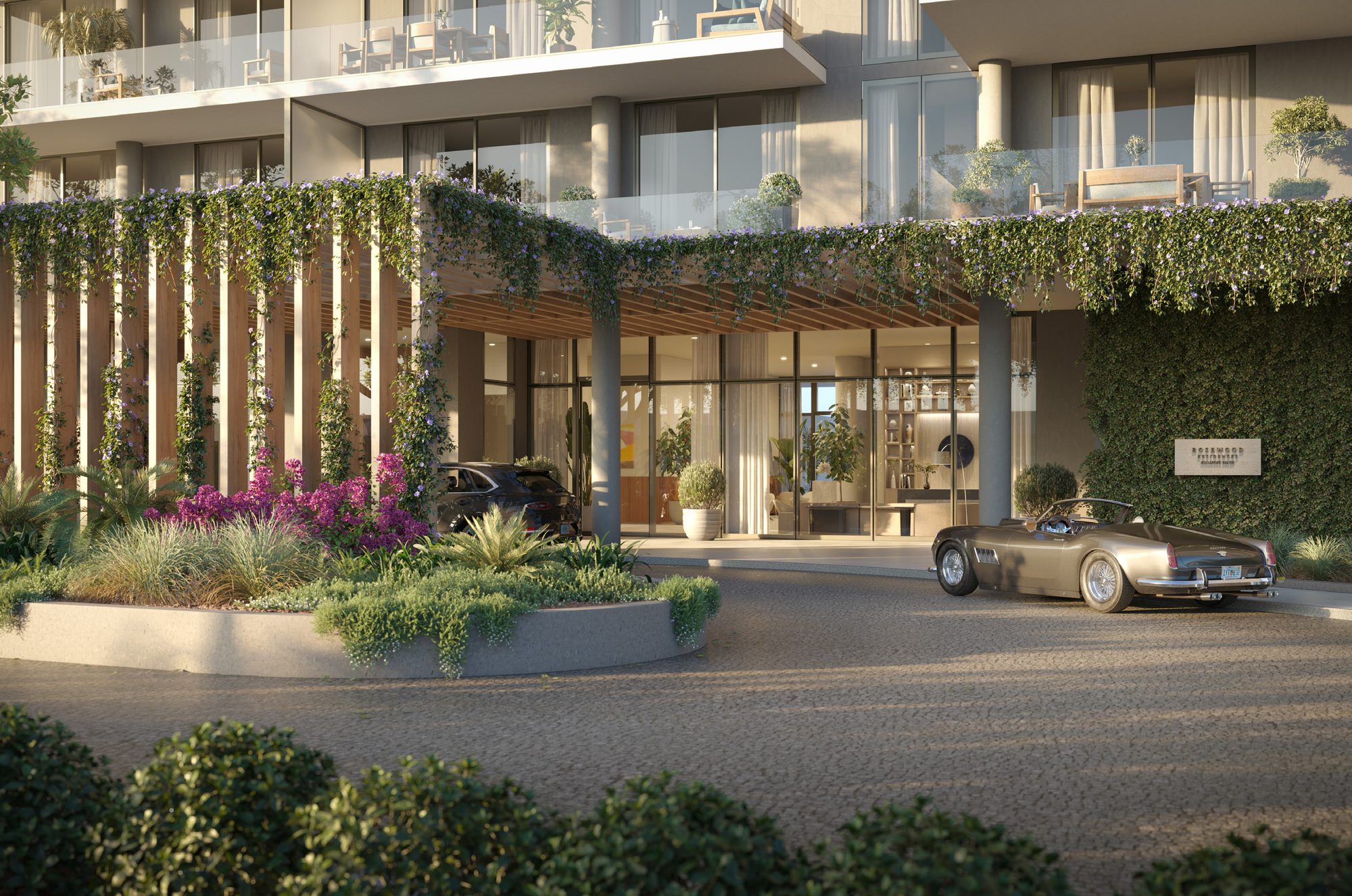
Rosewood Residences Hillsboro Beach — 92 residences across a 10-story oceanfront tower and a 3-story Intracoastal condominium, developed by The Related Group and Dezer Development with Arquitectonica architecture and Piet Boon interiors. The program features lifestyle concierge and butler services, a signature oceanfront restaurant for residents, direct beach entry with service, his-and-hers spas, and luxury guest rooms.
The Ritz-Carlton Residences, Palm Beach Gardens
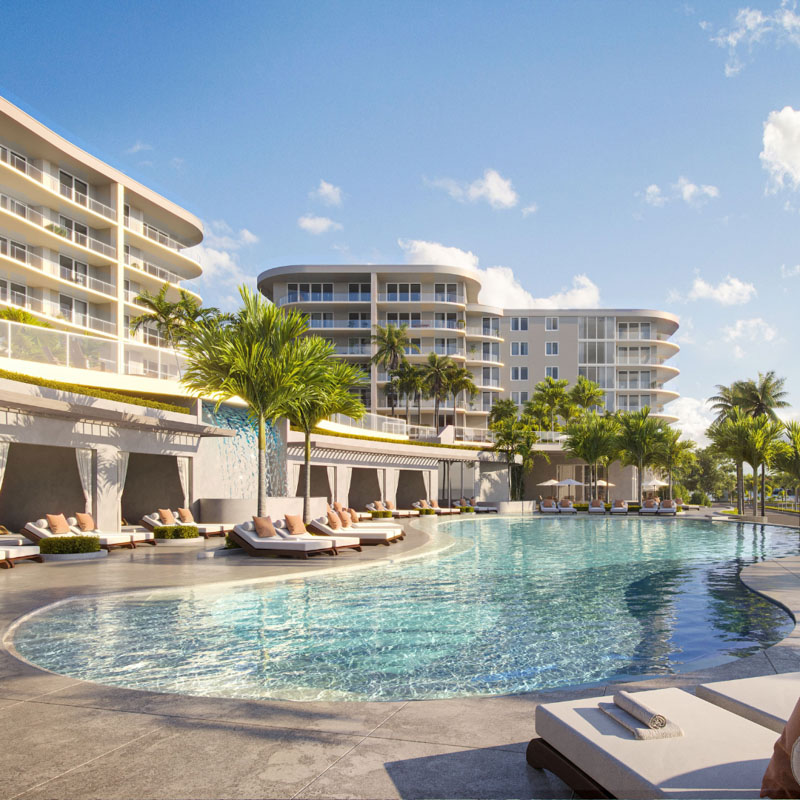
The Ritz-Carlton Residences, Palm Beach Gardens — 106 estate residences across seven stories on fourteen acres of Intracoastal waterfront, developed by Catalfumo Companies, with a private marina, waterfront entertainment pavilion, spa and wellness center, and 24-hour gated security. A lower-rise, estate-scaled format rather than a vertical tower.
Cipriani Residences Miami
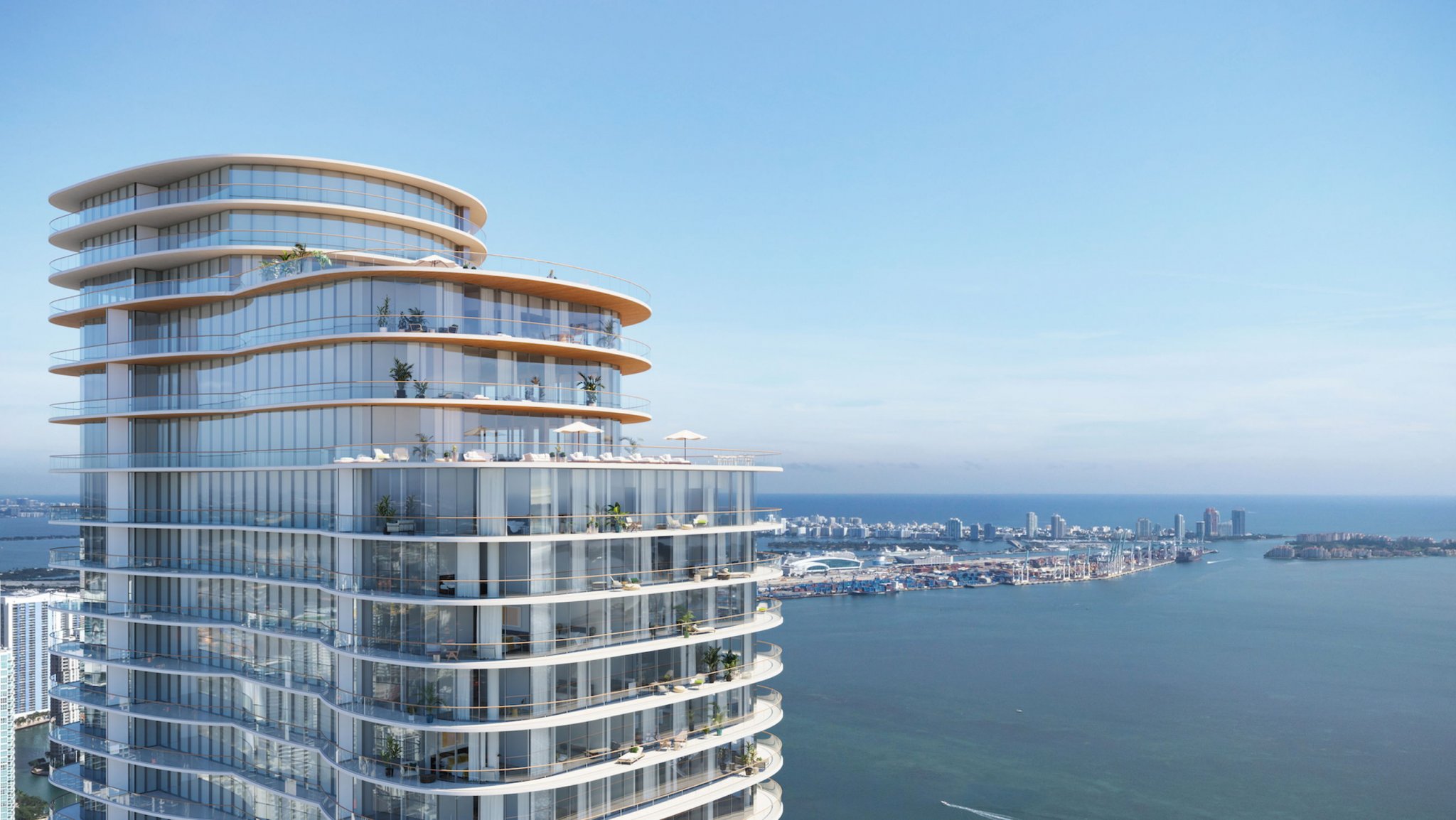
Cipriani Residences Miami — an 80-story Arquitectonica tower in Brickell from Mast Capital, with 24-hour in-home and catered dining by Cipriani, an exclusive Cipriani restaurant, reservable private dining rooms, poolside food and beverage, a four-level wellness center, and a holistic spa with sauna and ice plunge.
619 Brickell
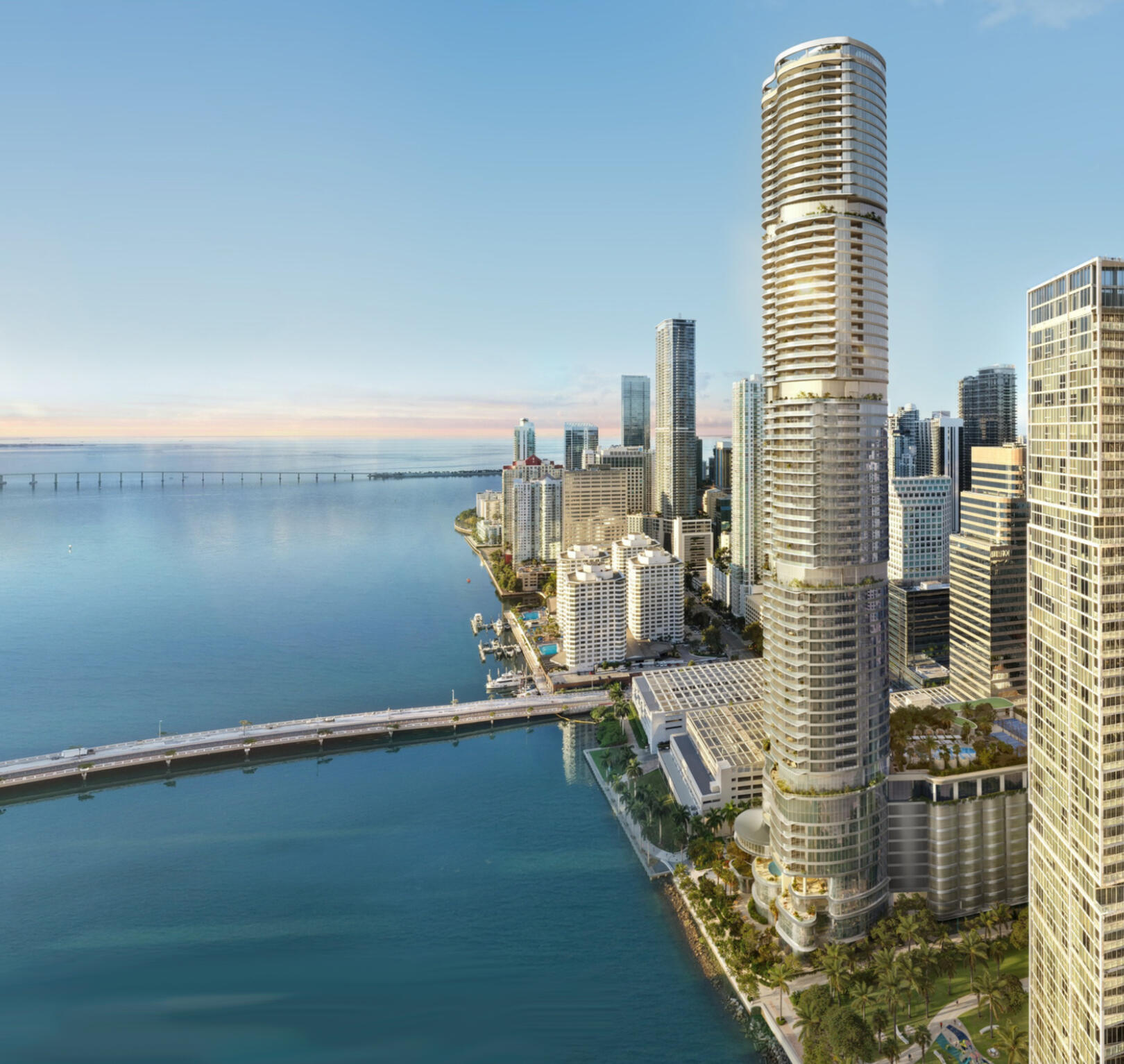
619 Brickell — Nobu Hospitality’s first Miami residential project, a 74-story Foster + Partners and Sieger-Suarez tower developed with 13th Floor Investments and Key International. The building pairs 300 residences with 90,000 square feet of Nobu-managed amenities, including a full-service spa and wellness retreat, fitness center, poolside café, and Miami’s second Nobu restaurant at the ground level.
Best fit: buyers who want a recognized hospitality standard and depth of service in a residential-first building rather than a hotel.
Model 3: Private Branded Residences
Private branded residences are licensed by a non-hospitality brand — a fashion house, an automaker, a design studio — and operate as fully private residential communities. Service is delivered through a dedicated residential team rather than a hotel operator. Amenities and staffing remain significant, but the day-to-day experience emphasizes privacy, smaller resident counts, and a singular brand language.
Bentley Residences Sunny Isles Beach
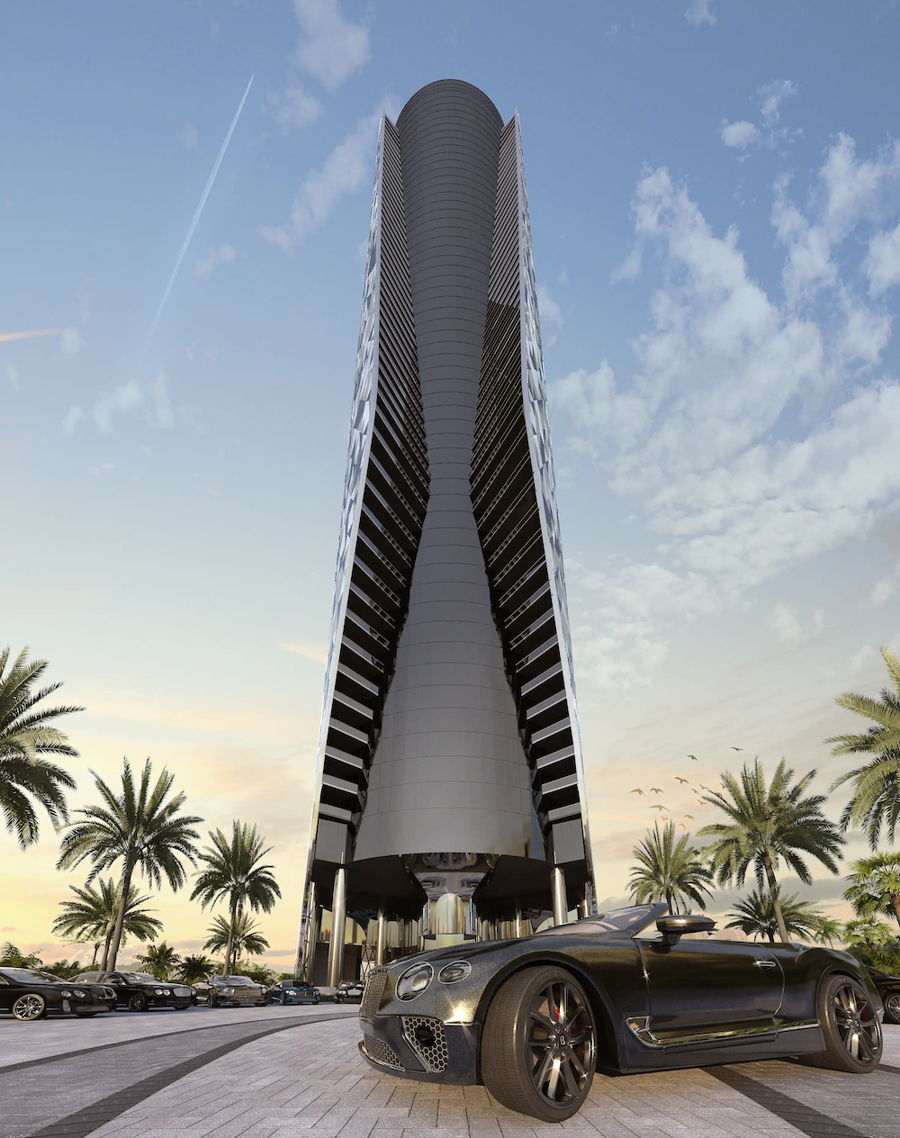
Bentley Residences Sunny Isles Beach — a 60-story oceanfront tower developed by Dezer Development with architecture by Sieger Suarez and interiors by Bentley. The building offers 62 residences, each with a private 3 or 4-car garage delivered via the Dezervator vehicular elevator system, a private heated pool on a raised sundeck, and oversized terraces with summer kitchens. Amenities include a residents-only restaurant curated by Chef Todd English, a movie theater designed to mimic a Bentley interior, an oceanfront beauty salon, a cigar lounge, multilingual concierge, and 24-hour valet.
Best fit: buyers who want fewer neighbors, no public hotel traffic, and an interior language drawn from a global lifestyle brand.
What Buyers Should Compare Across Models
When evaluating branded residences across these three models, HL Real Estate Group recommends comparing buildings on the same set of criteria — not just brand name:
- Pricing and total cost of ownership. Base price, square-foot pricing, deposit structure and milestones, and projected HOA fees, which buyers should request directly from each development team.
- Floor plans and residence count. Square footage, ceiling heights, terrace depths, private elevator vestibule, optional staff quarters, and the total number of residences in the building.
- Developer and design team. Track record and prior delivered projects — Swire Properties, Related Group, Dezer Development, CMC Group, Mast Capital, Catalfumo Companies, and 13th Floor Investments are all represented in the projects above, alongside architects including KPF, Robert A.M. Stern, Foster + Partners, Sieger Suarez, Arquitectonica, and Revuelta Architecture.
- Brand and service program. Which services are included in HOA versus à-la-carte, whether staff are trained and badged by the brand, and whether dining and spa are residents-only or shared with hotel guests.
- Delivery timeline. Estimated completion year and how it aligns with the buyer’s occupancy plans.
- Views, location, and waterfront access. Brickell Key, South Brickell, Coconut Grove, Sunny Isles Beach, Hillsboro Beach, and Palm Beach Gardens each offer different waterfront, skyline, and lifestyle contexts.
- Rental policy. Some branded buildings restrict short-term rentals or require operator-managed leasing — material for buyers considering part-time occupancy.
- Resale considerations. Branded buildings vary in unit density, brand exclusivity, and governing-document restrictions. Buyers should review each building’s documents and consult their own legal, tax, and financial advisors.
All figures, timelines, deposit structures, and service programs are preliminary and should be verified with the development team before signing a reservation or contract.
Need details on these residences?
Our advisory team can share current information on the projects referenced in this guide.
Speak With an Advisor →