Florida Amendment 3 Passed: Why December 31, 2026 Matters for Homestead Buyers
The December 31 residency test, January 1 homestead rules and March 1 filing deadline are separate. Here is the year-end timeline for buyers.
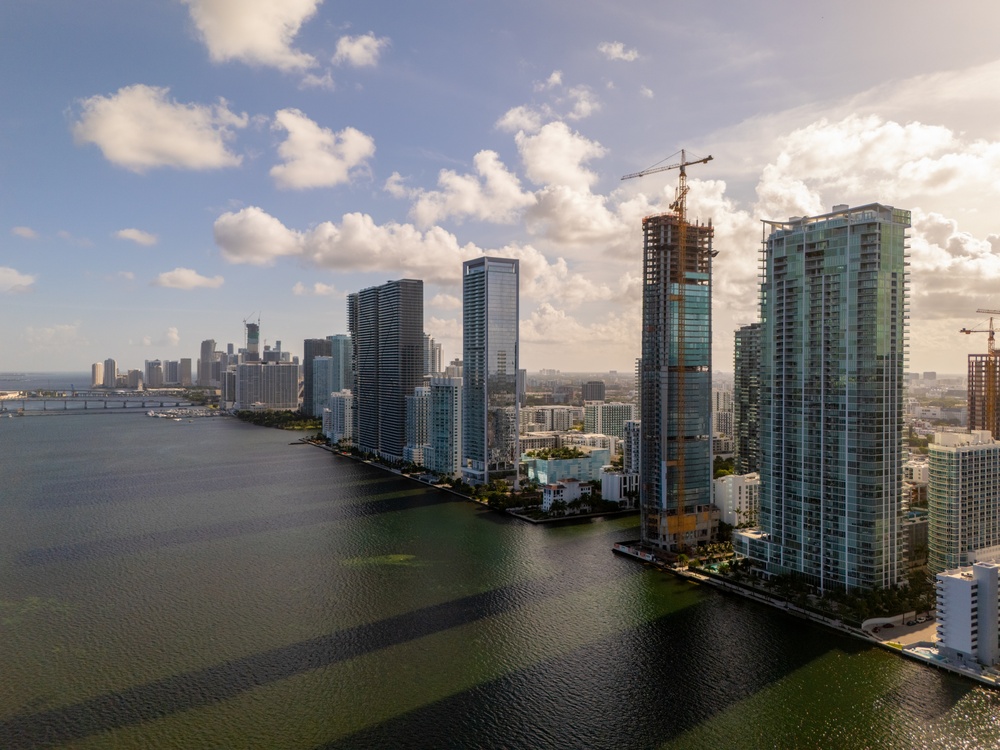
Florida Amendment 3 passed Nov. 3, 2026 (unofficial Yes 61.98%, above 60%; uncertified). For non-school taxes, the homestead exemption rises to $150,000 in 2027 and $250,000 in 2028, effective Jan. 1, 2027. Buyers without permanent Florida residence by Dec. 31, 2026 start on the existing exemption; the increase begins in year five (Division of Elections ballot text).
This article explains what the 2026 Amendment 3 text says for luxury buyers deciding before year-end. It is not the 2024 ballot measure of the same number. Figures below come from the official ballot title and summary, the Amendment 03 English full text posted by the Division of Elections, unofficial statewide results on Florida Election Watch, and Florida Department of Revenue homestead guidance (PT-113 and the taxpayers’ exemptions page). County property appraisers administer homestead; implementation details for the Dec. 31 residency test are still developing. This is information, not tax or legal advice — consult your attorney and CPA.
What passed, and who it affects
The official ballot title
“INCREASED HOMESTEAD EXEMPTION; LOWER CAP ON INCREASES IN NON-HOMESTEAD PROPERTY ASSESSMENTS.” The measure was placed on the ballot by the Legislature (HJR 1F) and amends Article VII, Sections 4, 6 and 9, and Article XII (Florida Division of Elections / Constitutional Initiatives detail; Amendment 03 English PDF).
The unofficial vote
Yes for Approval 4,917,796 (61.98%); No for Rejection 3,016,195 (38.02%); total 7,933,991. Amendments require 60% to pass. Certification is pending — treat the margin as unofficial until the state certifies.
Homestead exemption (non-school taxes), from the ballot summary:
- Up to $150,000 beginning in 2027
- Up to $250,000 beginning in 2028
- Then adjusted for inflation thereafter
- Takes effect January 1, 2027
School-district levies keep a separate homestead amount in the full text (up to $25,000 of assessed valuation for school levies). The large increase described in the summary applies to non-school taxes.
Who the December 31 line affects
The ballot summary states that persons who are not Florida residents on December 31, 2026 “will receive the existing homestead exemption upon qualifying for a homestead exemption, with the increased homestead exemption beginning with the fifth year of exemption, to the extent permitted by the U.S. Constitution.” The full text frames that path for owners who “had not maintained a permanent residence in this state as of December 31, 2026,” and assigns them up to $50,000 of assessed valuation for non-school levies (plus the school amount) until the fifth-year step-up, unless a later local reduction applies (Amendment 03 English PDF).
The non-homestead assessment cap
For real property that is not homestead (second homes, investment and commercial property among them), the annual assessment-increase cap for non-school levies drops from 10% to 5% beginning January 1, 2027 (same PDF).
Local spending limits
The summary also directs counties and municipalities to use property taxes solely for listed purposes (public safety, education and schools, infrastructure, natural resources, bond debt service, retirement benefits for employees, and operations and administration), with other expenditures allowed unless prohibited by general law. That clause is about local budgets, not the buyer’s homestead filing.
What “resident by December 31” means — and what it does not
Three dates now sit next to each other. Do not collapse them:
December 31, 2026
Whether you had already “maintained a permanent residence in this state” for the Amendment 3 increased-exemption path vs. the delayed path
Source: Amendment 03 full text / ballot summary
January 1 of the tax year
Ownership + permanent residence on the property for that year’s homestead (existing rule)
Source: FL DOR PT-113
March 1 of the tax year
Deadline to file Form DR-501 with the county property appraiser (existing rule)
Source: FL DOR PT-113
Residency is not the same as owning a Florida property by Dec. 31. The amendment’s Dec. 31 test is about maintaining a permanent residence in Florida, not about holding title that day. Homestead exemption itself still requires legal or equitable title and use as permanent residence, with the January 1 / March 1 rules above (ballot text + PT-113).
How Dec. 31 residency will be proved is not settled in the ballot text. The Legislature is directed to prescribe uniform procedures for the new-resident track. County appraisers already may ask for residency evidence under existing PT-113 guidance (prior out-of-state residency and date of entry, declaration of domicile and residency date, employer, last IRS return address, dependent children’s schools, bank and utility addresses, and items referenced on DR-501 such as Florida driver license, vehicle registration and voter registration). Which combination will decide the Dec. 31 Amendment 3 path is pending implementing guidance from the Legislature, DOR and county appraisers. Do not treat a blog checklist of license or tag deadlines as official Amendment 3 proof rules.
From January 1, 2030, a county or municipality, by two-thirds vote of its governing body, may determine that a reduction of the five-year requirement is warranted for a critical local need (Amendment 03 full text). That is optional and local; it is not automatic.
Homestead is not income-tax domicile. Florida has no personal state income tax. Whether you remain taxable as a resident of a former state (New York, New Jersey, California and others) is decided under that state’s rules. Have a CPA and attorney handle domicile planning separately from the property-tax filing.
Closing checklist and timeline for buyers deciding before year-end
Use this as a buyer timeline, not as legal advice. Confirm every step with your closing attorney and CPA.
- Read the Amendment 3 path that fits you. If you already maintain a permanent Florida residence as of Dec. 31, 2026, the ballot summary’s increased non-school exemption amounts ($150,000 in 2027; $250,000 in 2028) are the amounts tied to that track once you also qualify for homestead. If you will not have maintained permanent Florida residence by that date, plan for the existing exemption first and the increased amount beginning with the fifth year of exemption, unless a later local two-thirds vote shortens the wait (ballot summary / full text).
- Separate “move to Florida” from “close on a home.” You can be working on Florida residency while still shopping. Homestead still needs ownership and permanent residence on the property by January 1 of the tax year you want the exemption, plus a timely DR-501 (PT-113).
- If you want 2027 homestead on a specific property, back-solve the closing calendar so title and occupancy support January 1, 2027 permanent residence, then file by March 1, 2027. Holiday and year-end recording backlogs are common — ask your closer for county-specific cutoffs. County recording and occupancy practice varies; have your attorney confirm the requirements for your deal.
- File DR-501 with the correct county property appraiser (Miami-Dade, Broward, Palm Beach and others each run their own office). Keep copies of whatever residency proof the appraiser requests under PT-113.
- Do not rely on estimated dollar “savings” from press articles. Millage rates, assessed value, Save Our Homes, portability, senior/veteran add-ons and local levies change the bill. Ask your CPA or the property appraiser’s office for a property-specific estimate.
- Budget for non-homestead property separately. A second home or investment condo does not get homestead. It does get the lower 5% annual assessment-increase cap for non-school levies beginning Jan. 1, 2027 (ballot text).
Resale vs new-construction delivery timing
Amendment 3 does not change building permits or developer delivery dates. It changes the property-tax rules that attach once you own and occupy.
Resale: existing condos and houses
Closing and move-in dates are mostly in the buyer’s and seller’s control. If the goal is homestead for tax year 2027, the practical pressure is to own and maintain permanent residence by January 1, 2027, and to file by March 1, 2027 (PT-113), while also understanding whether Dec. 31, 2026 Florida residency places you on the immediate increased-exemption path or the delayed path (ballot text).
New construction and pre-construction
Delivery often slips. A contract that projected a 2026 closing can push into 2027 or later. If you take title and establish permanent residence only after Dec. 31, 2026 — and you had not already maintained permanent Florida residence by that date — the ballot text’s delayed path for the increased exemption is the one that applies until the fifth year of exemption (unless later shortened locally). A buyer who is already a Florida resident by Dec. 31, 2026, but closes on a new tower in 2027 or 2028, still needs the January 1 / March 1 homestead steps on that specific unit (ballot residency test + PT-113). Confirm both tracks with counsel before you use a delivery date as a tax plan.
For inventory and delivery context across South Florida, see our new developments index and the November 2026 pre-construction monthly. Neighborhood pages such as Brickell, Miami Beach and West Palm Beach list projects buyers often compare when timing a year-end move. For the baseline homestead and Save Our Homes framework that Amendment 3 builds on, see our earlier guide: The Homestead Exemption and Save Our Homes Cap.
What we are not claiming
- We are not publishing Miami-Dade average dollar savings, Axios-style bill examples, or driver-license / vehicle-tag / Declaration of Domicile fee-and-timeline checklists from secondary blogs. Those were not verified against property appraiser or FLHSMV primary sources for this draft.
- We are not asserting that Save Our Homes, portability, or every senior/veteran exemption is unchanged line-by-line; treat those as separate benefits and confirm against current DOR and county materials.
- Exact counting of the “fifth year of exemption,” interaction with portability, and the outcome of any constitutional challenge remain unresolved and require confirmation.
- Final certified statewide totals may differ slightly from the unofficial Election Watch figures cited above.
Sources and methodology
- Florida Division of Elections: Amendment 3 ballot title and full text
- Florida Division of Elections: HJR 1F initiative detail
- Florida Election Watch: unofficial amendment results
- Florida Department of Revenue: taxpayers’ exemptions
- Florida Department of Revenue: PT-113 homestead guidance
- Palm Beach County Property Appraiser: Amendment 3 calculator
Sources dated November 5, 2026. Election results are unofficial and implementation guidance remains pending. This page provides general information, not tax, legal or accounting advice.
FAQ: Florida Amendment 3 and the Dec. 31, 2026 residency date
Did Florida Amendment 3 pass in 2026?
Unofficial statewide results on Florida Election Watch show Yes 4,917,796 (61.98%) and No 3,016,195 (38.02%), above the 60% required for amendments. Totals are not yet certified. This is the 2026 homestead measure, not the 2024 Amendment 3 (Florida Election Watch; Division of Elections ballot materials).
How large is the new homestead exemption, and when does it start?
For all non-school taxes, the ballot summary increases the homestead exemption to $150,000 in 2027 and $250,000 in 2028, then adjusts for inflation thereafter. The amendment takes effect January 1, 2027 (Amendment 03 English PDF ballot summary).
Why does December 31, 2026 matter?
The ballot summary states that persons who are not Florida residents on December 31, 2026, receive the existing homestead exemption upon qualifying, with the increased homestead exemption beginning with the fifth year of exemption, to the extent permitted by the U.S. Constitution. The full text refers to owners who had not maintained a permanent residence in this state as of that date (Amendment 03 English PDF).
If I become a Florida resident only in 2027, what homestead amount do I get?
Under the full text, owners who had not maintained a permanent Florida residence as of December 31, 2026, receive up to $25,000 for school levies and up to $50,000 for other levies upon qualifying, with the increased amount beginning with the fifth year of exemption unless later revised under the local two-thirds process available beginning January 1, 2030 (Amendment 03 English PDF). Confirm the count of “fifth year” with counsel; implementing guidance remains pending.
Do I need to own a home by December 31, 2026?
The Amendment 3 December 31 test is about maintaining a permanent residence in Florida, not about owning property that day. Homestead exemption still requires ownership and permanent residence on the property by January 1 of the tax year, and filing Form DR-501 by March 1 (ballot text; FL DOR PT-113). Have an attorney confirm how both rules apply to your facts.
Does Amendment 3 help second-home or investment buyers?
Those properties are not homestead. Separately, the annual assessment-increase cap for non-homestead real property (non-school levies) falls from 10% to 5% beginning January 1, 2027 (Amendment 03 English PDF).
What documents might a property appraiser ask for?
Florida DOR PT-113 notes that appraisers may request proof of prior residency outside Florida and date of entry, a declaration of domicile and residency date, current employer, the address on your last IRS return, where dependent children attend school, bank statement address, and utility payments at the homestead address. DR-501 also references items such as a Florida driver license, vehicle registration and voter registration. Which documents will prove December 31, 2026 residency for the new exemption path is not yet settled; implementing guidance is pending.
Does a Florida homestead end income tax in my old state?
No. Homestead is a Florida property-tax exemption. Former-state income-tax residency or domicile is a separate question for a CPA and attorney (general framing; not a DOR homestead rule).