The Best South Florida Towers for Multigenerational Families: An Operational Comparison
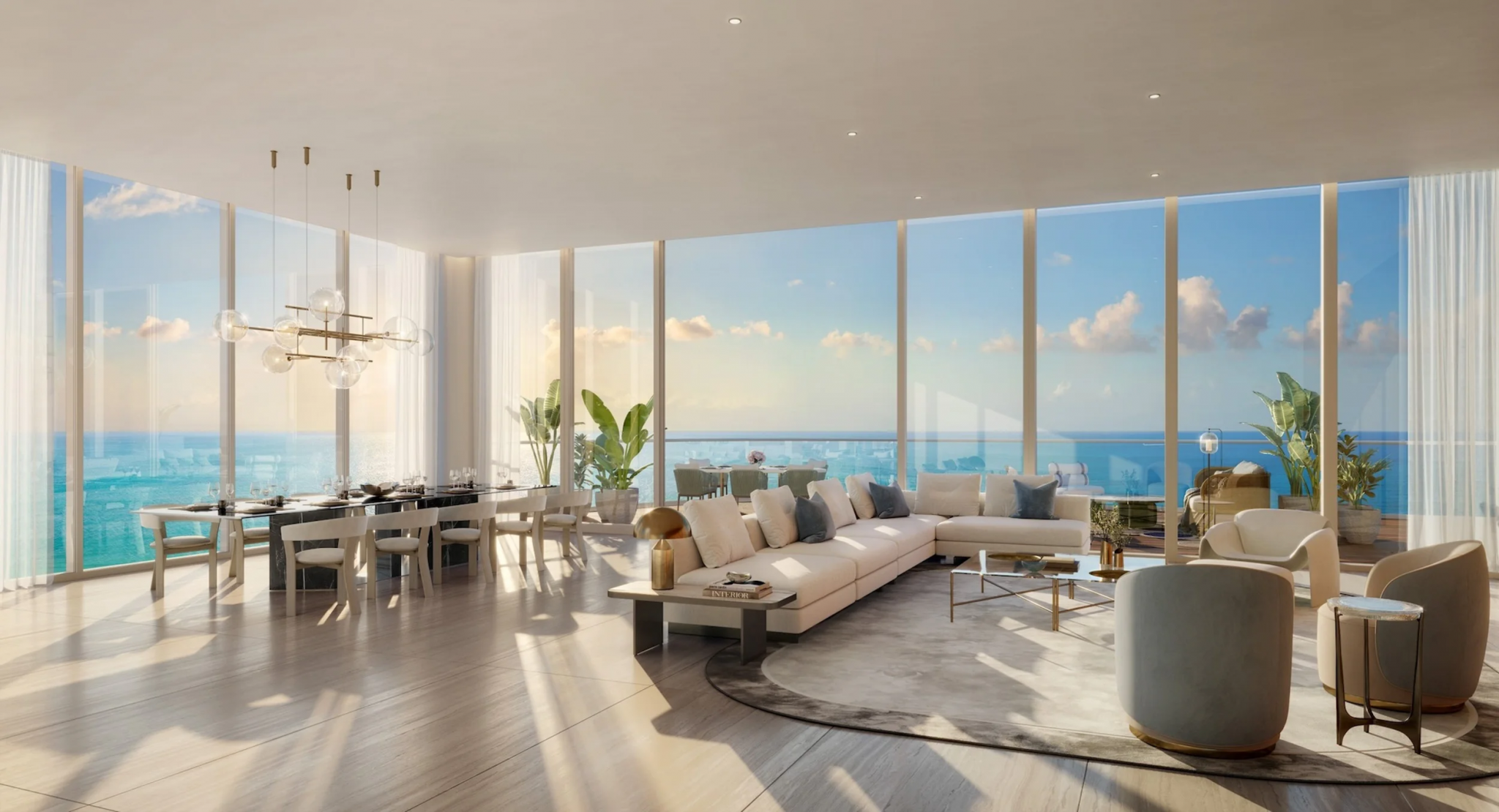
Multigenerational living in a South Florida luxury tower is not the same as multigenerational living in a private estate. An estate can be designed from scratch with multiple living wings, separate entrances, distinct kitchen and living configurations, and outdoor space that absorbs the energy of multiple generations coexisting. A luxury condominium building must solve these challenges through a combination of floor plan design, service infrastructure, amenity programming, and the physical arrangement of multiple units within the same building.
The buildings that solve these challenges well — that actually deliver on the multigenerational brief at an operational level, not just a marketing one — share a specific combination of features. This guide identifies them.
The Multigenerational Operational Checklist
Before comparing buildings, the operational requirements for successful multigenerational luxury living:
Multiple-unit purchase or adjacency: The most effective multigenerational arrangement in a luxury tower is two adjacent or floor-adjacent units — one for the primary family, one for parents or adult children. This requires a building where multiple units are available in proximity and where the HOA structure permits coordinated multi-unit ownership without punitive guest/occupancy restrictions.
Guest suite program: When family visits are shorter — two weeks rather than two months — a building with a managed guest suite program allows visiting family to stay in a fully serviced private suite without requiring a dedicated purchased unit. This is the highest-value amenity for the multigenerational second-home buyer.
Floor plan flexibility: Units with 3–5 bedrooms that organize primary and secondary bedroom clusters around separate living zones — rather than all bedrooms on a single corridor — provide the privacy differentiation that multigenerational cohabitation requires.
Children’s programming and senior accessibility: Buildings that serve multiple generations simultaneously need amenity programming at both ends of the age spectrum: children’s pool areas, children’s playroom, and supervised activities programming at one end; accessibility in spa and wellness facilities, elevator priority, and seating in outdoor areas at the other.
Noise and privacy architecture: Buildings with high concrete-and-glass construction quality — thick floor slabs between residences, proper sound isolation between units — are essential for multigenerational living. Buildings where sound transmission between units is audible are not functional for extended multigenerational stays regardless of their amenity programming.
The Buildings: Operational Assessment
St. Regis Residences Sunny Isles Beach — Best for Large-Scale International Multigenerational Families
Configuration: Twin towers (North and South), 194 total residences, 4.7-acre beachfront, St. Regis butler service
Multigenerational strength: The twin-tower configuration is the defining advantage for multigenerational purchasing. Families can purchase in both towers — maintaining the physical proximity of the same address while living in separate structures with separate lobbies, separate elevators, and separate service teams. This arrangement provides generational adjacency with genuine independence in a way that single-tower buildings cannot match.
The St. Regis butler service — a fully assigned butler for each residence, available around the clock — is the most comprehensive service model for multigenerational logistics. The butler serves as the operational coordinator: arranging meals, managing guest arrivals, coordinating transportation, and handling the hundred small logistical details that extended-family visits produce.
Floor plan: Residences range from 2–5 bedrooms with configurations specifically designed for full-time living and extended family use. The largest configurations provide the floor area (4,000+ sq ft) and bedroom separation that multigenerational cohabitation requires.
Who it serves best: Latin American and international families where multigenerational proximity is a cultural value; families with grandparents who want oceanfront Sunny Isles lifestyle with full service; multigenerational purchases where the two generations want adjacent but independent residences.
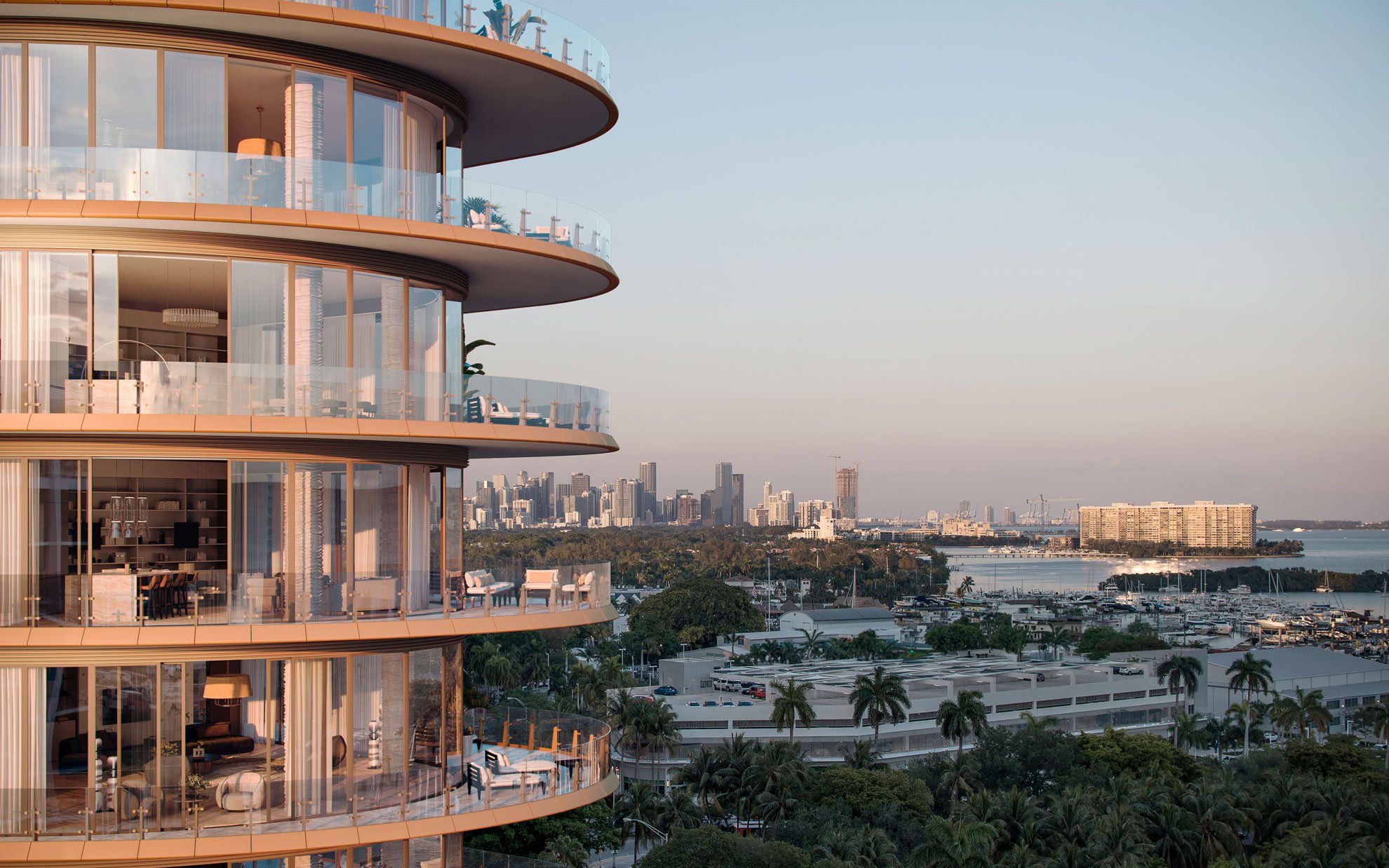
Four Seasons Private Residences Coconut Grove — Best for Families Seeking Maximum Service in a Boutique Setting
Configuration: 70 residences, 20 stories, bayfront, standalone Four Seasons residential (no hotel), 2028 delivery
Multigenerational strength: With only 70 total residences, the Four Seasons Coconut Grove community is intimate enough that different generations in the same family are genuinely known by the service team — not as unit numbers, but by name and preference. This level of personalization is not achievable in 200+ unit buildings regardless of brand.
The Coconut Grove neighborhood setting itself is a multigenerational asset: Ransom Everglades School and the greater Palm Beach County private school infrastructure are easily accessible; Kennedy Park and Peacock Park provide outdoor space for children; and the village character of Coconut Grove — walkable restaurant streets, farmers markets, community events — supports a domestic lifestyle that Sunny Isles Beach’s oceanfront-tower environment does not.
The standalone Four Seasons residential model (no hotel guests, all service for owners only) means that service attention is not divided between hotel transient demand and residential demand — a meaningful operational difference for families who want consistent, predictable service.
Who it serves best: Families making Coconut Grove their primary Miami residence; buyers who want private school access combined with branded service; buyers who value Coconut Grove’s neighborhood character over Sunny Isles Beach’s oceanfront energy.
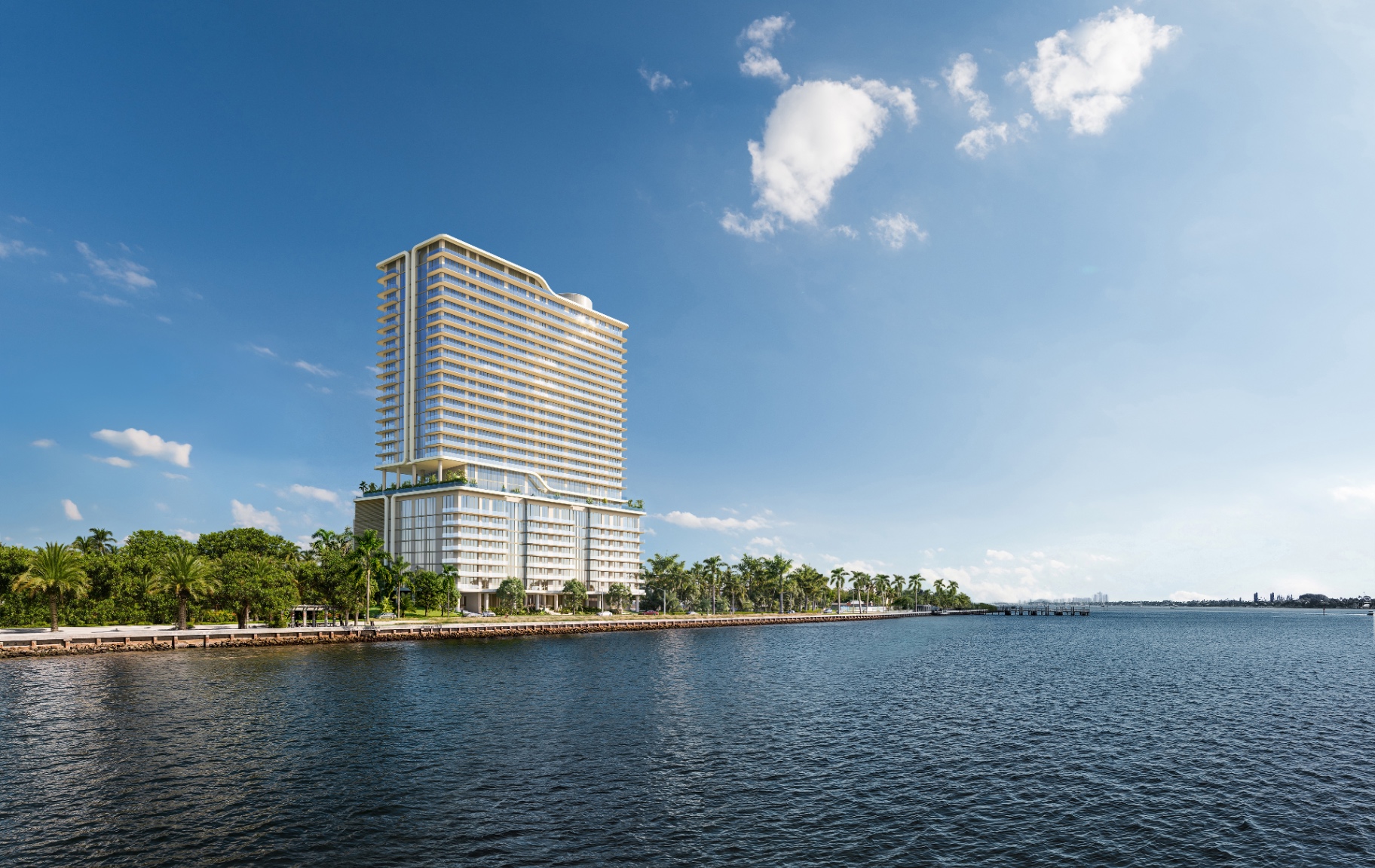
Ritz-Carlton Residences West Palm Beach — Best for Families Integrating Social Season
Configuration: 138 residences, Intracoastal positioning facing Palm Beach island, Ritz-Carlton service standards, targeting 2028 delivery
Multigenerational strength: The Ritz-Carlton WPB’s Intracoastal positioning — looking east across the water toward Palm Beach island — places families within the orbit of Palm Beach’s social season infrastructure without requiring Palm Beach island’s price tag. For the generation that is actively participating in the charity circuit, club memberships, and the social events of the Palm Beach winter season, the 5-minute drive from Ritz-Carlton WPB to Worth Avenue and The Breakers is operationally identical to living on the island itself for day-to-day purposes.
The Ritz-Carlton brand’s specific multigenerational service strength: their globally mandated children’s programming (Ritz Kids), their spa infrastructure for the senior generation, and the butler/concierge model that can coordinate logistics across multiple generations’ simultaneous needs in a single building.
West Palm Beach’s The Benjamin School and the Palm Beach County private school ecosystem are the best family education infrastructure of any South Florida submarket — a decisive factor for multigenerational families where the grandchildren’s school situation drives geography.
Who it serves best: Northeast families (New York, Connecticut, Massachusetts) relocating and integrating into the Palm Beach social season; families where children’s schooling is a primary geography driver; multigenerational buyers who want the Ritz-Carlton brand’s globally consistent service standards.
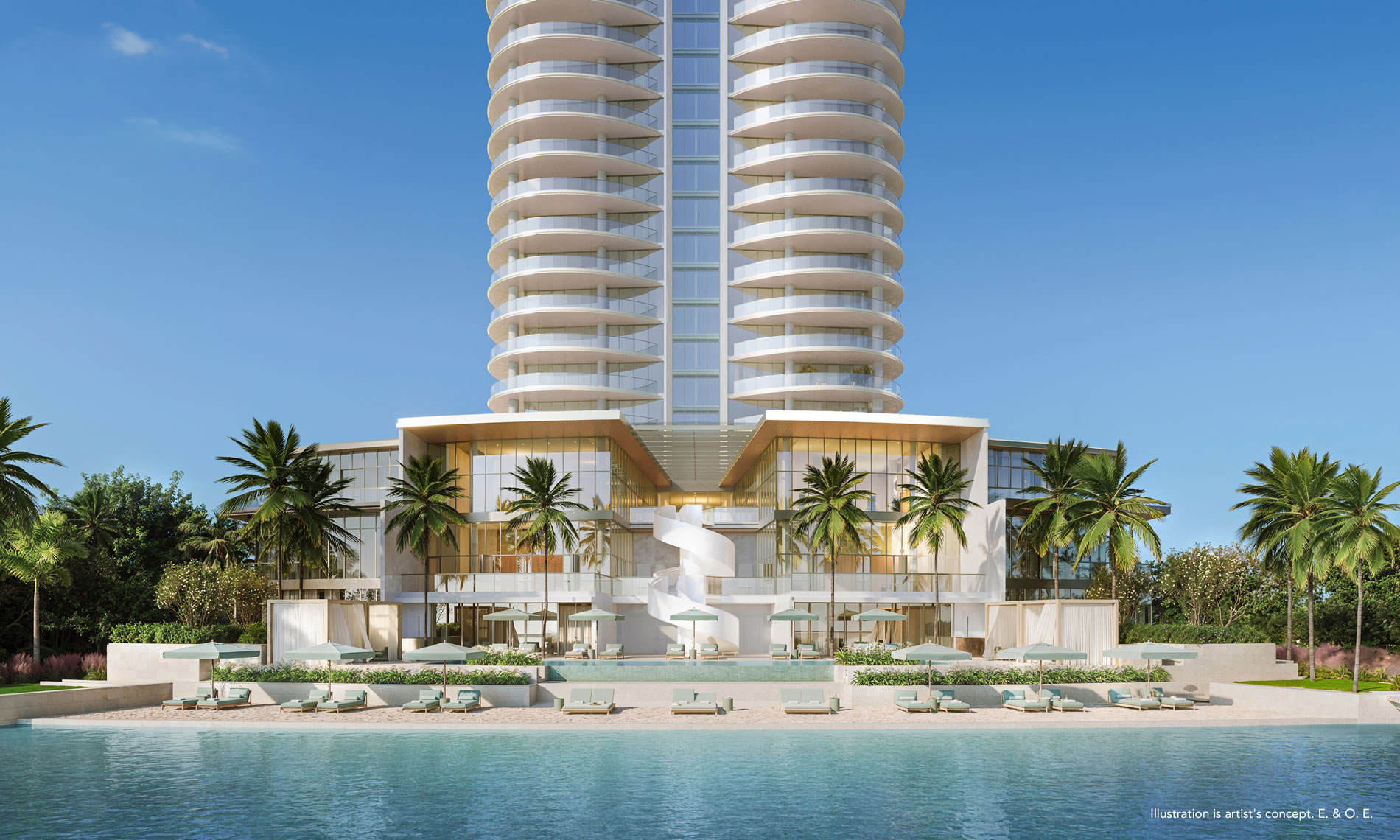
Mandarin Oriental Residences West Palm Beach — Best for Wellness-Focused Multigenerational Living
Configuration: Safdie Architects design, Intracoastal WPB, targeting 2028 delivery
Multigenerational strength: The Mandarin Oriental brand’s specific strength is wellness infrastructure — the brand’s global spa reputation and the wellness programming embedded in the building’s amenity design are directly relevant for multigenerational buyers where one generation (typically parents) is at an age where wellness access is a primary daily value.
Moshe Safdie’s sculptural architecture — and the brand’s specific approach to natural light and landscape integration — produces a residential environment that is calming and regenerative in a way that the more conventional Ritz-Carlton tower design does not specifically claim. For the multigenerational buyer who wants an environment that supports rest, recovery, and wellness alongside family activity programming, the Mandarin Oriental’s design philosophy is specifically aligned.
Who it serves best: Health-conscious multigenerational families; buyers where one generation is managing health conditions and values proximate medical and wellness access; buyers who respond to Safdie’s architectural vision.
The Common Errors in Multigenerational Building Selection
Selecting based on amenity list rather than operational depth: Every branded building claims a children’s program and a spa. The question is whether the children’s program operates on a scheduled, staffed basis every day of the week — or only when enough children are present to justify staffing. Ask the sales team how many children are in residence during peak season and what the programming schedule is. The answer tells you whether the program is genuinely operational or primarily decorative.
Ignoring noise transmission between units: The most common source of multigenerational living friction in luxury towers is sound transmission between adjacent and vertically adjacent units. Request the building’s acoustic specifications — specifically the Sound Transmission Class (STC) rating between residential units and between residential units and amenity spaces. Buildings with STC ratings below 55 between units will produce noise complaints between generations regardless of their amenity quality.
Underestimating HOA costs for multi-unit ownership: Families purchasing two or three units in the same building for multigenerational use need to underwrite HOA fees for all units simultaneously, plus coordinate reserve funding contributions, special assessment risk, and the HOA governance complexity of multiple vote positions in the same building. These operational costs are real and should be modeled before purchase.
Need details on these residences?
Our advisory team can share current information on the projects referenced in this guide.
Speak With an Advisor →