The Best South Florida New Developments for Art Collectors
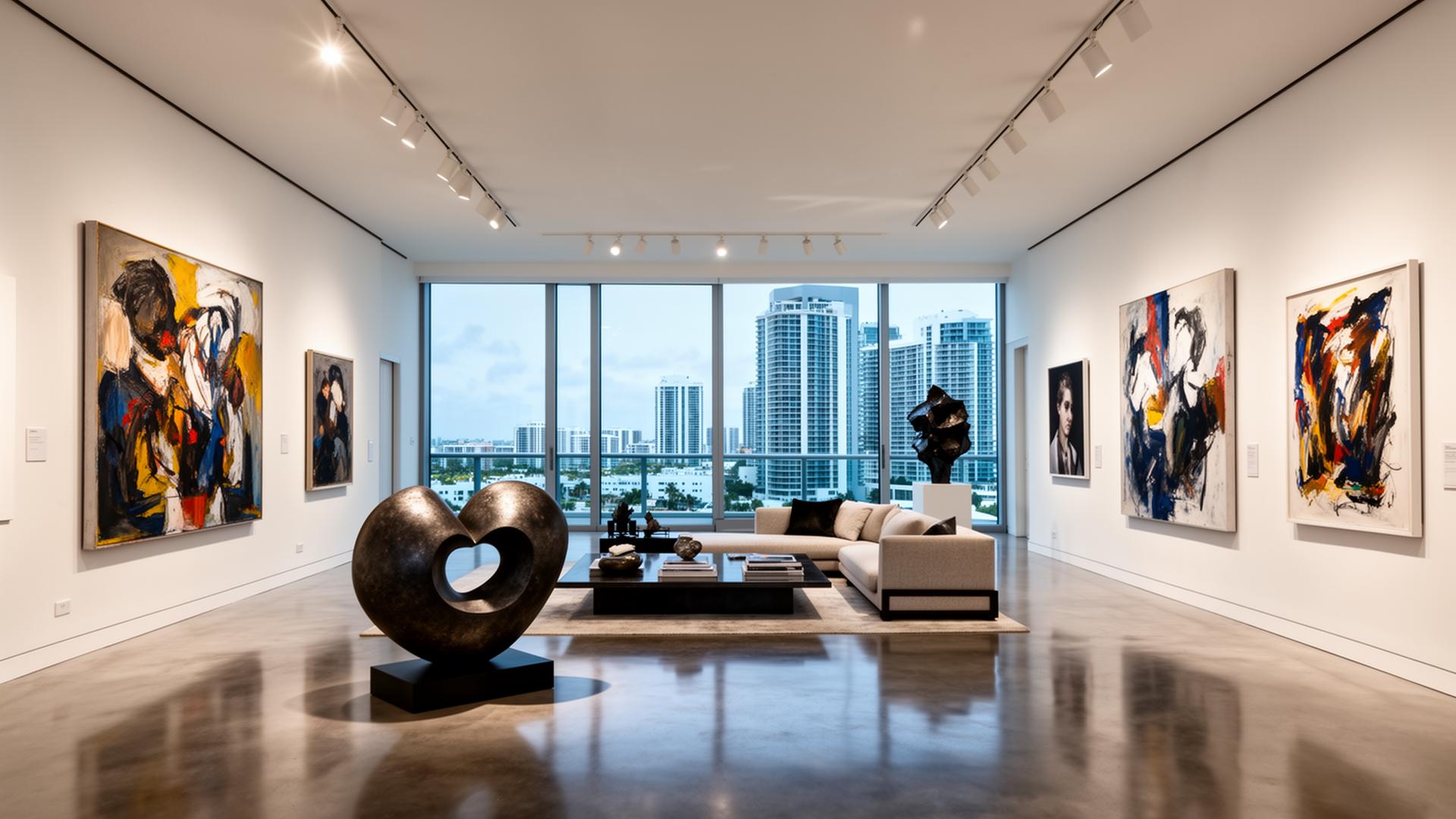
For the serious art collector, a luxury condominium is not just a home — it is a gallery. The ability to live with a significant collection in an environment that properly supports, protects, and displays it requires a specific set of building and unit characteristics that are present in only a small fraction of South Florida’s luxury new development pipeline.
The gap between a building that technically permits art and a building that genuinely accommodates serious collecting is enormous. A collector who owns a 12-foot canvas by Mark Bradford, a Koons sculpture that weighs 2,000 pounds, or a temperature-sensitive photography archive has requirements that most luxury condominiums — regardless of brand or price — simply cannot meet without advance planning.
What Art Collectors Need in a Building
Ceiling height: The single most important physical characteristic for art collectors. Most South Florida luxury condominiums offer 10–12 foot ceilings in standard units. Collectors who work at gallery scale — paintings above 60 inches, large-format photography, oversized sculptures — need 12 feet minimum, with 14–16 feet ideal. Penthouse and special units in some buildings offer double-height spaces or loft configurations; these command significant premiums from collector buyers.
Structural load capacity: Floor-to-ceiling structural load capacity in typical luxury condominiums is designed for residential furniture, not monumental sculpture. A cast bronze sculpture or large marble piece can easily exceed the floor load rating of a standard residential floorplate. Buildings whose structural engineers have been asked to accommodate collector-level loads are rare; buyers should confirm structural specifications before assuming a large work can be installed.
Climate and humidity control: South Florida’s subtropical climate — characterized by high humidity, temperature swings between heavily air-conditioned interiors and outdoor heat, and salt air — is hostile to many art forms. Works on paper, photographs, textiles, and certain paints are particularly vulnerable. Buildings with superior HVAC systems that can maintain museum-standard humidity levels (typically 45–55% relative humidity) and temperature stability (68–72°F year-round) are essential for serious collections.
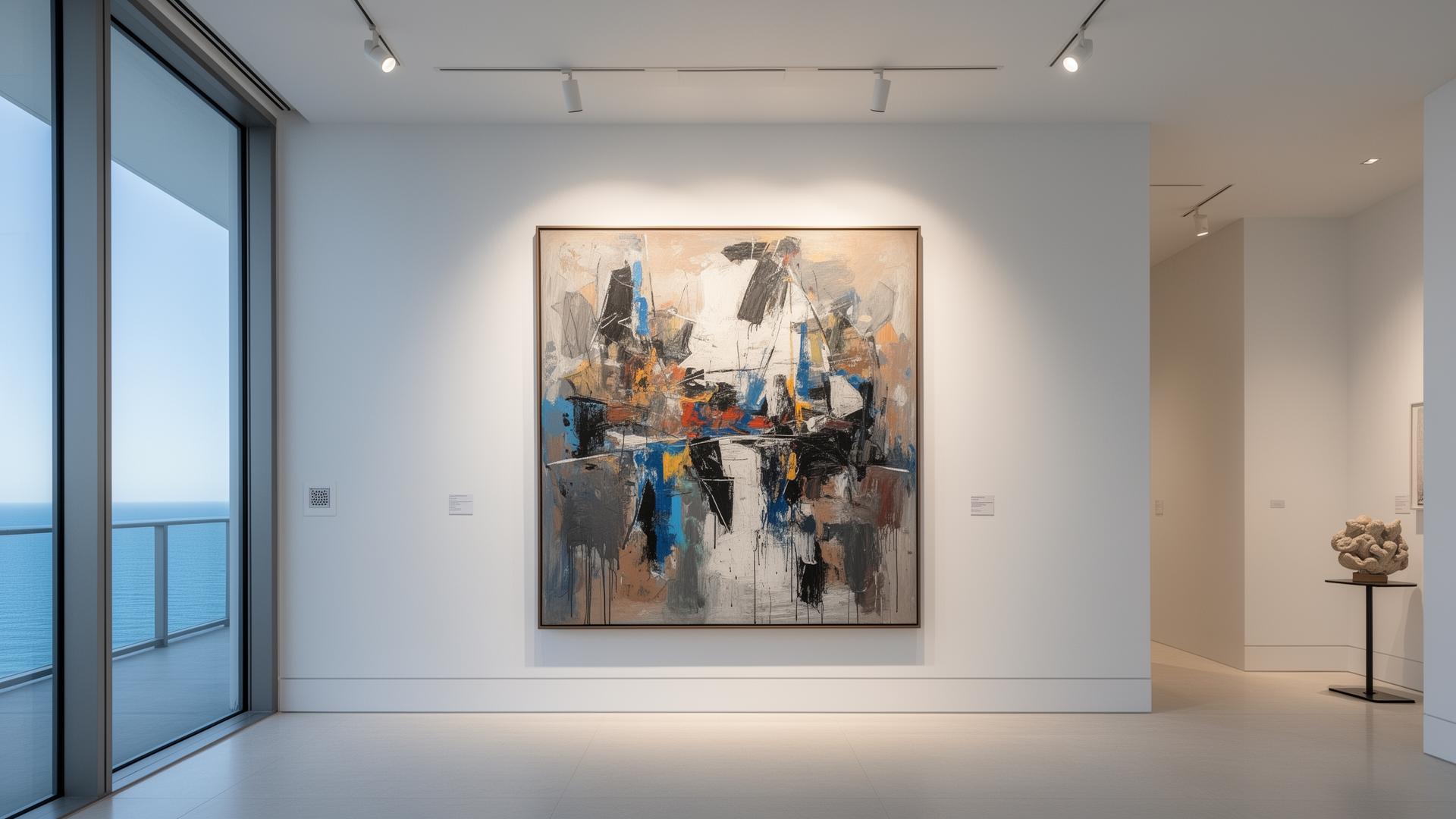
Lighting systems: Art display requires lighting that can be precisely aimed, dimmed, and adjusted without producing UV radiation that damages pigments over time. Buildings that allow owners to install custom track lighting, recessed directional fixtures, or gallery-standard LED systems — and that have adequate electrical load capacity on each circuit to support professional lighting installations — are significantly more suitable for collectors than buildings with fixed decorative lighting packages.
Elevator and service access: Moving large works of art into a high-rise condominium requires a service elevator large enough to accommodate the work in question, a service entrance that does not require navigating tight corridors, and building management staff experienced in coordinating art deliveries. Buildings that have never handled a large art delivery — or whose service elevator is too small for gallery-scale works — create logistical complications that can be expensive and damaging to resolve.
Buildings and Markets Best Suited for Serious Collectors
Park Grove, Coconut Grove (Terra Group / OMA)
Park Grove’s OMA-designed towers are the most art-sympathetic residential buildings in South Florida for a specific reason: Rem Koolhaas has spent his career designing cultural institutions — the Seattle Central Library, the CCTV headquarters in Beijing, the Garage Museum in Moscow — and his residential work reflects that institutional understanding of how spaces should support visual culture. Park Grove’s units have been purchased by multiple serious collectors specifically because of the building’s design intelligence and its proximity to the Design District’s gallery ecosystem.
Eighty Seven Park, Miami Beach (Terra Group / Renzo Piano)
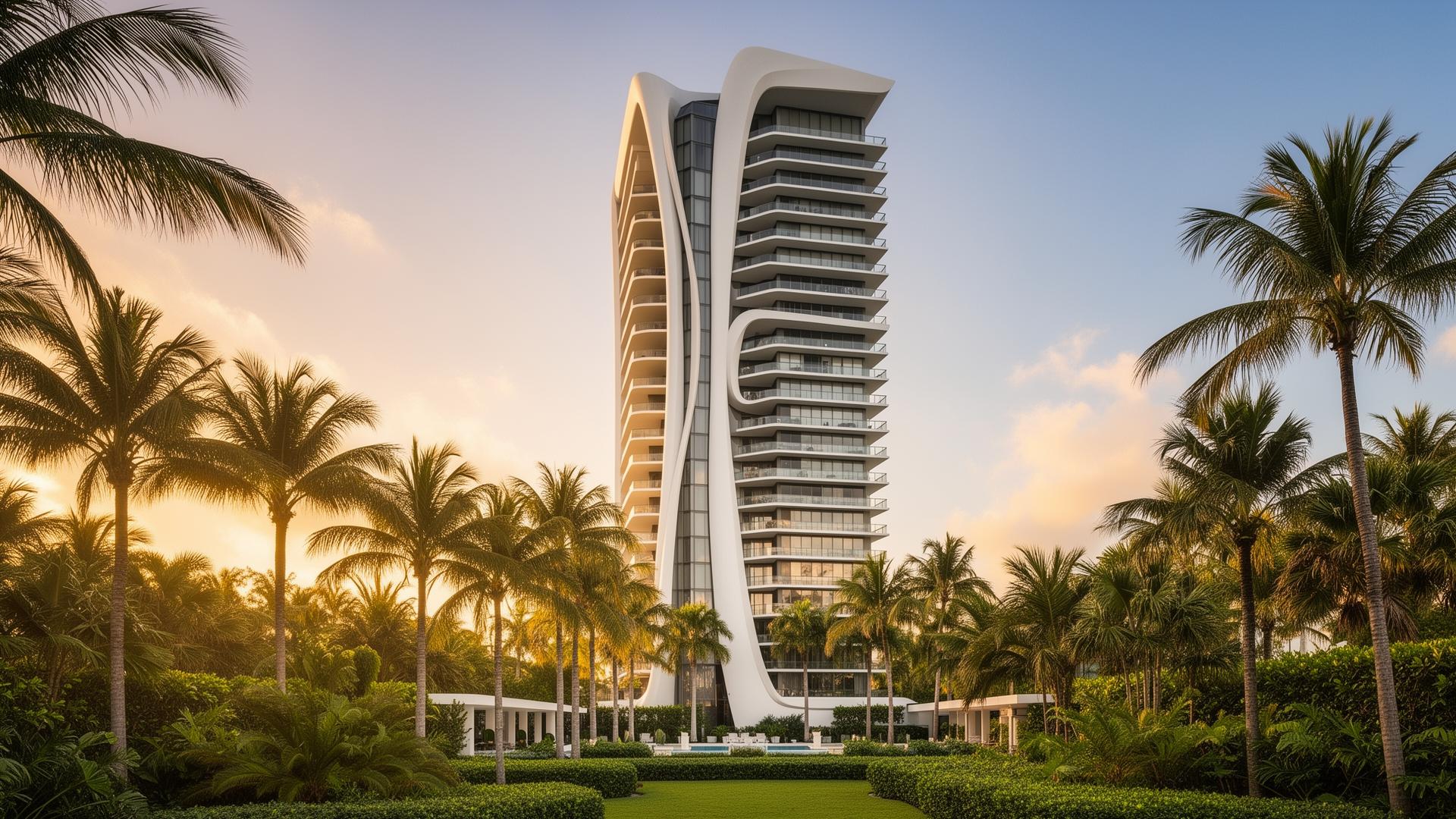
Renzo Piano Building Workshop’s work is deeply influenced by light — the manipulation of natural light is central to RPBW’s design philosophy, and Eighty Seven Park’s floor-to-ceiling glass, studied solar orientation, and material palette produce units that are genuinely gallery-caliber as living spaces. The building’s location in North Miami Beach places it within easy reach of the Bass Museum, the Faena Forum, and the broader Miami Beach cultural infrastructure.
Faena House, Miami Beach
Faena House is the South Florida building most explicitly designed around art as a primary value driver. Developer Alan Faena has built his entire brand — Faena Hotel, Faena Forum, the Faena Arts Center — around the intersection of luxury hospitality and serious contemporary art. The building’s common areas include commissioned works by major artists; the building’s cultural programming is curated at a level that no other South Florida residential building can match.
Ultra-Luxury Penthouse Formats Across the Pipeline
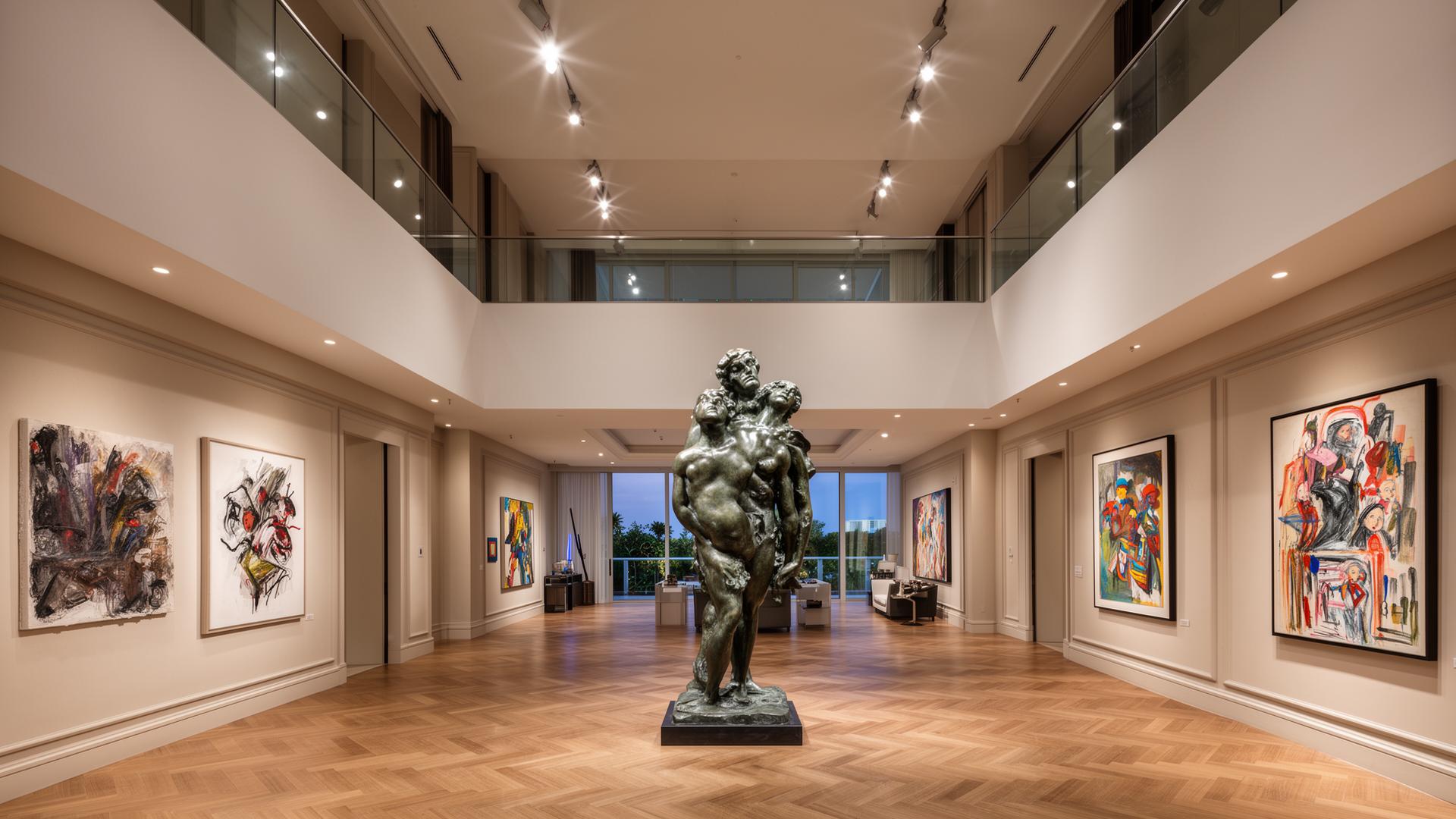
For the most serious collectors, the relevant question is not which building but which specific unit — and the answer is almost always a penthouse or special unit with double-height or loft-configured spaces, structural upgrades, and the ability to customize the interior before closing. Multiple buildings in the current South Florida new development pipeline — Bentley Residences, St. Regis Sunny Isles, Rosewood Hillsboro Beach — offer penthouse configurations with sufficient ceiling height, structural capacity, and customization latitude to serve major collection needs.
The Art Basel Effect on South Florida Luxury Real Estate
Art Basel Miami Beach — held annually in December at the Miami Beach Convention Center — has been one of the most significant forces in South Florida luxury real estate market development over the past two decades. The fair brings 50,000+ art world participants — collectors, gallerists, curators, artists, and their advisors — to Miami Beach each December, many of whom are simultaneously evaluating the city as a residential destination. Multiple real estate transactions at the ultra-luxury tier are credited directly to introductions made at Art Basel, and the fair’s ongoing presence has established Miami as a globally credible cultural destination that supports serious collecting as a residential activity.
Need details on these residences?
Our advisory team can share current information on the projects referenced in this guide.
Speak With an Advisor →