South Florida Condo Amenities: Pickleball, Tennis & Golf Sims
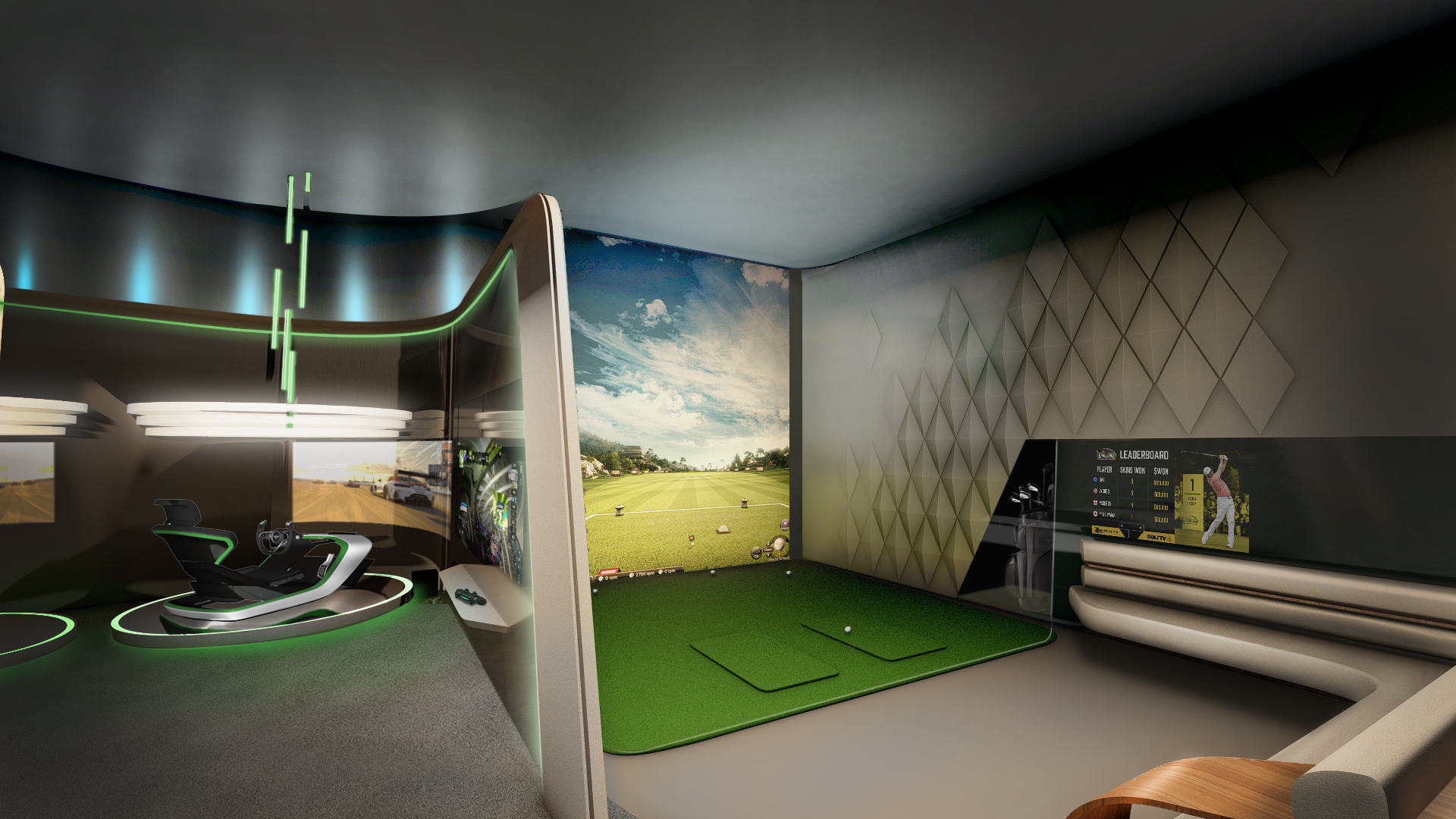
The amenity arms race in South Florida’s luxury new development market is nowhere more visible — or more practically useful to evaluate — than in the recreation amenity category. Pickleball has emerged as the defining recreation amenity of the current cycle: faster to install than tennis courts, usable in smaller spaces, social in a way that encourages regular play among neighbors, and currently the fastest-growing sport in the United States by participation across every demographic that South Florida’s luxury buyer targets.
This guide maps the recreation amenity landscape across the active South Florida new development pipeline — courts, simulators, and the programming that makes a recreation amenity actually usable rather than promotional.
Pickleball: From Optional to Expected
Pickleball’s ascent from niche retiree sport to the defining luxury amenity of 2026 has been extraordinary. The sport’s appeal to South Florida’s luxury buyer demographic is structural: it is competitive enough to satisfy the active buyer who wants genuine athletic challenge, social enough to facilitate natural community formation among building residents, and physically accessible enough across age ranges to serve the multigenerational buyer profile that now accounts for approximately one in five South Florida luxury purchases.
From a development perspective, pickleball courts are significantly less expensive to install than tennis courts (a single pickleball court uses the space of less than half a tennis court), can be installed on rooftop terraces that could not support the footprint of a tennis court, and can be painted on almost any existing outdoor surface — making them the recreation amenity most suited to the constrained outdoor footprints of urban high-rise developments.
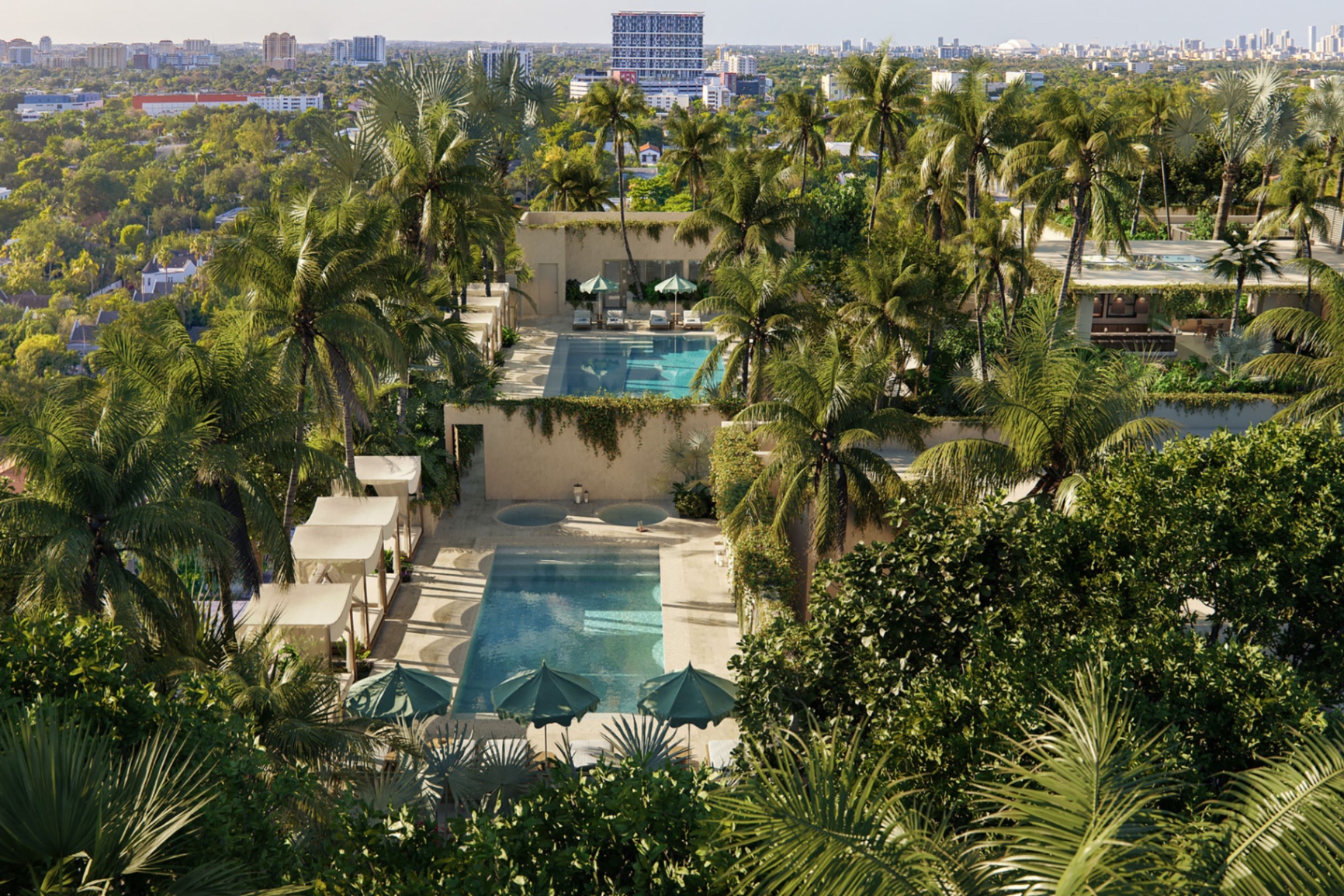
THE WELL Coconut Grove rooftop pickleball: THE WELL Coconut Grove’s 40,000 sq ft rooftop oasis includes a pickleball court within the building’s overall wellness landscape — positioned alongside the thermal circuit, the tea garden, and the Fitness Forest as a component of the outdoor wellness program rather than a standalone sport amenity. The rooftop positioning provides a view context that makes pickleball at THE WELL a genuinely pleasant environment.
South Flagler House rooftop courts: South Flagler House West Palm Beach’s rooftop includes pickleball courts as part of the building’s recreation program — facing the Intracoastal and Palm Beach island, which makes the court setting one of the most visually distinctive pickleball environments in any South Florida new development.
Waldorf Astoria Residences Miami: The Waldorf Astoria’s amenity program includes pickleball as part of its recreation offering — at elevation, with city views providing the backdrop for play.
Tennis: Rare but Significant Where It Exists
Tennis courts require substantially more space than pickleball — a regulation singles court is 78 feet long by 27 feet wide, compared to pickleball’s 44 feet by 20 feet — and the footprint requirement makes genuine tennis courts extremely rare in urban high-rise developments. Buildings that have invested in full tennis courts have typically done so on ground-level sites with sufficient land area, which in South Florida’s urban markets (Brickell, Miami Beach, Sunny Isles) is prohibitively scarce.
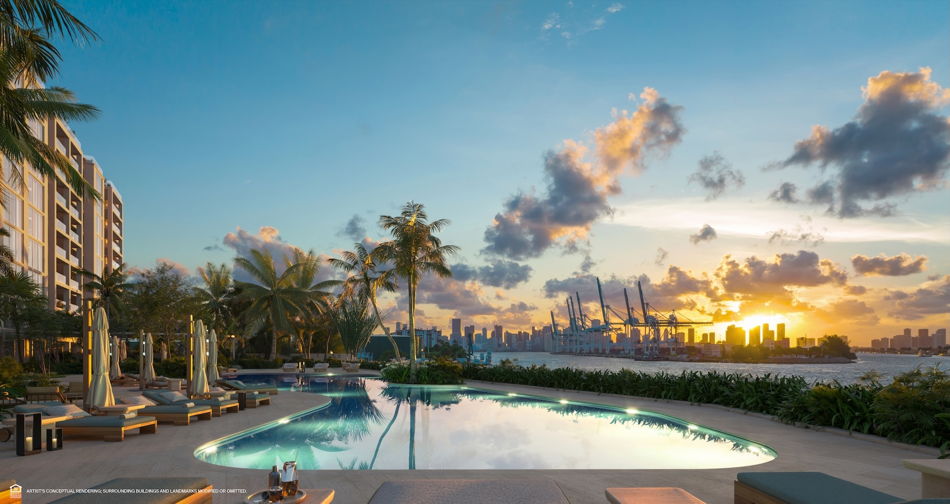
Fisher Island: Fisher Island’s private island geography allows the kind of ground-level sports infrastructure that no urban high-rise can provide. The island includes tennis courts alongside its golf course and other recreational amenities — one of the clearest lifestyle advantages of island living over urban condo ownership.
Bentley Residences Sunny Isles Beach: The building’s Sunny Isles site and the generous footprint of its outdoor amenity program includes sport court configurations that accommodate either pickleball or tennis depending on resident demand — a flexible approach that recognizes the sport’s changing popularity among the building’s resident demographic.
Coconut Grove residential context: Several of Coconut Grove’s low-rise residential buildings and the neighborhood’s proximity to Coconut Grove Tennis Club and Salvadore Park’s public tennis courts means that Four Seasons and THE WELL residents have access to genuine tennis infrastructure within the neighborhood, supplementing what the buildings themselves provide.
Golf Simulators: The Urban Substitute That Has Become a Genuine Amenity
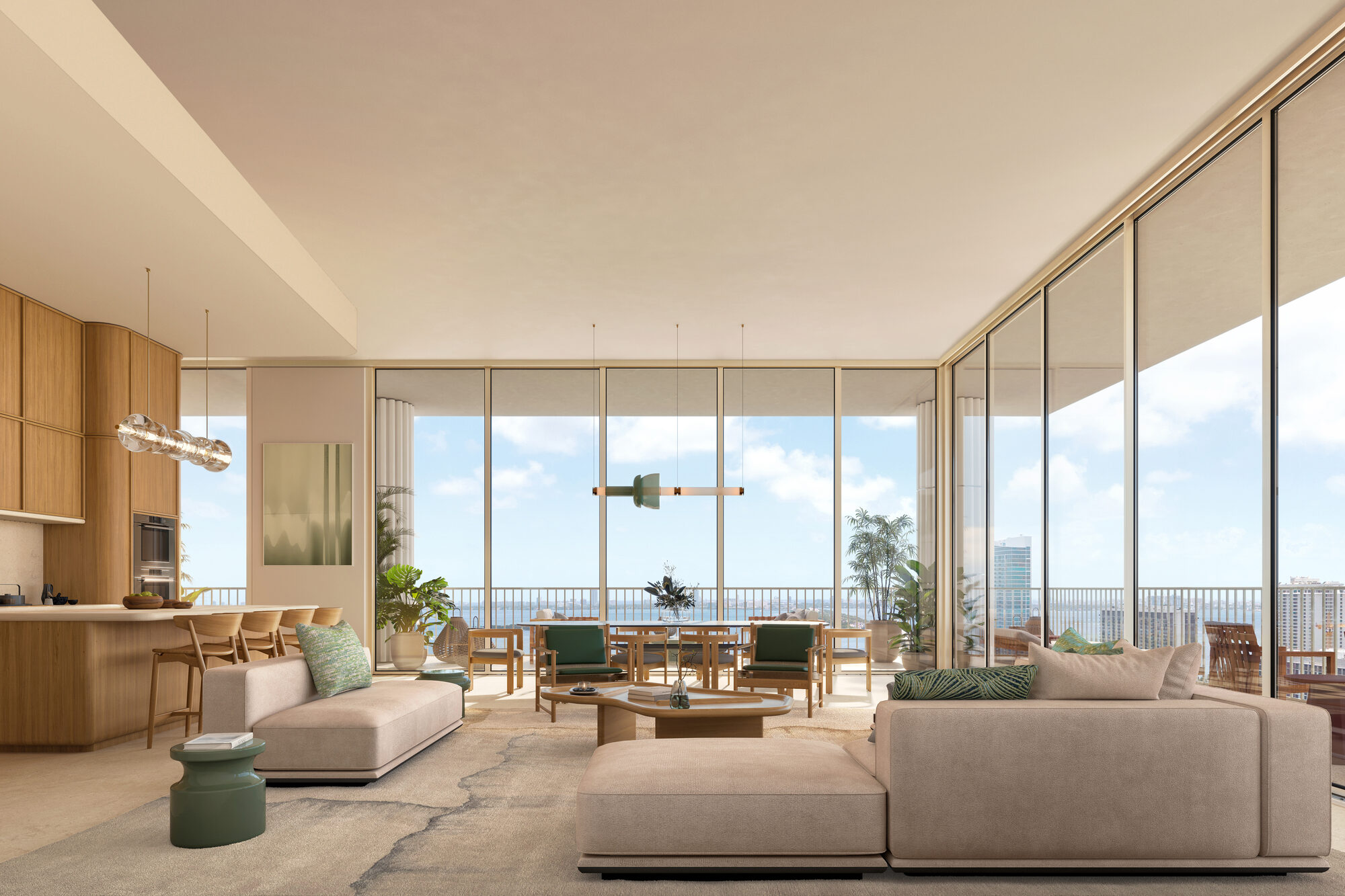
The golf simulator has graduated from executive toy to genuine recreation amenity in South Florida’s luxury new development pipeline — driven by the ultra-high-net-worth buyer’s high rate of golf participation and the near-impossibility of access to quality private courses without a membership commitment that many seasonal residents are not positioned to make.
A high-quality golf simulator room — using Trackman, Full Swing, or FlightScope launch monitor technology, a 4K projection screen, a swing analysis computer, and simulated rounds at the world’s best courses — delivers a genuinely useful golf practice and social environment that does not require scheduling a tee time or driving to a course.
Fouquet’s Hotel & Residences Miami Design District: The golf simulator/media room at Fouquet’s is one of the building’s most specifically functional amenities — a private, reservable space that serves both the resident who wants to practice before a weekend round and the resident who wants to organize a social golf simulator event with friends.
Waldorf Astoria Residences Miami: The Waldorf Astoria’s amenity program includes a golf simulator as part of the building’s comprehensive recreation offering — appropriate for a buyer demographic where golf participation rates are among the highest of any residential building in Brickell.
Bentley Residences Sunny Isles Beach: Bentley’s media room and golf simulator reflect the brand’s specific buyer demographic — automotive enthusiasts and premium lifestyle buyers whose recreation tends toward precision sports. The simulator at Bentley is positioned as a high-performance experience rather than a casual diversion.
The Fitness Center Standard: What “State of the Art” Actually Means
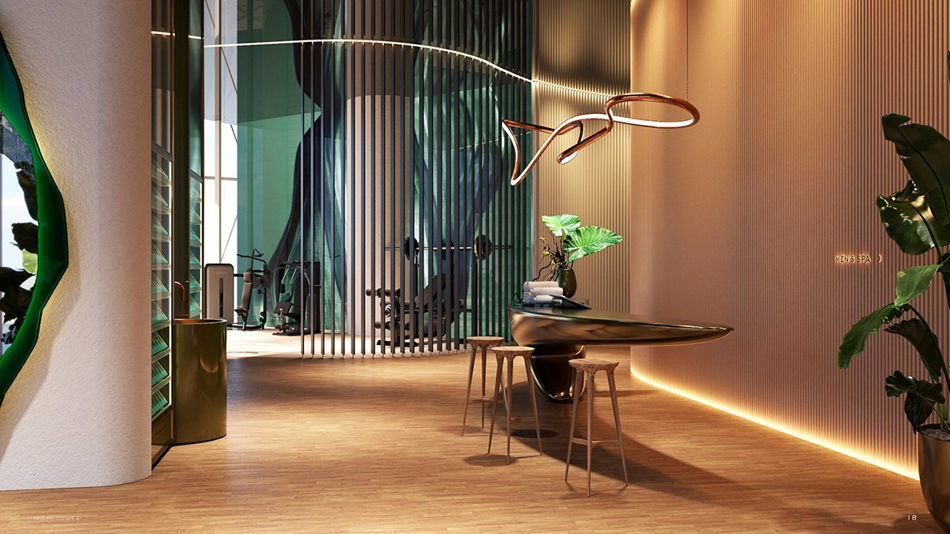
Every luxury new development claims a “state of the art fitness center.” The meaningful distinctions:
Equipment brands: Technogym (the Italian equipment brand used in the Olympics and in the world’s most recognized luxury gyms) and Life Fitness (the US institutional standard) represent the two ends of the luxury fitness equipment spectrum. Buildings that specify Technogym are making a specific quality commitment — the equipment costs more, lasts longer, and has a design quality that makes the gym environment more pleasant to use. Brands that are not named in the specification materials are typically mid-tier suppliers chosen for price rather than quality.
Private training studio: A private training studio — a separate, reservable space for personal training sessions — is distinct from the main fitness floor. Buildings that provide both a main fitness area and a private training studio understand that ultra-high-net-worth residents typically work with personal trainers whose preferred training methodology may differ from the equipment arrangement of the main gym.
Programming: A fitness center without programming is equipment storage. The buildings that provide genuine fitness value have Pilates instructors, yoga teachers, swim coaches (where a lap pool exists), and fitness class schedules that make the gym a social and programmatic environment rather than a collection of machines.
Need details on these residences?
Our advisory team can share current information on the projects referenced in this guide.
Speak With an Advisor →