Where South Florida’s Institutional Money Is Going: The Hedge Fund and Family Office Buyer
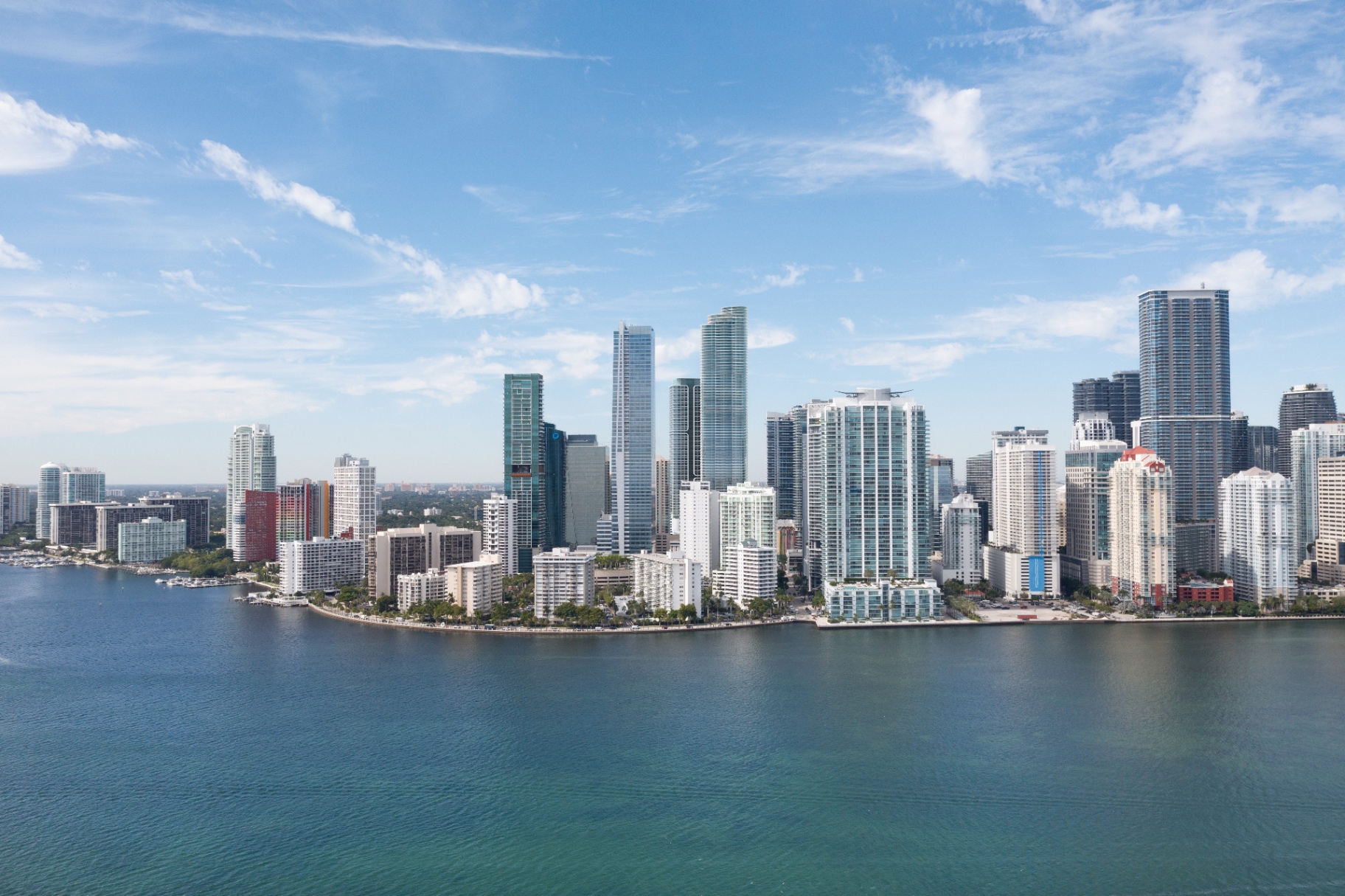
The most consequential shift in South Florida’s luxury real estate buyer composition since 2020 is not the Latin American buyer wave, the New York migration, or the California tax-motivated relocation. It is the institutionalization of the buyer pool itself: the arrival of hedge fund principals, private equity partners, family office leadership, and the senior executives of relocated financial services firms as the defining demand driver at the $10M+ tier.
This buyer is different from the lifestyle-motivated second-home buyer in ways that matter for how the market behaves. They buy with a capital allocation framework, not just a lifestyle preference. They maintain advisors — tax, estate, legal, real estate — who evaluate every transaction against a return and risk framework. They operate within institutional timelines and approval structures that can accelerate or decelerate decisions. And they have access to information — proprietary market research, private transaction data, expert networks — that individual buyers do not.
Who They Are and What Moved Them South
The clearest institutional migration story in South Florida’s current cycle is Citadel — Ken Griffin’s global hedge fund and market-making firm — which committed to a full Miami relocation announced in 2022 and has been executing through 2025–2026. Citadel’s relocation has been explicitly credited by multiple market observers as the catalytic event that accelerated the clustering of hedge funds, private equity firms, and family offices in the greater Miami-Palm Beach corridor.
The companies that followed Citadel’s lead include: Point72 (established Palm Beach County operations), Millar Capital (South Florida office), and dozens of smaller hedge funds and family offices that saw Griffin’s move as institutional validation that Miami had achieved the infrastructure and talent depth to support serious financial services operations.
What attracts this buyer to South Florida is not primarily the lifestyle — it is the combination of:
- Zero state income tax: For a hedge fund principal earning $10M+ annually, Florida domicile saves $1M–$1.3M+ per year in state income tax. Over a decade, this is a meaningful capital allocation.
- Estate tax efficiency: Florida’s domicile also means no state estate tax — a significant consideration for family office principals with eight-to-nine-figure estate values.
- Functional financial ecosystem: The cluster effect is real. When enough hedge funds and private equity firms are operating in the same market, the supporting professional services (prime brokers, law firms, accounting firms, compliance consultants) follow. Miami now has that critical mass.
- Time zone alignment: Miami’s Eastern Time zone alignment with New York markets — unlike California’s three-hour lag — makes Miami a functionally superior base for professionals whose working hours are synchronized with NYSE and NASDAQ market open and close.
Where They Are Buying
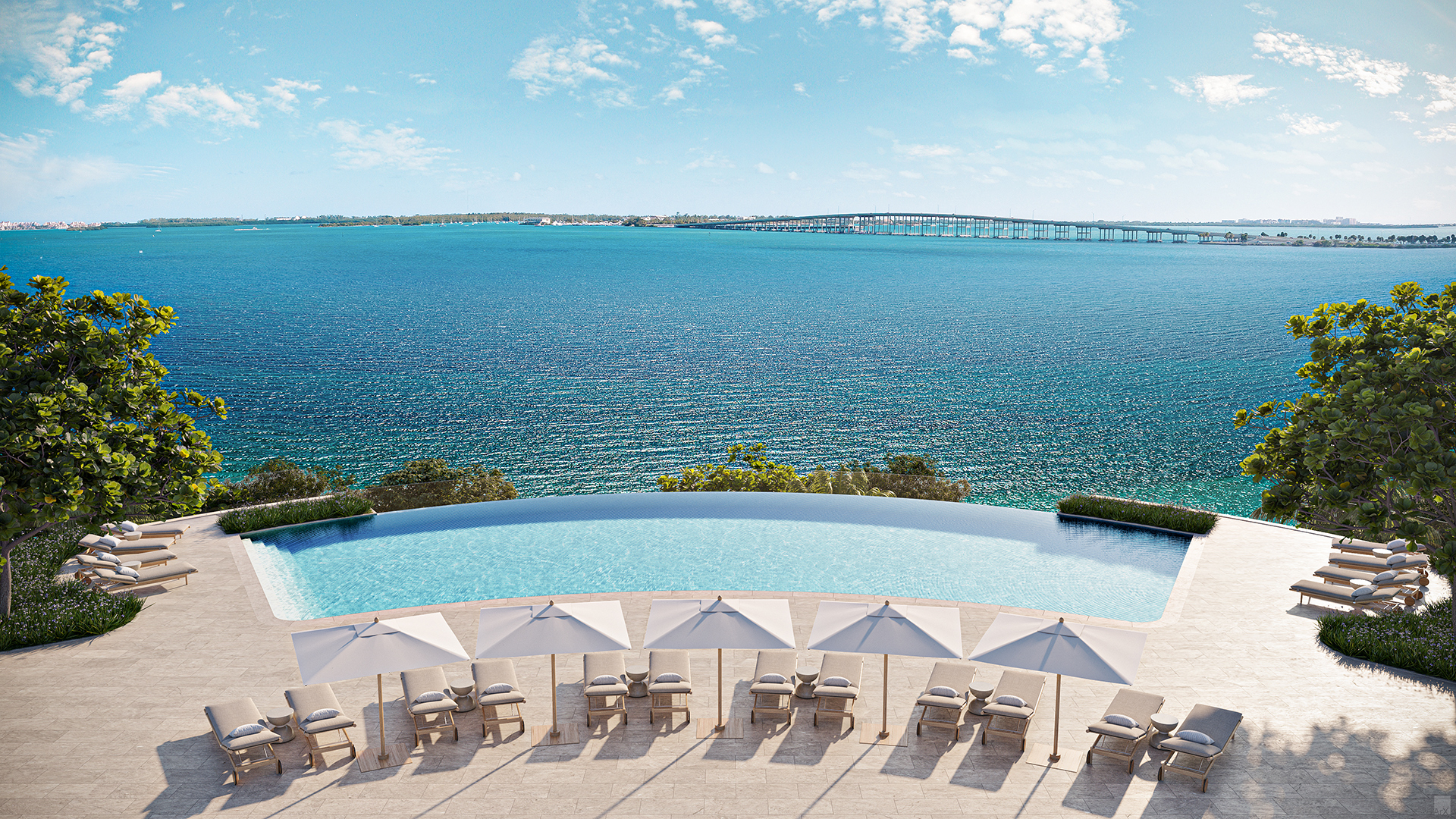
Primary residence: Fisher Island, Palm Beach Island, South of Fifth, and private estate markets. The hedge fund and family office principal buying at the primary residence level is operating in the $15–50M+ tier — single-family estates, full-floor penthouse condominiums, or Fisher Island’s controlled-access island. These buyers value privacy, security, and address prestige above all other criteria. Fisher Island’s $2,708 PSF and $11.2M median sale price (Q3 2025) reflects this buyer’s presence in the market.
Office adjacency: Brickell. For buyers who are actively working — managing a fund, running a portfolio company, attending board meetings — Brickell’s proximity to the financial district is functionally important. Cipriani Residences Miami and The St. Regis Residences, Miami — Brickell both attract financial industry buyers who want the urban luxury experience with direct access to Brickell’s professional ecosystem.
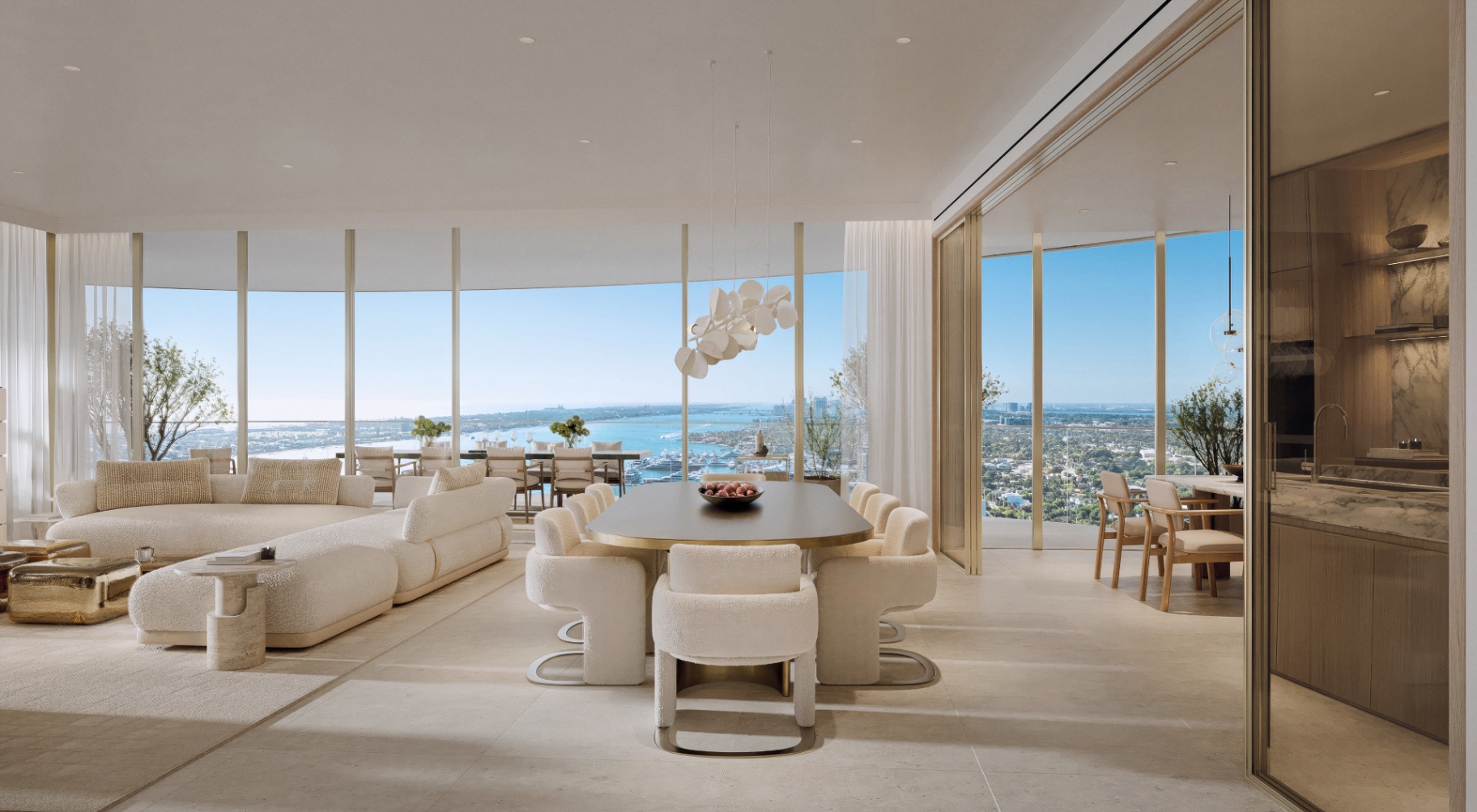
The Intracoastal Palm Beach play: West Palm Beach. Many financial industry principals are making a different calculation: buying in West Palm Beach rather than Palm Beach island — capturing 80% of the lifestyle and social infrastructure proximity at 30–50% of the cost, with a far more active branded development pipeline (Mandarin Oriental, Ritz-Carlton, Banyan Tree, South Flagler House). The West Palm Beach Intracoastal view of Palm Beach island is, for this buyer, a daily reminder that the island is 400 meters away — accessible by boat, by car in 5 minutes, or by social relationship.
What This Buyer Is Prioritizing
Privacy architecture: Institutional buyers have a more acute awareness of physical security than typical luxury buyers — a combination of high public profiles, potential target risk for fraudulent claims or unwanted contact, and the general security culture that financial services firms cultivate. Buildings with serious security architecture — biometric or sophisticated card access, visitor management logs, camera systems, staff background screening — are specifically valued.
Address legibility: The institutional buyer’s residence is a professional signal as well as a personal one. The choice of address communicates something about the buyer’s position and success. Palm Beach island, Fisher Island, South of Fifth, and the major branded towers in Brickell are all “legible” — their quality is understood globally without explanation. Buildings in emerging neighborhoods that require a contextual explanation are less attractive to this buyer.
Long-hold, capital preservation orientation: Family office buyers in particular are not buying with a 5-year flip timeline. They are underwriting 15–25 year holds, often with eventual estate transfer as the intended exit. This changes the evaluation framework: the building needs to age well (materials, architecture, governance quality), the neighborhood needs durable long-term demand, and the legal structure needs to accommodate estate planning.
What Their Activity Signals About Market Direction
Institutional buyers — hedge fund principals, family office leadership — are among the most sophisticated real estate market participants available. Their concentration in specific submarkets and building types is itself a signal worth analyzing:
The concentration in Fisher Island, Palm Beach island, and South of Fifth signals that the ultra-scarce, access-controlled, institutional governance models are being validated as the most defensible assets in a market that has seen broad appreciation.
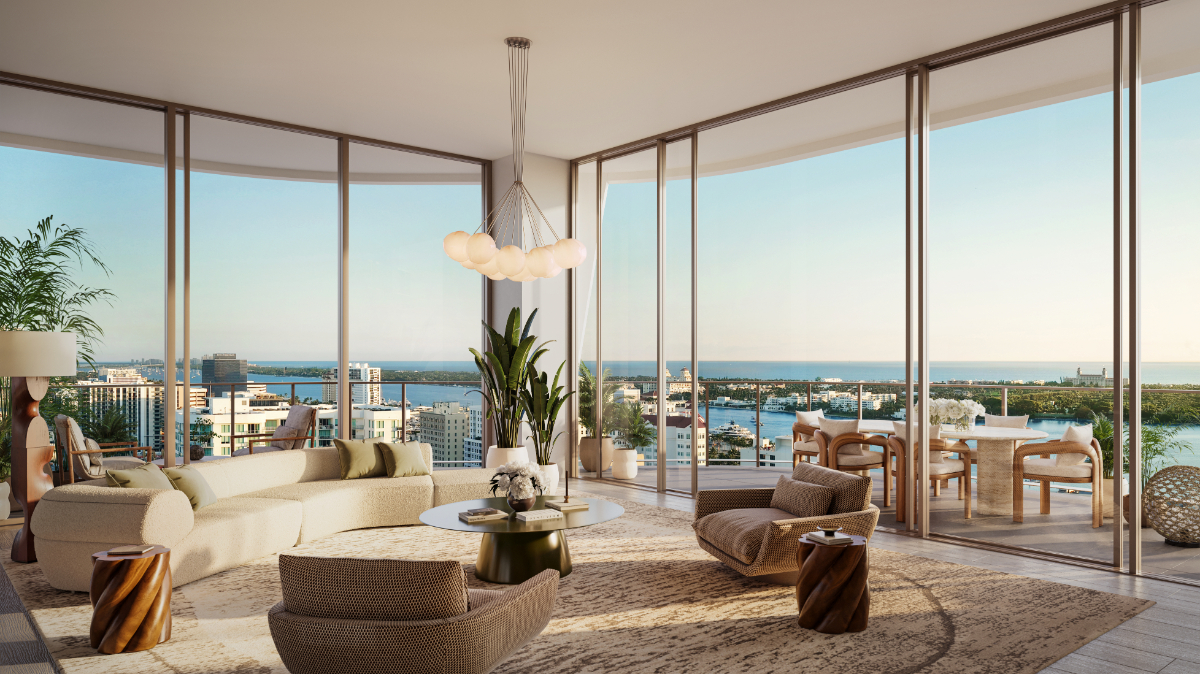
The concentration in West Palm Beach new development signals conviction that the 187.3% decade-long appreciation trajectory has room to run — that the branded development wave (Mandarin Oriental, Ritz-Carlton, Banyan Tree) is arriving at the right moment in the market cycle.
The concentration in Brickell’s branded pipeline (Cipriani, St. Regis) signals that the Wall Street South clustering thesis is not speculative — it is being underwritten by the principals of the firms doing the clustering.