The Aman Philosophy, the Cipriani Standard, and the Four Seasons Promise: Three Hospitality Cultures to Live In
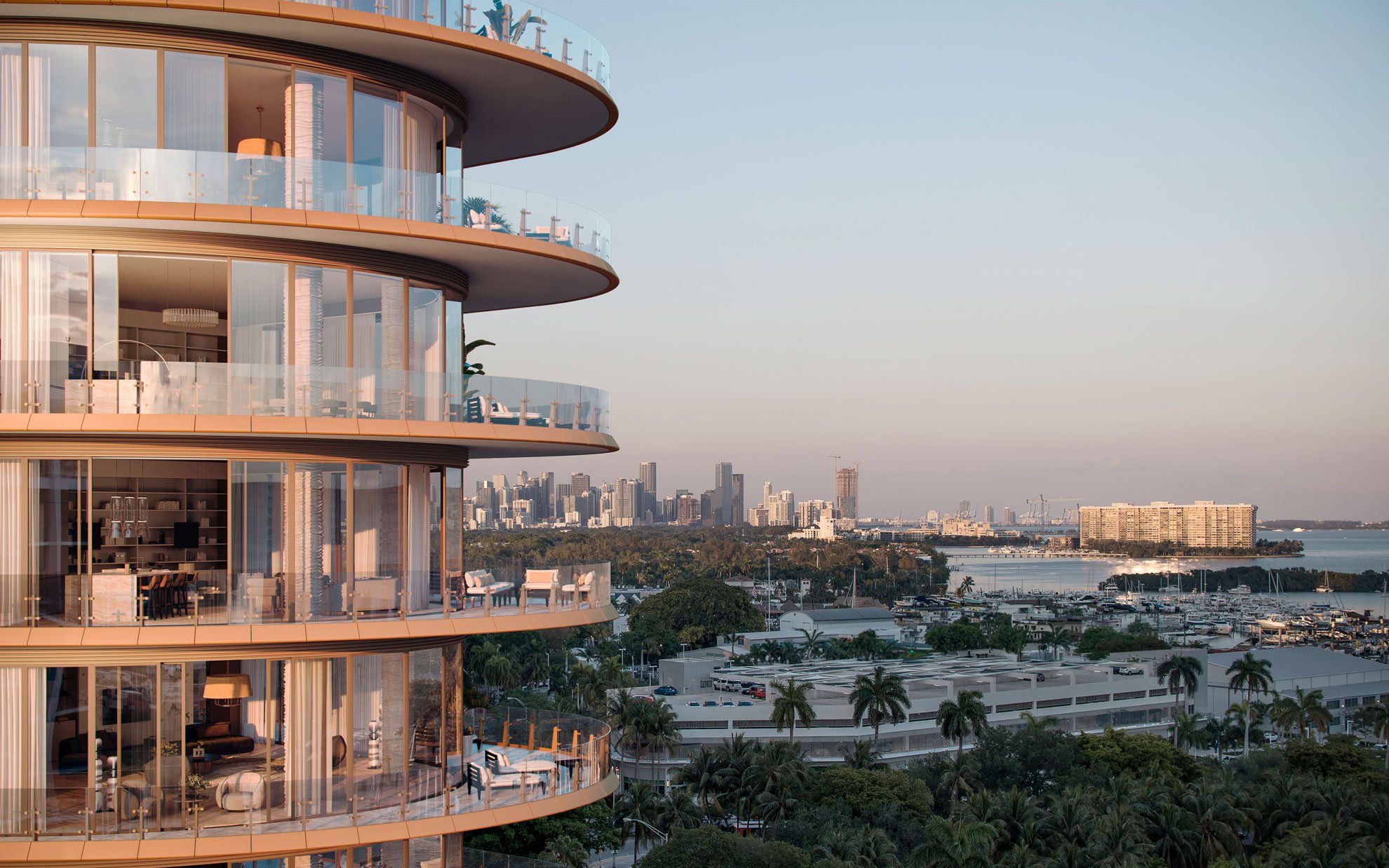
South Florida’s new development pipeline has produced an extraordinary coincidence: three of the world’s most distinct hospitality philosophies are entering the residential market simultaneously and within close geographic proximity. Aman Residences Miami Beach, Cipriani Residences Miami, and Four Seasons Private Residences Coconut Grove are not variations on the same product — they are fundamentally different answers to the question of what luxury residential hospitality should do for the person who lives there.
Choosing among them requires understanding what each philosophy is actually optimizing for — and whether that optimization matches the specific way you live.
The Aman Philosophy: Privacy, Stillness, and the Elimination of Urgency
Aman was founded in 1988 by Adrian Zecha in Phuket, Thailand, with the opening of Amanpuri — a collection of pavilions set among coconut palms on a private beach, designed around a single operating principle: everything at a resort should disappear except the natural environment and the experience of being completely at rest in it.
Thirty-five years later, with 35+ properties in operation across five continents, that founding principle has not changed. What has changed is its refinement. Aman has had three decades to understand what produces the specific quality of calm that its guests describe — the sense of time slowing, of anxiety dissolving, of genuinely resting rather than performing relaxation. The answer is consistently environmental: the buildings, the landscape, the materials, the sound levels, the social programming, and the service culture are all designed to remove the conditions that create stress rather than to overlay them with pleasures.
What Aman optimizes for: Stillness. Privacy. The absence of urgency. The sense of being in a place that was designed specifically for you, where no social performance is required.
What this means in a residence: The Aman Residences Miami Beach building — 18 stories, approximately 35–50 units, direct oceanfront on one of Miami Beach’s last available parcels — is the physical embodiment of this philosophy. The building is small because Aman properties are always small (never more than 40–50 keys, typically fewer). The materials are natural because Aman’s environments are built from materials that belong to the natural world rather than the manufactured one. The service is present but invisible because Aman’s service model is designed to anticipate rather than to respond.
Who this is for: The buyer who values privacy above social life; who wants the building’s community to be minimal and undisturbed; who has lived in Aman resorts and found that the specific quality of calm they produce is something they want to inhabit permanently rather than visit occasionally.
Who this is not for: The buyer who wants a building with social programming, a visible community of interesting neighbors, or the specific energy of a place where things happen.
The specific South Florida Aman advantage: The Miami Beach oceanfront location — direct sand, the Atlantic horizon, the specific quality of light that the ocean’s reflective surface produces — is the natural environment that the Aman philosophy requires. Aman cannot be built in Brickell; it belongs exactly here.
The Cipriani Standard: Italian Social Theater, the Pleasure of Being Seen Eating Well
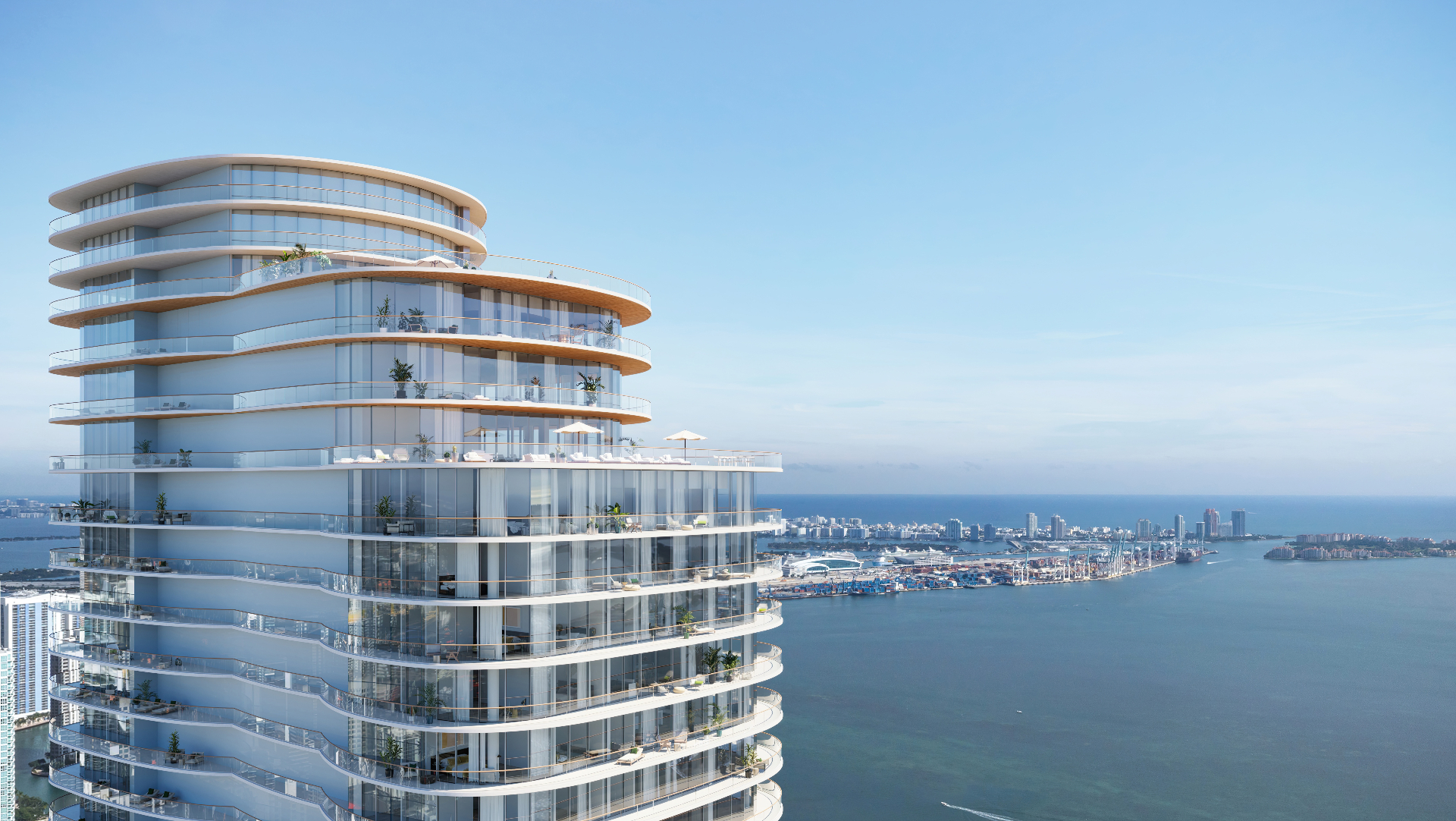
The Cipriani family’s hospitality identity begins at Harry’s Bar in Venice — 99 Calle Vallaresso, opened by Giuseppe Cipriani in 1931. Harry’s Bar invented the Bellini cocktail, served Ernest Hemingway, Somerset Maugham, Orson Welles, Humphrey Bogart, Truman Capote, and virtually every significant cultural figure of the 20th century who passed through Venice. It holds UNESCO recognition as an Italian cultural monument. It is also, by any objective measure, a small restaurant — 30 covers, no tablecloths — in which the quality of the food, the precision of the service, and the specific social energy of the room made it more famous than any of Venice’s luxury hotels.
That social energy — the Cipriani’s specific understanding that eating together is the primary social act of Italian culture — is the organizing principle of everything the family has built since. Cipriani 42nd Street, Cipriani Wall Street, Cipriani Downtown in New York; event spaces in London, Abu Dhabi, and elsewhere — they are all extensions of Harry’s Bar’s fundamental proposition: that life is better when people eat together in a beautiful room.
What Cipriani optimizes for: The social meal. The pleasure of a room full of people enjoying themselves simultaneously. The Italian hospitality philosophy that treats the guest as someone to be honored by generosity, not managed by protocol.
What this means in a residence: Cipriani Residences Miami at 1420 South Miami Avenue in Brickell is organized around the building’s restaurant and social spaces as the community’s daily life center. The dining room, the bar, the terrace — these are where the building’s residents encounter each other, entertain guests, and live the social life that the Cipriani brand’s Italian identity defines.
Who this is for: The buyer who is energized by social life; who entertains frequently and wants a building environment that facilitates rather than requiring separate arrangements; who has eaten at Cipriani in New York or Venice and found the specific Italian social energy an aspiration for daily life.
Who this is not for: The buyer who wants privacy above social life; who doesn’t eat in restaurants regularly, or whose social life is primarily organized outside the building.
The specific South Florida Cipriani advantage: Brickell’s urban energy — the density of professional activity, the international business community that has made Brickell the financial center of Latin America — is the social context in which Cipriani’s Italian social theater is most appropriate.
The Four Seasons Promise: Anticipatory Service, Global Consistency, and the Reliable Standard
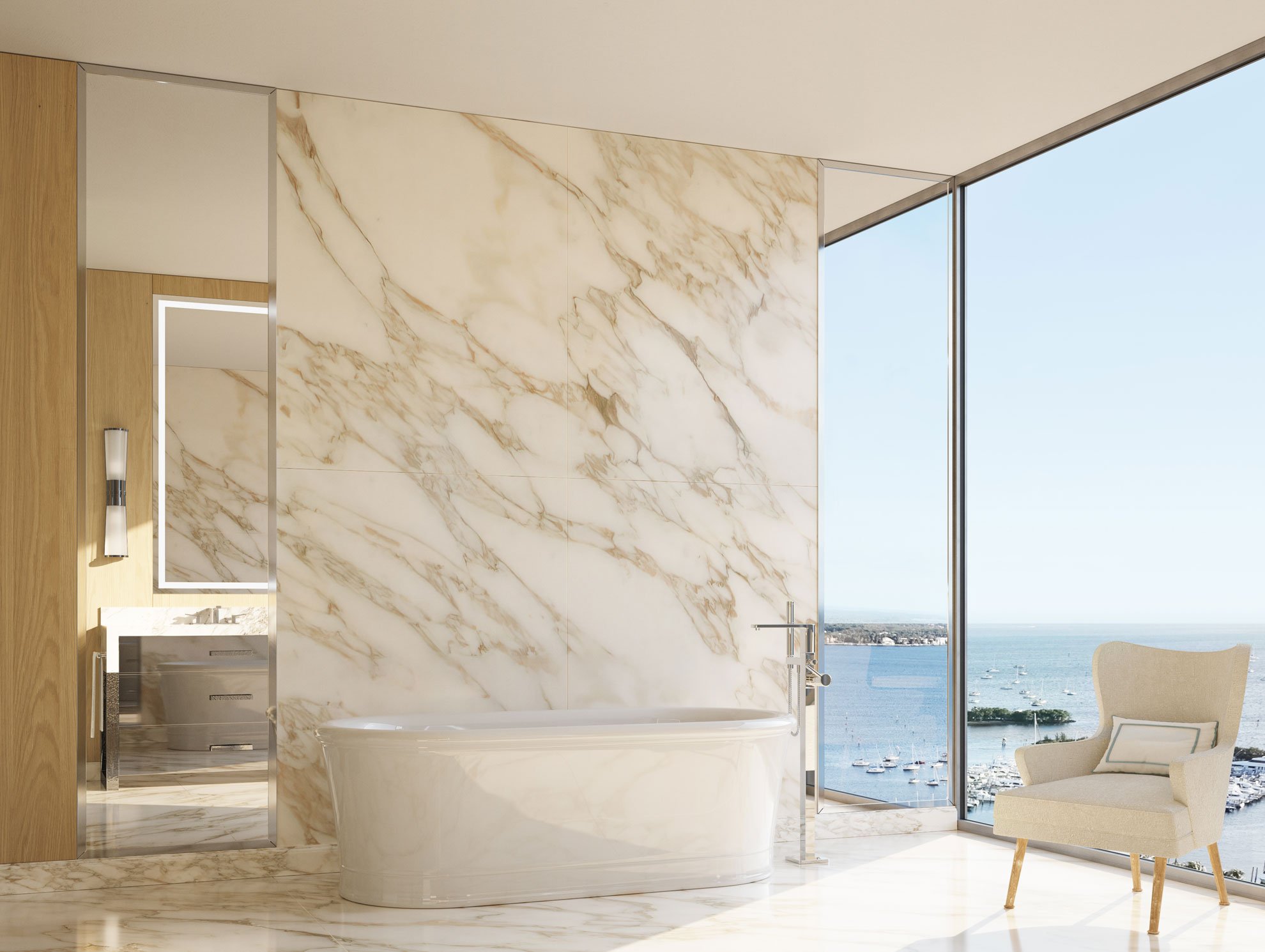
Four Seasons Hotels and Resorts was founded in 1961 by Isadore Sharp — a Toronto developer who opened his first hotel in a neighbourhood others had written off, built it to standards higher than the location required, and discovered that genuine service quality attracts customers across any geographic context. Sharp’s foundational insight — that the hotel business is a people business, and that investing in employees produces service quality that cannot be faked — became the operational philosophy that has made Four Seasons the gold standard of global luxury hospitality over 65 years.
The Four Seasons service standard is the most globally consistent of any luxury hospitality brand: whether in Hong Kong, Paris, New York, or Miami, the Four Seasons produces a specific recognizable quality of attentiveness, the specific type of anticipation, and the specific character of warmth (genuine rather than performed) that guests identify as the Four Seasons experience.
What Four Seasons optimizes for: Anticipatory service. Global consistency. The reliable standard — the knowledge that wherever you are and whatever you need, the Four Seasons will deliver it at the level you expect.
What this means in a residence: Four Seasons Private Residences Coconut Grove — 70 residences, no hotel component, the full Four Seasons service infrastructure operating exclusively for the building’s owners — delivers the Four Seasons experience as a permanent residential condition rather than a hotel visit. Lifestyle managers, concierge relationships that open otherwise-closed reservations, housekeeping to Four Seasons George V standards — all of this becomes the daily operational environment.
Who this is for: The buyer who has stayed at Four Seasons globally and trusts the brand’s standard completely; who values service predictability and global consistency; who wants a building that manages itself at a known level of quality without requiring the owner’s involvement.
Who this is not for: The buyer who wants the intensity of Aman’s philosophical depth or the social specificity of Cipriani’s Italian identity. The Four Seasons at its best is the most consistently excellent hotel in the world — it is not the most emotionally distinctive.
The specific South Florida Four Seasons Coconut Grove advantage: The standalone residential model — no hotel guests, all service exclusively for 70 owners — delivers the Four Seasons standard at a quality-to-resident ratio that the brand’s hotel-and-residences format cannot match. Coconut Grove itself provides the mature, walkable, culturally rich neighborhood context the brand’s primary-residence buyer most often seeks.
The Comparison: Three Buyers, Three Buildings
The Aman buyer: Has typically been to Aman. Knows from experience that the quality of rest produced by an Aman environment is qualitatively different from every other luxury hospitality environment. Wants that quality as the ambient condition of daily residential life. Is seeking restoration, not social life.
The Cipriani buyer: Is energized by social life, not exhausted by it. Entertains frequently and wants a building environment that supports it. Has a specific appreciation for Italian hospitality culture. Wants the building’s community to have a social identity as specific and distinctive as their own.
The Four Seasons buyer: Values consistency, reliability, and the global standard. Has built a life around the Four Seasons brand’s promise of excellence without variance. Does not need the emotional intensity of Aman or the social specificity of Cipriani. Needs the reliable excellent.
The Price Context
All three buildings are priced at the South Florida luxury market’s highest tier. The specific price points reflect developer positioning, unit size, and market timing rather than a simple quality ranking — each building is excellent within its philosophy, and none is definitively more expensive than the others across their full price ranges.
Buyers choosing among these buildings based on price are likely to make the wrong choice. The relevant comparison is always philosophical: which of these hospitality cultures matches your specific way of living?
Need details on these residences?
Our advisory team can share current information on the projects referenced in this guide.
Speak With an Advisor →