A Week in the Life: What Full-Service Branded Condo Living Actually Feels Like Day to Day
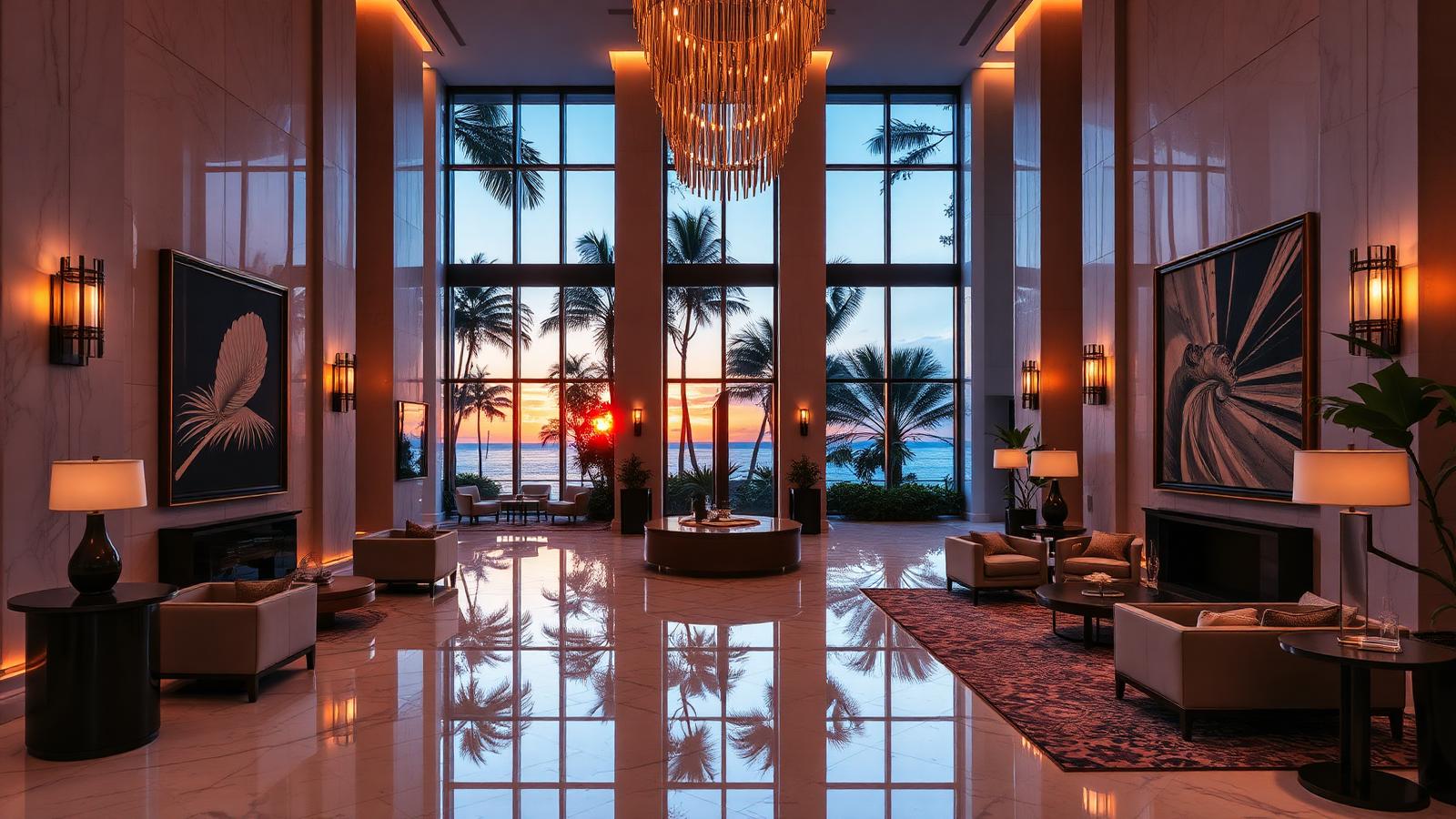
The marketing brochure for every full-service branded residence in South Florida describes the same general experience: seamless service, resort amenities, hotel-quality hospitality, and a life of effortless luxury. The experience described is real — but the experience of inhabiting it as your primary residence, every day for 52 weeks, is a specific and textured thing that deserves a more honest description.
This is that description.
Sunday: The Week Begins as It Ends
7:30 AM. The unit’s automated shade system begins its programmed morning sequence — the eastern bedroom shades rise slowly, allowing the Miami light to enter at a rate that the sleep physician who consulted on the building’s biophilic design specifications would describe as “graduated activation.” You did not set this. The lifestyle manager who onboarded you three weeks after move-in asked about your morning preferences, entered them into the building’s smart home system, and the system has operated on your schedule since.
8:00 AM. The kitchen produces an espresso from the Miele integrated coffee system — the same machine that the building’s ownership recommended during your unit walkthrough because it uses whole beans and has a profile you programmed once, in October. The morning newspaper — physical, delivered to your door at 6:45 AM by the building’s morning concierge — is on the kitchen counter. This was arranged during move-in and has happened every weekday without your involvement.
9:00 AM. You are at the pool. It is Sunday in high season and the building has 70 residences; there are perhaps 12 other people at the pool, which is a resort-quality environment serving a population smaller than most private member clubs. The pool attendant knows your name. When you sit down, your preferred lounge chair — the one in the shade position you favor — is already positioned with a towel. This is either a remarkable coincidence or the pool team’s observation of your preference, documented in the building’s guest history system. It is the latter.
12:00 PM. The building’s restaurant — Cipriani, in this scenario — is taking lunch. You have not made a reservation because the building’s concierge made it on your behalf three days ago when you mentioned, in passing, that you were expecting your daughter and her family for lunch Sunday. The table is positioned with the bay view you prefer. The maître d’ greets your daughter by name because the concierge told them she would be joining you. This is either the maître d’ having a remarkable memory or the building operating as the hotel it is designed to be. It is the latter.
3:00 PM. Your daughter and family have departed. You are on your terrace. The afternoon light is the specific quality — the long-angle subtropical afternoon light that makes everything it touches look as though it is being photographed for a magazine — that you moved to South Florida to experience. This is the hour that vindicates every decision made to get here.
Monday: The Week in Normal Operation
6:30 AM. You have an 8:30 AM flight to New York. You requested a car through the building’s concierge on Friday. The car — a black SUV from the building’s preferred operator, charged to your account — is waiting at the motor court at 7:00 AM. The concierge sent a text confirmation at 6:45 AM: “Your car is in the motor court. Driver’s name is Eduardo.” Eduardo knows which airline, which terminal, and does not need to be told.
7:00 PM. You return from New York on the evening flight. The car service — which the concierge also arranged, upon receiving your departure notification at 5:00 PM — is at arrivals when you land. Your unit has been prepared: the climate system has been adjusted from the energy-saving mode it enters when you are away, the bed is turned down, and the package that arrived during your absence — two boxes — has been received by the building’s package management service and placed inside your unit by the housekeeping team with a note indicating when it was received.
Tuesday Through Thursday: The Rhythm of Belonging
By the third month, the texture of branded residential life is no longer the service details — it is the sense of belonging that the service details produce.
The fitness center manager, who noticed that you consistently arrive at 7:30 AM and leave by 8:45 AM, has suggested a trainer whose schedule aligns with yours. The trainer has a key to your account and books sessions through the building’s programming system without requiring you to coordinate directly. Three sessions per week, Tuesday/Thursday/Saturday, confirmed every month without your involvement.
The morning yoga instructor who teaches in the studio every Tuesday and Thursday at 7:00 AM knows that you arrive late (you always arrive at 7:10 AM) and always takes the same spot (back left, near the window). She holds it for you.
The building’s restaurant bar has your preferred drink. You did not tell the bar manager. Your lifestyle manager’s onboarding notes — which include your preferences collected during three conversations in your first month — include this detail, and it was communicated to the bar team as part of the standard resident preference documentation.
Friday: The Social Infrastructure
6:30 PM. The building hosts its monthly residents’ social event — this month, it is a wine tasting in the building’s private dining room, featuring a sommelier from a South American producer whose wines are distributed exclusively through the building’s wine program. The 40 residents who attend have been living in the building between 3 months and 4 years.
The building’s social infrastructure — which its marketing describes as “community” but which is, at bottom, a function of 70 people who have all made the same lifestyle decision, who share the same amenity spaces daily, and who are served by the same team — has produced a specific kind of social environment. It is not the social environment of a neighborhood (too small, too self-selecting). It is not the social environment of a hotel (too transient, too anonymous). It is something specific to the branded residence at this scale: a members club whose members have committed at a different level than any annual membership.
What Full-Service Does Not Mean
It does not mean you have no privacy. The building’s staff is trained in the specific discretion that the brand requires. The concierge does not discuss one resident’s schedules or preferences with another. The housekeeping team works within your unit on a schedule you set and in your absence only if you have authorized it. The lifestyle manager’s preference notes are not accessible to other residents.
It does not mean the building runs your life. The service responds to requests; it does not anticipate without asking. The car is not waiting every morning; it appears when you call for it. The restaurant does not hold a table every Sunday; it holds the one you asked for.
It does not mean every interaction is choreographed. The pool attendant sometimes does not have your chair ready. The morning newspaper is occasionally 20 minutes late. The restaurant reservation is occasionally two weeks out rather than three days. These are the tolerable imperfections of a service environment that is genuinely well-run rather than a mythologized ideal. The branded residential experience is very good, not perfect. The distinction matters for setting expectations correctly.
The Things That Compound Over Time
The experiences that buyers consistently cite, in interviews and in published accounts, as the things that most surprised them about full-service branded residential living — the things that compound over months and years:
- The quality of the physical space, experienced daily. The first week in a beautiful residence is about noticing the beauty. By the sixth month, the beauty is the ambient condition of your daily life, which changes how the day begins, how it ends, and how ordinary moments feel.
- The quality of the management relationship. A well-run building’s management team — the general manager, the lifestyle manager, the concierge team — becomes one of the most consistently positive relationships in a resident’s professional-social life. People who run these buildings well are genuinely good at what they do, and a long-term relationship with a good general manager produces a daily quality of care that compounds significantly.
- The liberation from house management. Residents who have moved from private estates — with their full infrastructure of property managers, groundskeepers, pool service, housekeeping, security, and maintenance — consistently report that the liberation from managing that infrastructure is one of the most significant quality-of-life improvements of the move. The building runs; the resident lives.