Warm Minimalism vs. Cold Modernism: The Interior Design Shift Defining South Florida New Condos in 2026
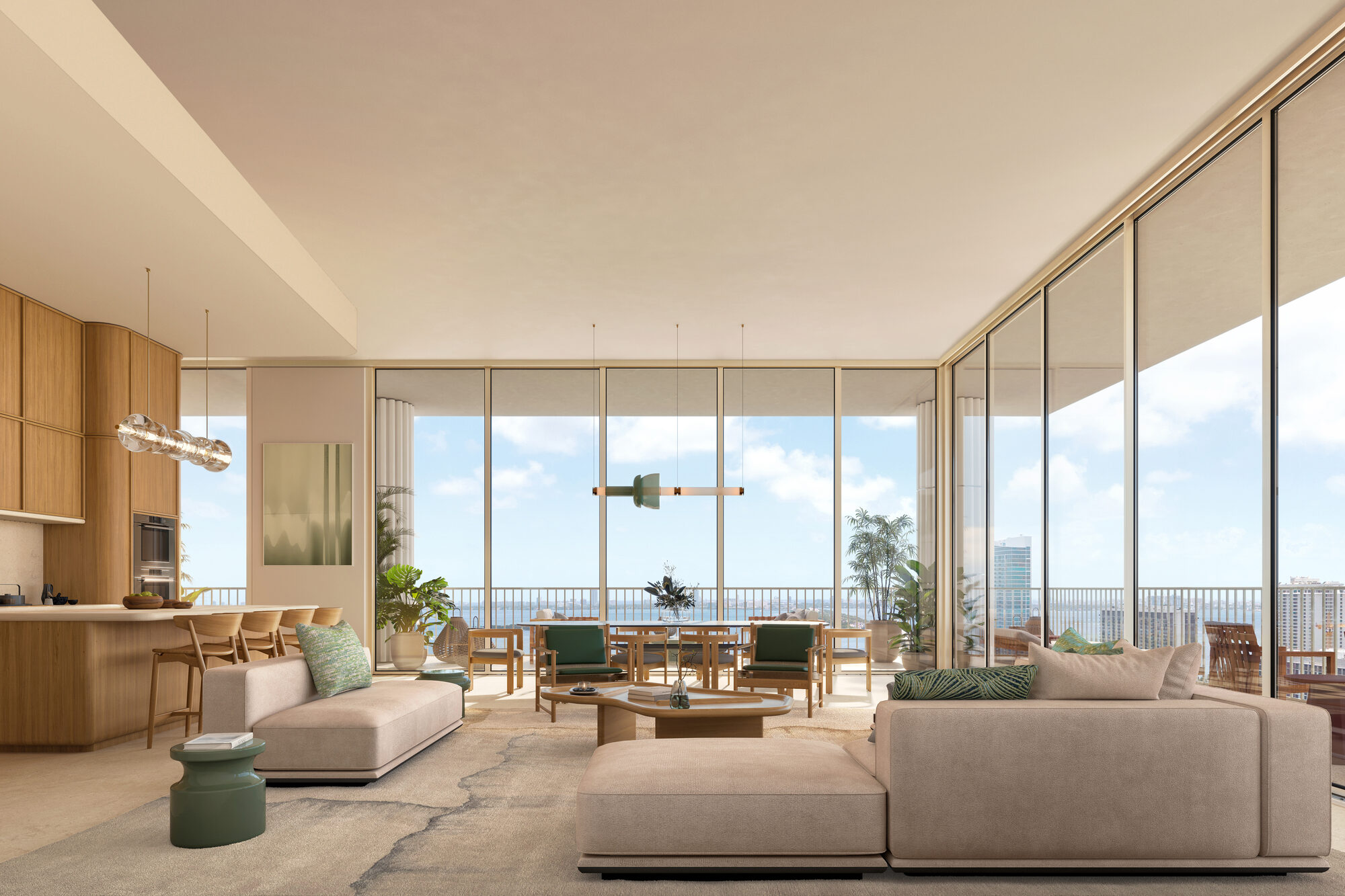
For approximately a decade, South Florida luxury real estate was synonymous with a specific aesthetic: white everything, polished marble, glass and chrome, high-gloss lacquered kitchens, and the visual effect of a room designed primarily to photograph well in bright Florida light. This was “luxury” as a visual language — immediately legible, globally consistent, and relentlessly cold.
The best new developments entering South Florida’s market in 2025 and 2026 have moved decisively away from that aesthetic. The design philosophy that has replaced it — warm minimalism — is not simply a softer palette. It is a fundamentally different philosophy about what luxury is for.
What Cold Modernism Produced (and Why It Failed)
Cold modernism in residential design is characterized by white or off-white wall finishes with no texture variation; polished surfaces (high-gloss marble, mirror-polished chrome, lacquered cabinet doors) that reflect light rather than absorbing it; furniture in pale neutrals or stark black-and-white contrast; and the absence of natural materials in favor of engineered substitutes that are easier to maintain and more visually uniform.
The rooms it produces are beautiful in photographs, taken on a bright day with a wide-angle lens and no people in them. They are less beautiful to live in.
Acoustic problems: Hard, reflective surfaces bounce sound rather than absorbing it. A room of polished marble and glass is acoustically hostile to conversation — every spoken word arrives at the listener twice. The cold modernist living room sounds expensive and feels exhausting.
Thermal comfort issues: Polished stone floors are cold in the morning in an air-conditioned apartment. A buyer living in a building where the HVAC is set to 70°F steps out of bed onto a floor that is 65°F. That is not the luxury morning experience the marketing describes.
Aging problems: Polished surfaces show every fingerprint, water mark and scuff. High-gloss lacquered cabinets telegraph every grease splash. Chrome fixtures develop water spotting within weeks in South Florida’s mineral-heavy water. Cold modernism requires constant maintenance; without it, the room looks neglected rather than used.
Emotional neutrality: The most consistent complaint from occupants is that the space does not feel like home. It feels like a hotel room — a room designed for someone else.
What Warm Minimalism Is
Warm minimalism does not abandon restraint or clean design principles — it recalibrates what those principles are for. The objective shifts from “a room with no unnecessary elements” to “a room with only elements that contribute to the experience of being there.”
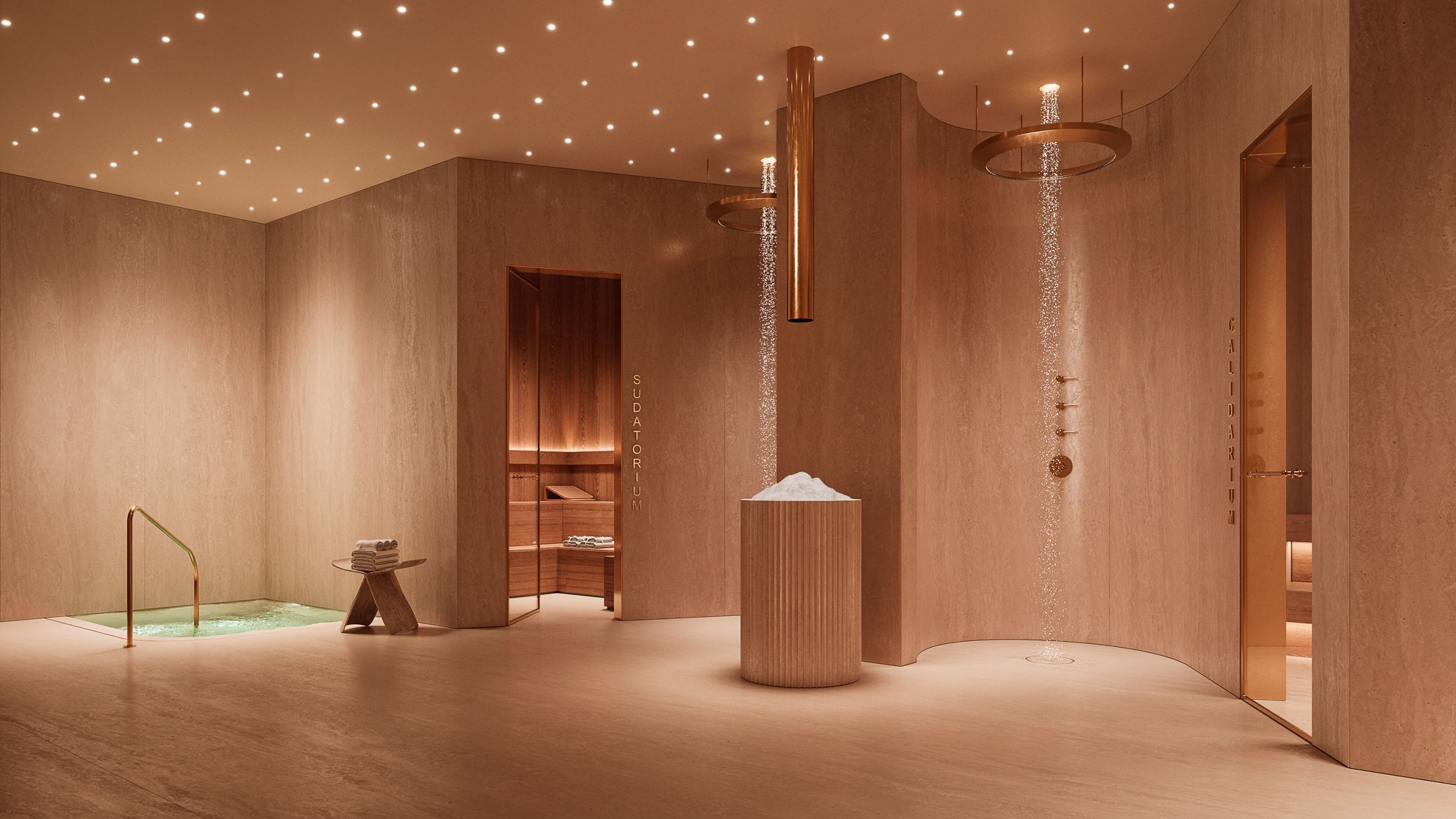
The material vocabulary: natural oak and walnut in their actual grain and color; natural stone with variation, veining and warmth (travertine, warm limestone, cream marble) rather than cool white Carrara or engineered quartz; Roman plaster and tadelakt walls with depth rather than the flat opacity of paint; warm metal finishes in aged brass, satin bronze and matte blackened steel; and linen, bouclé and textured natural fibers in upholstery.
The result is a room that reads warm at a distance, reveals material quality up close, and improves with the kind of use that damages cold modernist surfaces. A warm oak floor lived on for ten years develops a patina more beautiful than when new. A polished white marble floor lived on for ten years has stains, scratches and maintenance history.
The Buildings That Have Committed to Warm Minimalism
Fouquet’s Hotel & Residences Miami Design District — RDAI’s Warm French Material Philosophy
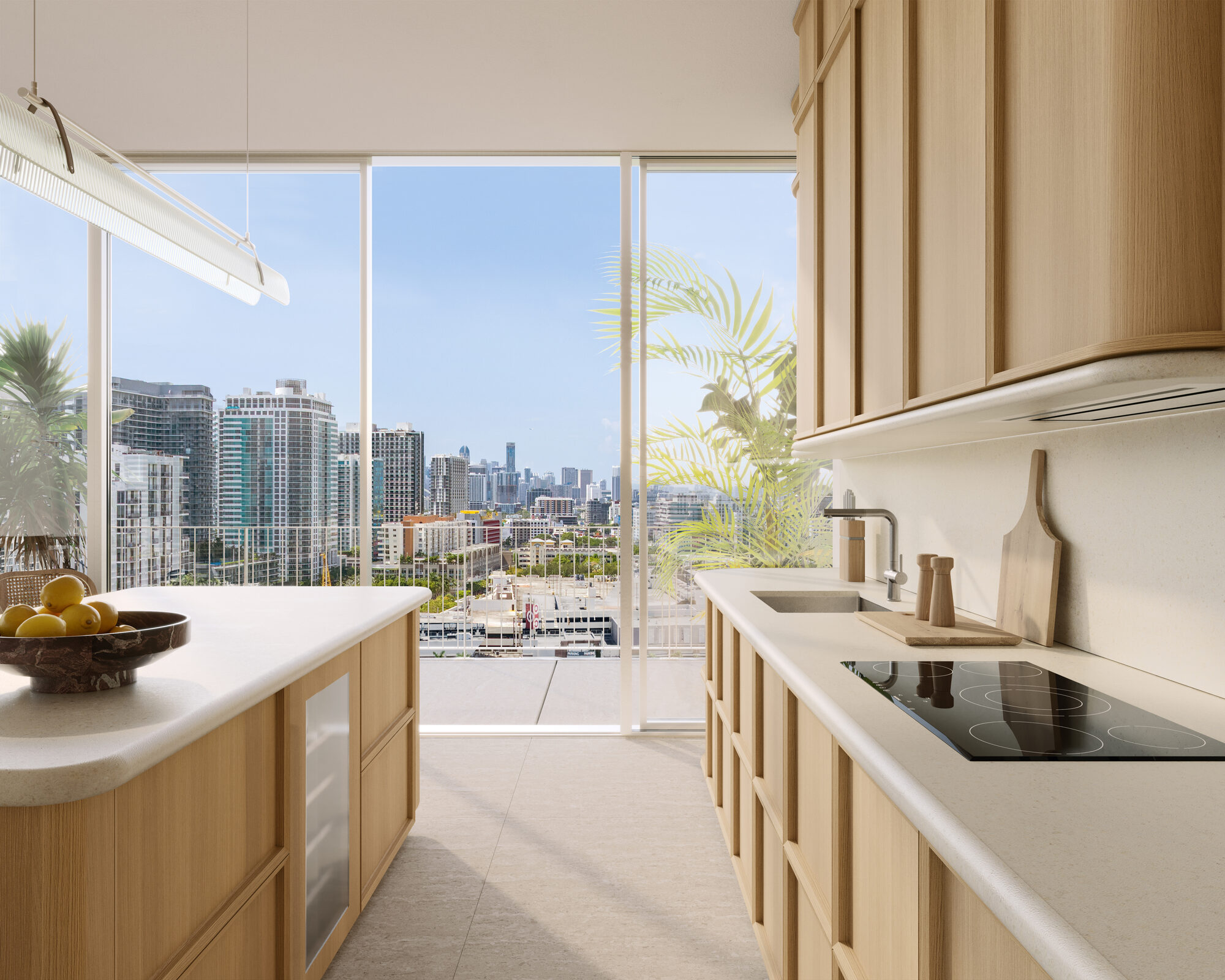
RDAI’s design for Fouquet’s is the most fully realized example of warm minimalism in any active South Florida new development. Custom oak cabinetry in warm natural tones, stone countertops and backsplashes in warm cream and beige varieties, specialty satin stainless hardware that reads warm rather than cold, and wall finishes that absorb light rather than reflect it are a direct expression of warm minimalism applied through the lens of French material culture.
These interiors will not photograph as dramatically as a white-and-chrome kitchen shot in harsh light. They will feel significantly better to cook in, to sit in at the end of a day, and to wake up in on a Sunday morning. That is the trade-off warm minimalism accepts: some visual impact in photography in exchange for genuine experiential quality in occupation.
The Perigon Miami Beach — OMA’s Warm Analytical Environment
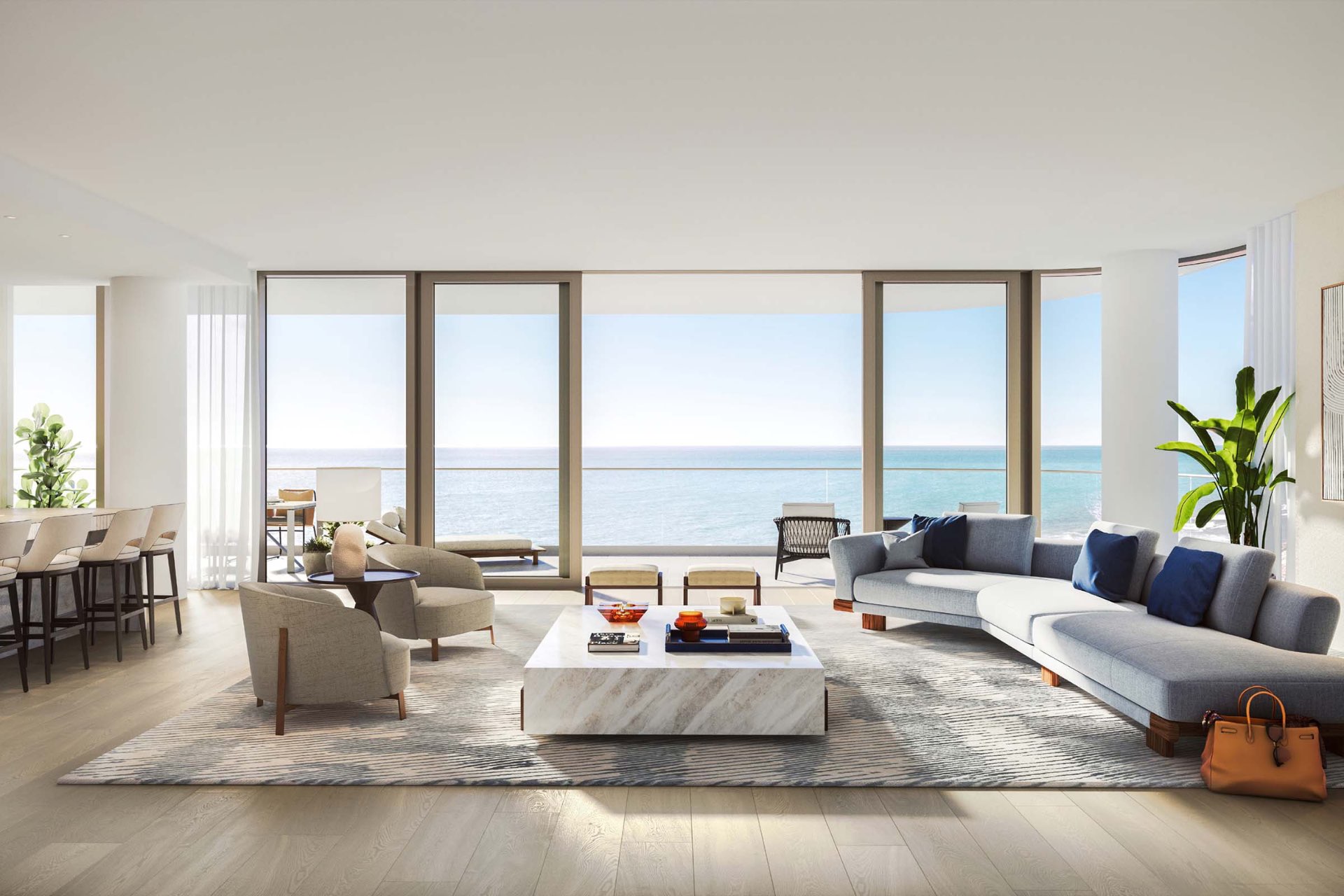
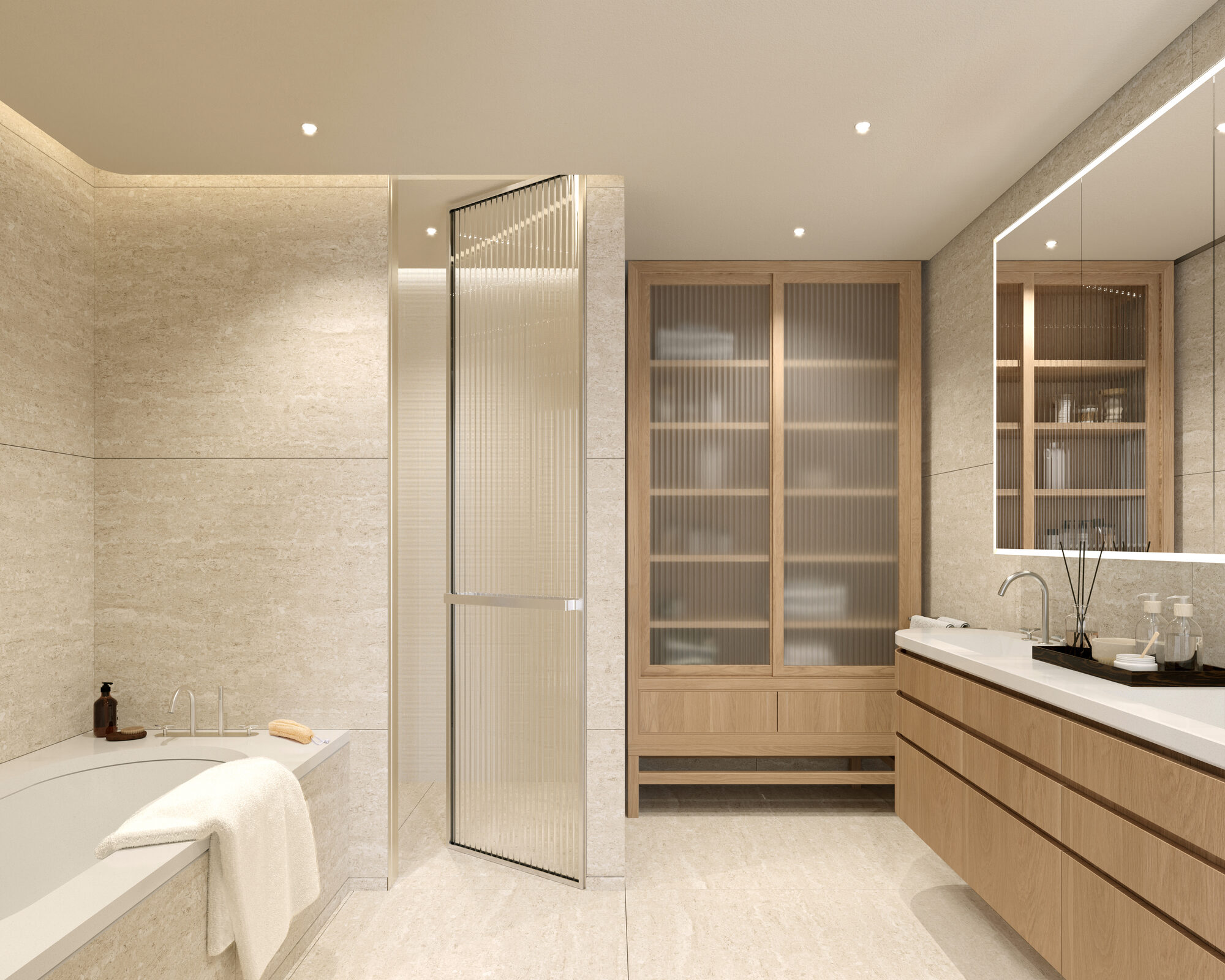
OMA’s design for The Perigon is a more surprising entry in the category — the firm’s reputation is for intellectual rigor rather than material warmth. But the interiors reflect a specific analytical position: what materials best serve a residence used as a primary home by a buyer who wants both design intelligence and daily comfort?
The answer OMA and Tara Bernerd reached is a palette that uses warm natural stone throughout — floor, wall and tub surround in a single warm material field — wood in cabinetry and millwork, and the Poliform kitchen system in finishes that read warm within the stone environment. The Perigon’s warmth is a designed conclusion rather than a sensibility, but the result is fully consistent with the philosophy.
Four Seasons Private Residences Coconut Grove — Michele Bönan’s Italian Warmth
Michele Bönan’s work for the Lungarno Collection — the Florentine hotel group whose properties are among the most beautifully furnished in Italy — is the foundational reference for the Four Seasons Coconut Grove interior approach. Bönan’s Italian warmth is not decorative; it is a function of material selection and light management.
Warm oak in natural grain rather than the whitewashed or grey-stained oak that dominated Miami Beach interiors for the previous decade, cream-toned marble with depth and variation, and hardware in warm-toned metals that do not require constant polishing read as both contemporary and timeless. This is what warm minimalism achieves when done correctly: the room does not look current in a way that will look dated in five years.
How to Identify Warm Minimalism vs. Cold Modernism in a Model Unit
Look at the floor material: Natural stone with variation and warmth (travertine, cream limestone, white oak hardwood) = warm minimalist. Large-format white porcelain or polished white marble with uniform pattern = cold modernist.
Look at the cabinetry finish: Natural wood grain in warm tones, matte or satin lacquer in warm neutrals = warm minimalist. High-gloss white or grey lacquer, mirror-polished surfaces = cold modernist.
Look at the hardware: Satin brass, aged bronze, matte black = warm minimalist. Polished chrome, mirror-polished stainless = cold modernist.
Look at the walls: Roman plaster, tadelakt, warm-toned paint with matte or eggshell finish = warm minimalist. High-gloss paint, white lacquered surfaces = cold modernist.
Check the floor in the morning: Ask which direction the primary bedroom faces and whether the floor is heated. A warm minimalist building with eastern exposure has either radiant floor heating or a floor material that does not start the day cold.
Need details on these residences?
Our advisory team can share current information on the projects referenced in this guide.
Speak With an Advisor →