Topped out is not finished
A topping-off marks height, not a closing date. Florida law ties conveyance to a recorded declaration and a surveyor’s certificate of substantial completion, and it ties statutory warranties to a certificate of occupancy. The purchase agreement sets the rest. This is not legal advice.
The last pour, or the invitation to watch it, has a way of feeling like an ending. The tower has a top. The photographs will go out. What the buyer actually needs, between that morning and the day the funds move, is quieter: a certificate that the building may be occupied, a declaration that has been recorded, a closing notice, a walk-through, and a punch list that is written down. A topping-off does not issue any of those.
This guide stays on that interval. It does not repeat Haute Residence’s Q4 2026 delivery calendar, the Florida new-construction warranty guide, or the pre-construction deposit guide. Those pages already exist. Cross them, and keep this one narrow. This is not legal advice.
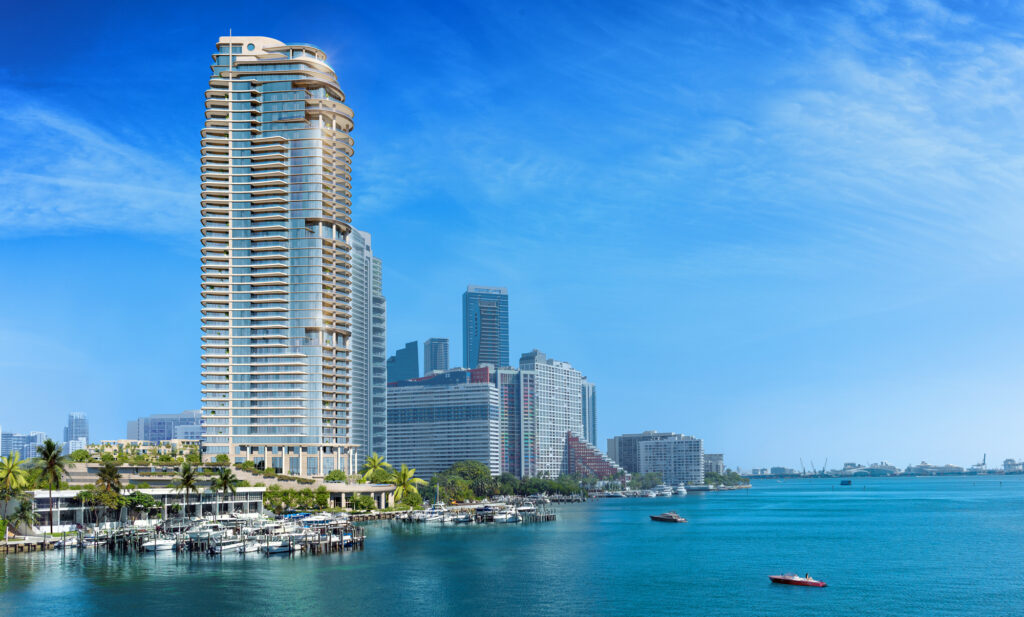
Rendering courtesy of the developer.
A topping-off marks height, not a closing date. Under Florida law, a condominium is created when the declaration is recorded, and conveyance generally waits on a surveyor’s certificate of substantial completion. Statutory warranties are tied to a certificate of occupancy, temporary or otherwise, for the entire building. Confirm the rest in the purchase agreement. This is not legal advice.
Height is not a closing date
Two towers on Haute Residence cards are already past that milestone, and both still publish 2027 delivery timing. Villa Miami lists its status as “Topped Out · Under Construction,” with that status checked November 13, 2026, and estimated delivery in 2027; the site also has a topping-out report from October 29, 2026. The Perigon Miami Beach lists its status as under construction and “topped off March 2026,” with delivery in 2027. The official Perigon site, fetched November 14, 2026, carries a homepage banner reading “OCCUPANCY SUMMER 2027,” and its official news page describes the tower as having topped out at 5333 Collins Avenue. Height is not occupancy. Occupancy is not closing.
The St. Regis Residences, Miami — Brickell is the building for which a ceremony has been reported as scheduled. Haute Residence’s November 9, 2026 article, St. Regis Residences Miami: November 19 topping-off scheduled, reported a ceremony as scheduled for November 19, 2026. The official Related Group project page and the official project site, both fetched again on November 14, 2026, still did not publish a confirmation of that date. Related Group’s news feed, searched the same day, had no topping-off release, and the official project site’s posts likewise did not confirm it. The date is therefore stated here as reported, not as a developer-confirmed fact, and not as a completed top-off. The card on the landing page, fetched the same day, still lists the project as under construction, with delivery in 2027.
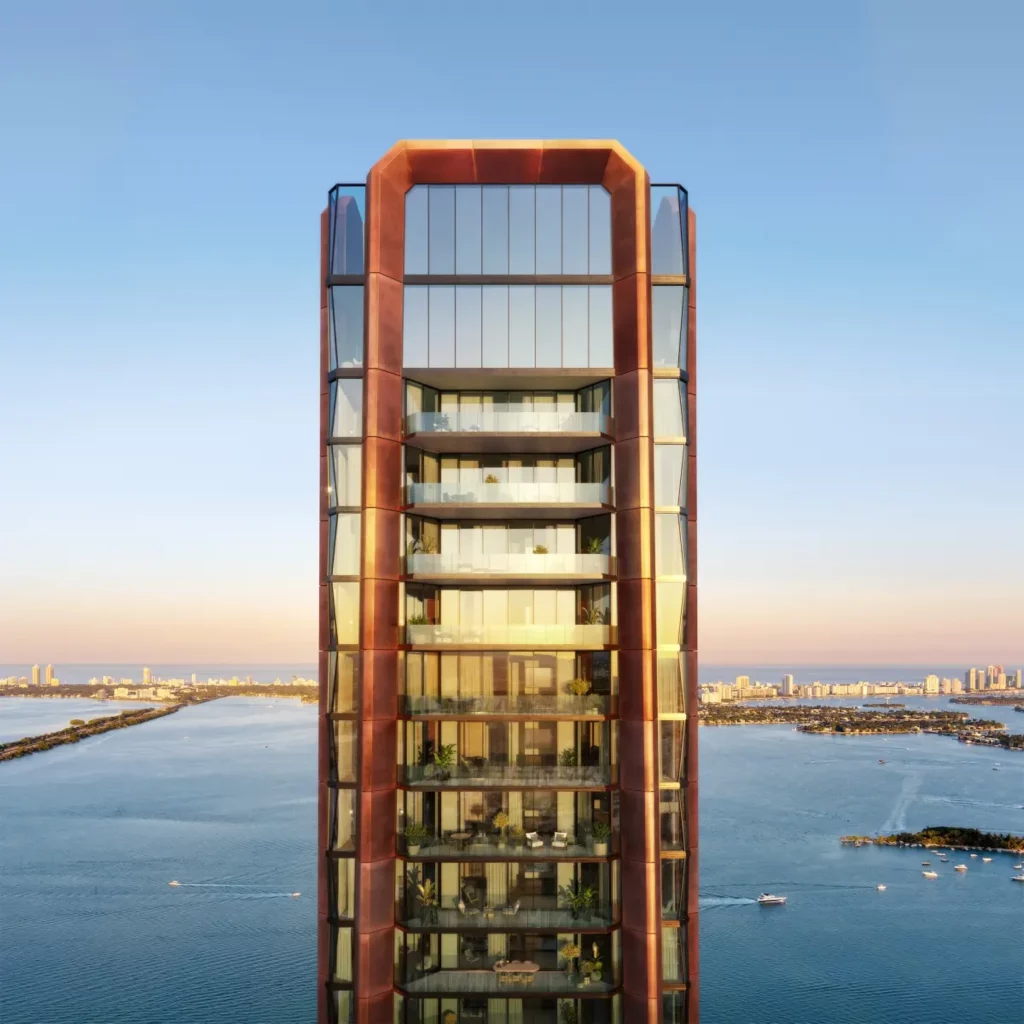
Rendering courtesy of the developer.
What Florida law actually ties to the next steps
A topping-off is a construction ceremony. Chapter 718 of the Florida Statutes is interested in other papers.
Under section 718.104, a condominium is created by recording a declaration in the public records of the county where the land is located. Upon that recording, the units described in the declaration come into existence, “regardless of the state of completion of planned improvements.” Recording is not, by itself, a license to close every sale.
The same section requires a surveyor-and-mapper certificate — once construction is substantially complete — that the improvements are an accurate representation of the location and dimensions of the units and the common elements. If construction is not yet substantially complete when the declaration is first recorded, the declaration must say so, and upon substantial completion the developer or the association must amend the declaration to include that certificate. Completed units may be conveyed only if the declaration has been recorded and, as to the units being conveyed, that certificate has been recorded, including certification that the planned improvements serving the building — landscaping, utility services, access, and common-element facilities set forth in the declaration — have been substantially completed.
That certificate is not a local certificate of occupancy. It is a condominium-act surveyor’s certificate. The two documents answer different questions.
A certificate of occupancy — including a temporary one — is how the statute defines completion for other purposes. Section 718.203(3), in the 2025 official compilation, provides that “completion of a building or improvement” means issuance of a certificate of occupancy, “whether temporary or otherwise,” that allows for occupancy or use of the entire building or improvement, or an equivalent authorization from the government having jurisdiction. Section 718.202(4) uses the same idea when it defines “completion of construction” for the deposit rules: a certificate of occupancy for the entire building or improvement, or the equivalent. The warranty guide already covers how those warranties run. This article notes only the hinge: temporary or otherwise, the authorization has to allow occupancy or use of the entire building or improvement.
A “condo conversion” is a different statutory path, under other provisions of chapter 718, for turning an existing building into a condominium. The three towers named here are being sold as new construction. The relevant milestone for them is the recording of the declaration, and of the surveyor’s certificate, not a conversion.
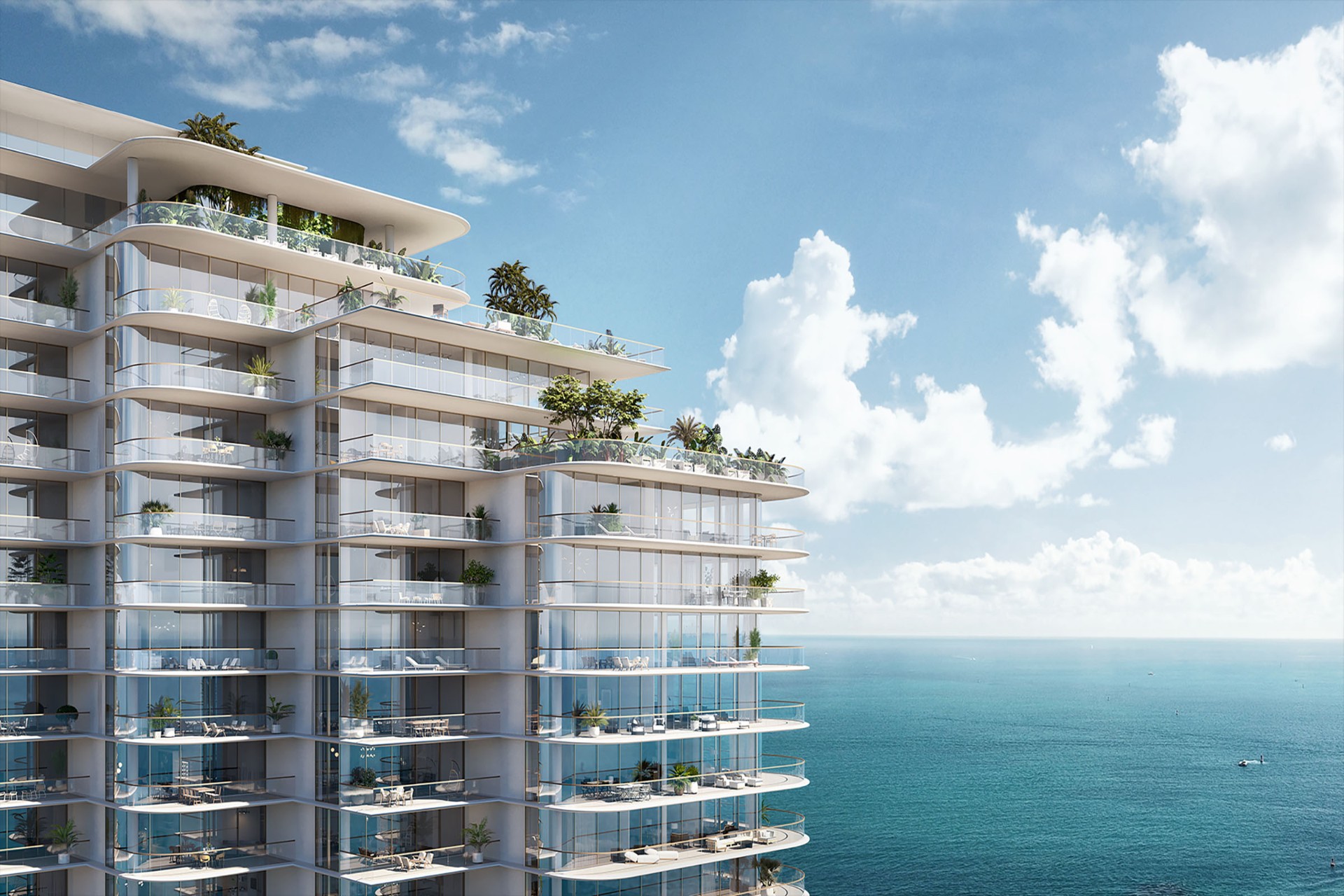
Rendering courtesy of the developer.
What the contract, not the ceremony, still has to do
Chapter 718 does not, in the sections reviewed for this article, write a universal number of days for a closing notice, a required punch list, or a final walk-through. Those steps live in the purchase agreement, the prospectus, and the closing instructions. They are not issued by a topping-off.
Ask, in the documents, how much notice the developer must give before closing; whether a walk-through is scheduled, and how a punch list is signed; what funds are due, and when the remaining deposit is released from escrow under the contract and under section 718.202; and whether closing is conditioned on a certificate of occupancy, a temporary certificate, or some other authorization. Then have a Florida attorney read the answers.
The funds question belongs with the deposit guide, not in a second retelling of escrow percentages. The defect question belongs with the warranty guide, not in a new grid. The calendar of which South Florida towers may deliver in 2026 belongs with that calendar. This page is only the reminder that a finished roof line is not the end of the file.
Sources
- Florida Statutes § 718.104 (2025 official Senate compilation, fetched Nov. 14, 2026): creation of a condominium by recording the declaration; surveyor-and-mapper certificate of substantial completion; conditions for conveying completed units: https://www.flsenate.gov/Laws/Statutes/2025/0718.104
- Florida Statutes § 718.105 (2025 compilation, fetched Nov. 14, 2026): recording of the declaration and of the surveyor’s certificate materials: https://www.flsenate.gov/Laws/Statutes/2025/0718.105
- Florida Statutes § 718.202(4) (2025 compilation, fetched Nov. 14, 2026): “completion of construction” means issuance of a certificate of occupancy for the entire building or improvement, or equivalent authorization: https://www.flsenate.gov/Laws/Statutes/2025/0718.202
- Florida Statutes § 718.203(3) (2025 compilation, official Senate page, fetched Nov. 14, 2026): “completion of a building or improvement” means issuance of a certificate of occupancy, whether temporary or otherwise, that allows occupancy or use of the entire building or improvement, or equivalent authorization: https://www.flsenate.gov/Laws/Statutes/2025/0718.203
- Haute Residence, The St. Regis Residences, Miami — Brickell landing page, fetched Nov. 14, 2026: under construction; delivery 2027: https://www.hauteresidence.com/st-regis-brickell/
- Related Group project page and official project site (MiamiSRR.com), fetched Nov. 14, 2026, and Related and official-site news feeds searched the same day: no confirmation of a November 19, 2026 ceremony date located on those pages
- Haute Residence, St. Regis Residences Miami: November 19 topping-off scheduled (Nov. 9, 2026): https://www.hauteresidence.com/news/st-regis-residences-miami-50-stories-november-19-topping/
- Haute Residence, Villa Miami landing page, fetched Nov. 14, 2026: Status Topped Out · Under Construction; delivery 2027 (est.); status checked Nov. 13, 2026: https://www.hauteresidence.com/villa-miami/
- Haute Residence, The Perigon Miami Beach landing page, fetched Nov. 14, 2026: under construction; topped off March 2026; delivery 2027: https://www.hauteresidence.com/the-perigon-miami-beach/
- Official Perigon site, fetched Nov. 14, 2026: homepage banner “OCCUPANCY SUMMER 2027”; official news page describes the tower as having topped out at 5333 Collins Avenue: https://theperigonmiamibeach.com/ and https://theperigonmiamibeach.com/news
- Haute Residence: Q4 2026 delivery calendar; new-construction warranty guide; pre-construction deposit guide; Villa Miami tops out at 56 stories (Oct. 29, 2026)
Frequently asked questions
Does a topping-off mean the building is ready to close?
No. A topping-off marks height. Florida law ties creation of the condominium to recording the declaration, conveyance to a surveyor’s certificate of substantial completion, and statutory warranties to a certificate of occupancy. Closing notice, walk-through and punch list are questions for the purchase agreement. This is not legal advice.
Was the St. Regis Brickell November 19 date confirmed by the developer for this article?
No. Haute Residence reported the ceremony as scheduled on November 9, 2026. The official Related Group page and the official project site, fetched again November 14, 2026, did not confirm the date, and neither news feed published a matching release. It is stated here as reported, not as a developer-confirmed fact, and not as a completed top-off.
What is a surveyor’s certificate of substantial completion?
Under section 718.104, it is a certificate by a surveyor and mapper that construction is substantially complete so the declaration and survey accurately locate the units and common elements. Conveyance generally requires that certificate to be recorded, along with the declaration. It is not a local certificate of occupancy.
How do a temporary certificate of occupancy and a final certificate of occupancy matter?
Section 718.203(3) defines completion of a building or improvement as issuance of a certificate of occupancy, whether temporary or otherwise, that allows occupancy or use of the entire building or improvement, or an equivalent authorization. Section 718.202(4) uses a similar definition for the deposit rules. Confirm what the contract requires.
Does chapter 718 require a punch list or a set number of days’ closing notice?
Not in the sections reviewed for this article. Those steps are set in the purchase agreement and the closing documents, not by a topping-off ceremony.
Why doesn’t this article repeat the warranty or deposit guides?
Those guides are already live. This page cross-links the warranty article, the deposit article, and the Q4 2026 delivery calendar, and stays on the interval between topping-off and closing.
Are Villa Miami and The Perigon already topped out?
Villa Miami’s card, with status checked November 13, 2026, lists “Topped Out · Under Construction.” The Perigon card lists “topped off March 2026,” and the official project news page, fetched November 14, 2026, describes the tower as having topped out. Both cards still publish 2027 delivery timing; The Perigon’s official homepage says occupancy summer 2027.