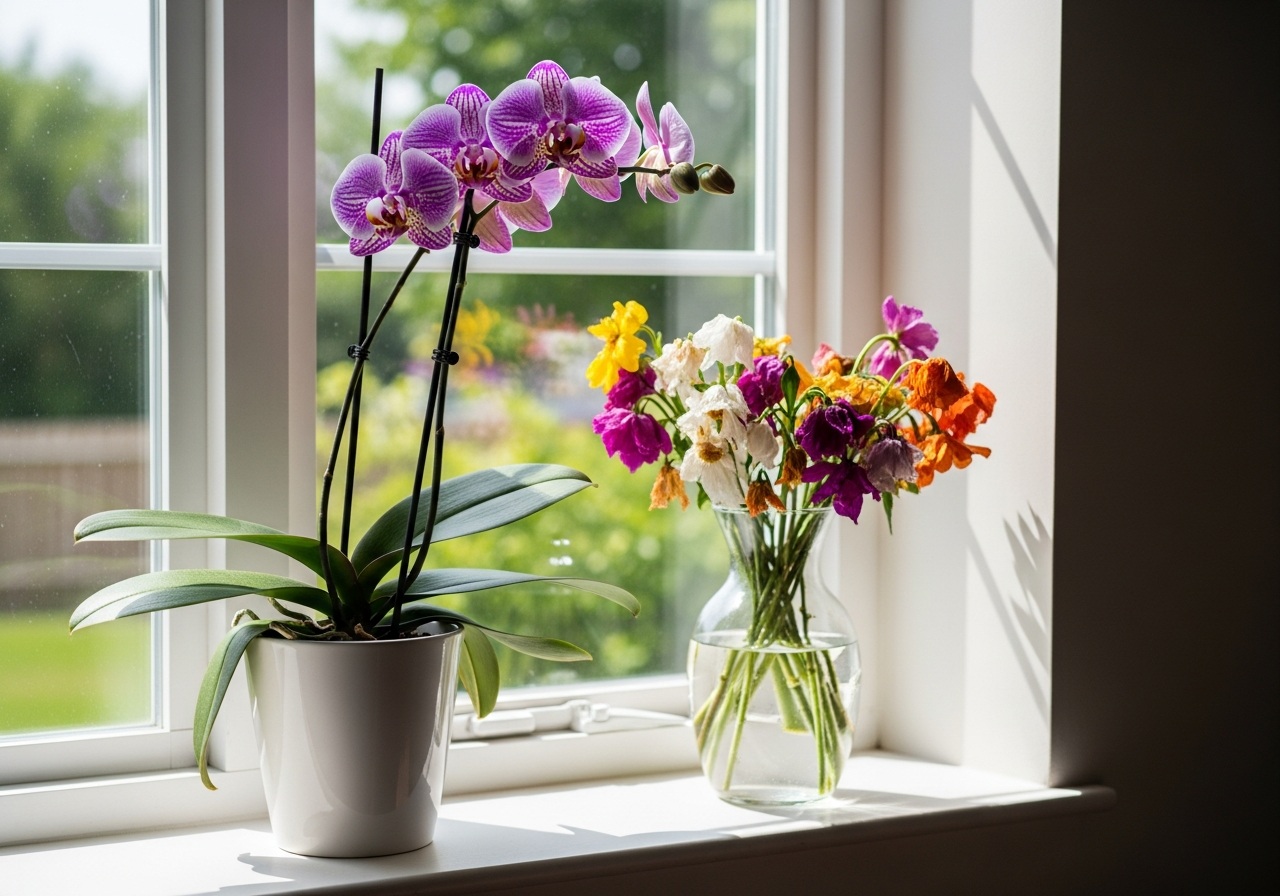
A Beautiful Purchase That Doesn’t Last the Week
Few things disappoint like a bouquet fading within days. As petals brown and stems soften, even the most vibrant arrangement quickly ends up discarded. This familiar cycle has led many to rethink flowers altogether. Living décor—potted plants that grow, rebloom, and change with the seasons—offers a more lasting alternative, with less daily effort, lower long-term cost, and a smaller environmental footprint.
The Limitations of Traditional Bouquets
Cut flowers face an uphill battle from the moment they leave the stem. Most bouquets survive somewhere between 3 days and 2 weeks, even with attentive care. Reaching that maximum lifespan demands a surprisingly involved routine: trimming stems at a 45-degree angle and refreshing vase water daily. Because of these constraints, many decorators now prefer to shop orchids online to receive professional-grade, rooted plants that arrive in peak health, bypassing the rapid decay of pre-cut arrangements. Unlike roses, which fade within 7 to 14 days regardless of effort, a rooted plant offers a permanent structural beauty that evolves.
The Rise of Living Decor as a Superior Alternative
Living décor lasts longer because roots stay intact, allowing continuous growth. Orchids can bloom for weeks and rebloom seasonally with minimal care, outlasting bouquets by months or years. Maintenance is simple—monitor light and soil moisture—while added air-quality benefits make living plants both functional and decorative.
Why Living Flowers Excel in Longevity and Beauty
The biology is straightforward: plants with intact vascular systems regulate water efficiently, hence cut stems fail quickly. Phalaenopsis orchids rebloom annually, anthuriums hold color for weeks, and bird of paradise can thrive indoors. Unlike static bouquets, living décor evolves with new growth and repeat blooms, adapting to conditions where cut flowers fade in days.
Low-Maintenance Care for Living Decor
The maintenance profile of living plants is considerably simpler than the daily regimen cut flowers demand. Most thrive in well-draining soil, infrequent watering that allows the soil to partially dry between sessions, and steady indirect natural light. A few key practices go a long way:
- Selecting species suited to your home’s specific light conditions
- Fertilizing sparingly during active growth periods
- Repotting every one to two years to replenish soil nutrients
The resilience of living plants comes directly from those intact vascular systems, which manage water stress far more effectively than cut stems ever could.
Environmental and Cost Benefits of Choosing Living Over Cutting
Choosing the right plant depends on light, space, and style. Orchids suit shelves and tables, while bird of paradise anchors larger rooms. Windowsills favor smaller flowering plants, and desks call for low-maintenance varieties. Specialized retailers help match plants to your conditions, making it easy to get started.
Integrating Living Flowers into Your Space
Choosing the right plant comes down to light, space, and style. Compact orchids suit shelves and tables, while statement plants like bird of paradise anchor larger rooms. Windowsills work well for small flowering plants, and desks benefit from low-maintenance varieties with seasonal interest. Specialized plant retailers make it easy to find options matched to your conditions and scale.
Reflecting on a Greener, Longer-Lasting Floral Choice
Living décor offers what cut flowers cannot: longevity, low maintenance, and real sustainability. While bouquets fade within days, potted plants become lasting elements of a home, growing and changing over time. Starting with a single resilient flowering plant, suited to your light and space, creates a more enduring connection to nature.
Disclaimer: Written in partnership with APG.