Terra Unveils Living Bayfront at Miami Seaquarium
A free baywalk, new aquarium, marine research facilities and environmental restoration anchor the proposal, which still needs final approvals.
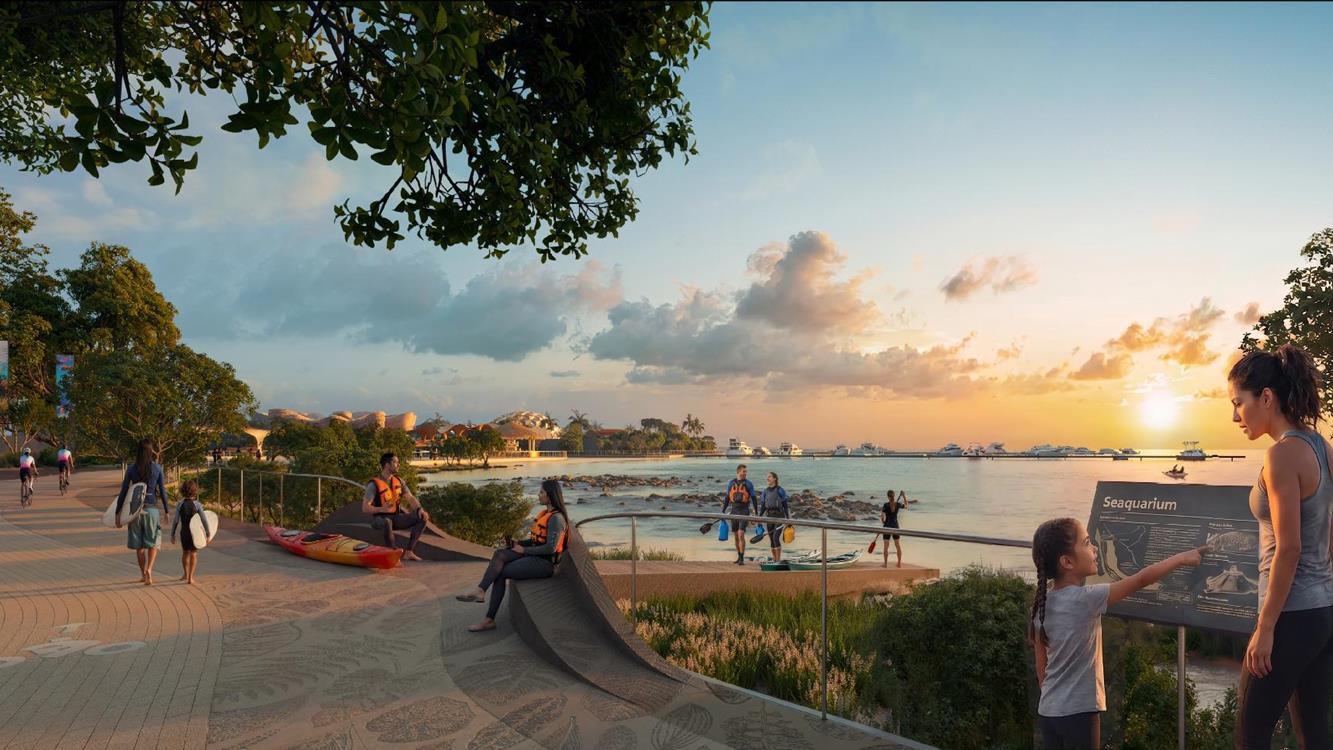
Terra has unveiled Living Bayfront at Miami Seaquarium, a proposal to transform the waterfront property into a marine-focused destination with a free public baywalk, a new aquarium, research and education facilities, waterfront dining and a public marina. According to the company’s November 10 announcement, the Miami-Dade County Commission unanimously approved the first reading of the project’s Land Use Plan on October 21, 2026. A final County vote is anticipated in November, and the plans remain subject to additional governmental and regulatory approvals.
The proposal pairs a family-friendly attraction with a broader ambition for Biscayne Bay: restoring marine habitats, improving water quality and making more of the waterfront accessible to the public. Terra says it has spent the past year gathering input from residents, conservationists, community organizations and scientific advisors.
A Free Baywalk and a New Aquarium
The public-facing centerpiece is Ocean Walk, a three-quarter-mile waterfront promenade envisioned as a free, year-round route with shaded paths, native landscaping, environmental exhibits and gathering spaces. It would link the property’s attractions and waterfront amenities while giving visitors more opportunities to experience Biscayne Bay.
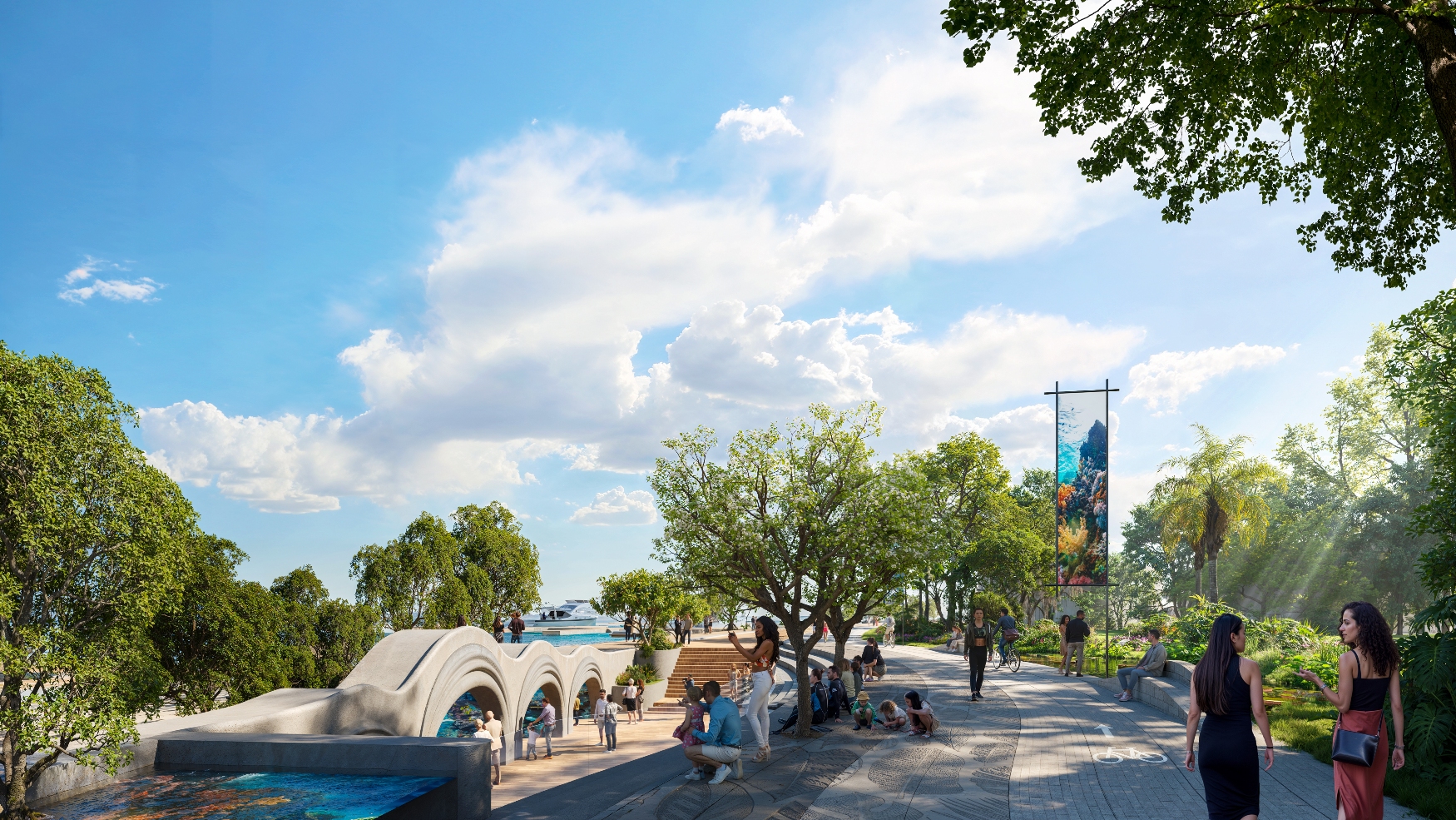
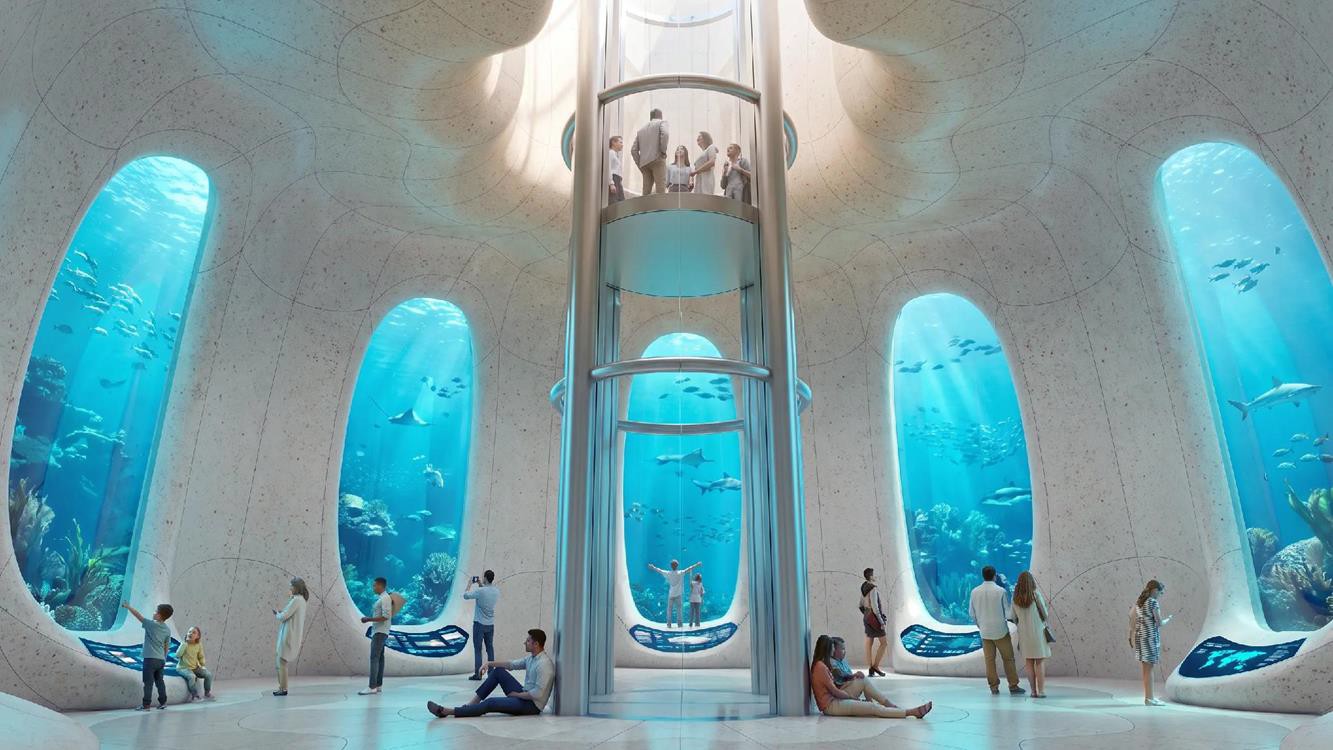
At the center of the destination, Terra proposes an 83,000-square-foot aquarium spanning three floors. Planned exhibits would explore ocean ecosystems and incorporate real-time Biscayne Bay data. The company says the new aquarium will not house marine mammals.
A separate attraction, Miami Wave, is planned as a surf lagoon and research pool. Alongside surfing lessons and competitions, it would provide a setting for marine science teams studying waves, wind, tides, storm surge and coastal systems.
Marine Research and an Underwater Classroom
Research and education are substantial components of the proposal. Terra describes a 118,000-square-foot UM DEEP Marine Research and Innovation Center to be developed in collaboration with the University of Miami’s Rosenstiel School. The planned facility would include laboratories, a coral restoration center and classrooms.
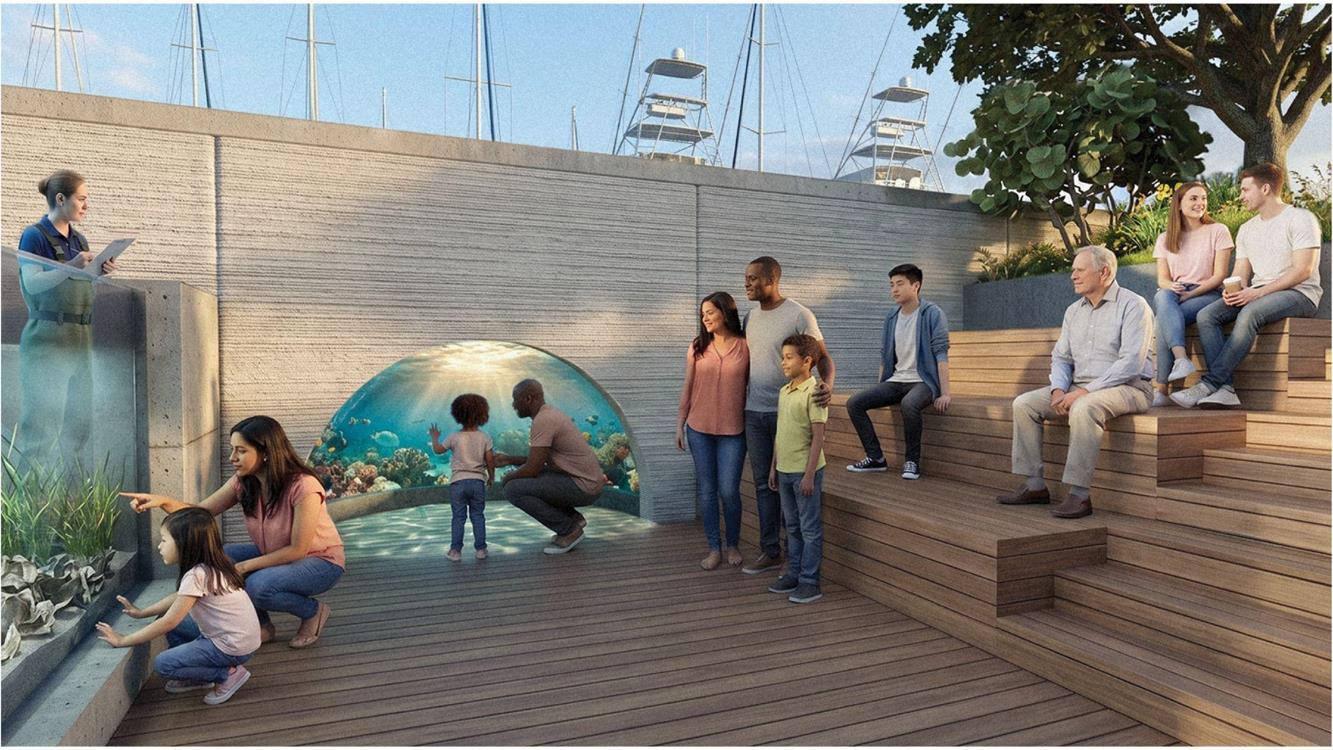
Along the waterfront, the Living Edge Underwater Classroom would be integrated into living seawalls. Visitors would be able to observe marine habitats and learn how ecological infrastructure can support biodiversity and water quality.
The vision is guided by a newly formed Science Advisory Council that Terra says includes experts from the Rosenstiel School and specialists in marine science, sustainability and resiliency. Publicly accessible environmental data, independent scientific review and ongoing reporting are also proposed.
Living Shorelines and Biscayne Bay Restoration
Terra’s announcement places environmental regeneration at the center of the master plan. The company proposes rehabilitating portions of the site and surrounding waterfront affected by dredging and filling in the 1940s, using a combination of habitat restoration and ecological infrastructure.
The proposed measures include:
- Living shorelines: 3D-printed living seawalls and modular coral sod systems intended to create habitat for oysters, sponges and other marine life.
- Habitat restoration: protection and restoration of seagrass meadows, coral habitats, mangroves and oyster ecosystems, including coral nursery and transplantation programs.
- Water filtration: natural filtration through oysters, sponges and wetland vegetation, alongside infrastructure designed to retain and clean stormwater before it returns to the bay.
- Environmental monitoring: continuous tracking of water quality, tides and environmental conditions, with public data and independent review.
- Building and landscape standards: a LEED Silver standard for eligible buildings, rooftop solar panels, expanded tree canopy and wildlife-sensitive lighting.
These are proposed design features and environmental goals, not documented results from a completed project.
“What makes this vision particularly compelling is the opportunity to go beyond protecting the existing environment and actively improve it,” said Noah Valenstein, former secretary of the Florida Department of Environmental Protection and an advisor to the project, in the announcement.
A Public Marina and Fisherman’s Village
Harbor House & Fisherman’s Village would combine marina services with restaurants, cafés, local retailers and waterfront gathering spaces. The adjoining public marina is proposed with 295 wet slips and dry storage for 552 vessels, as well as dedicated facilities for public safety and marine patrol operations.
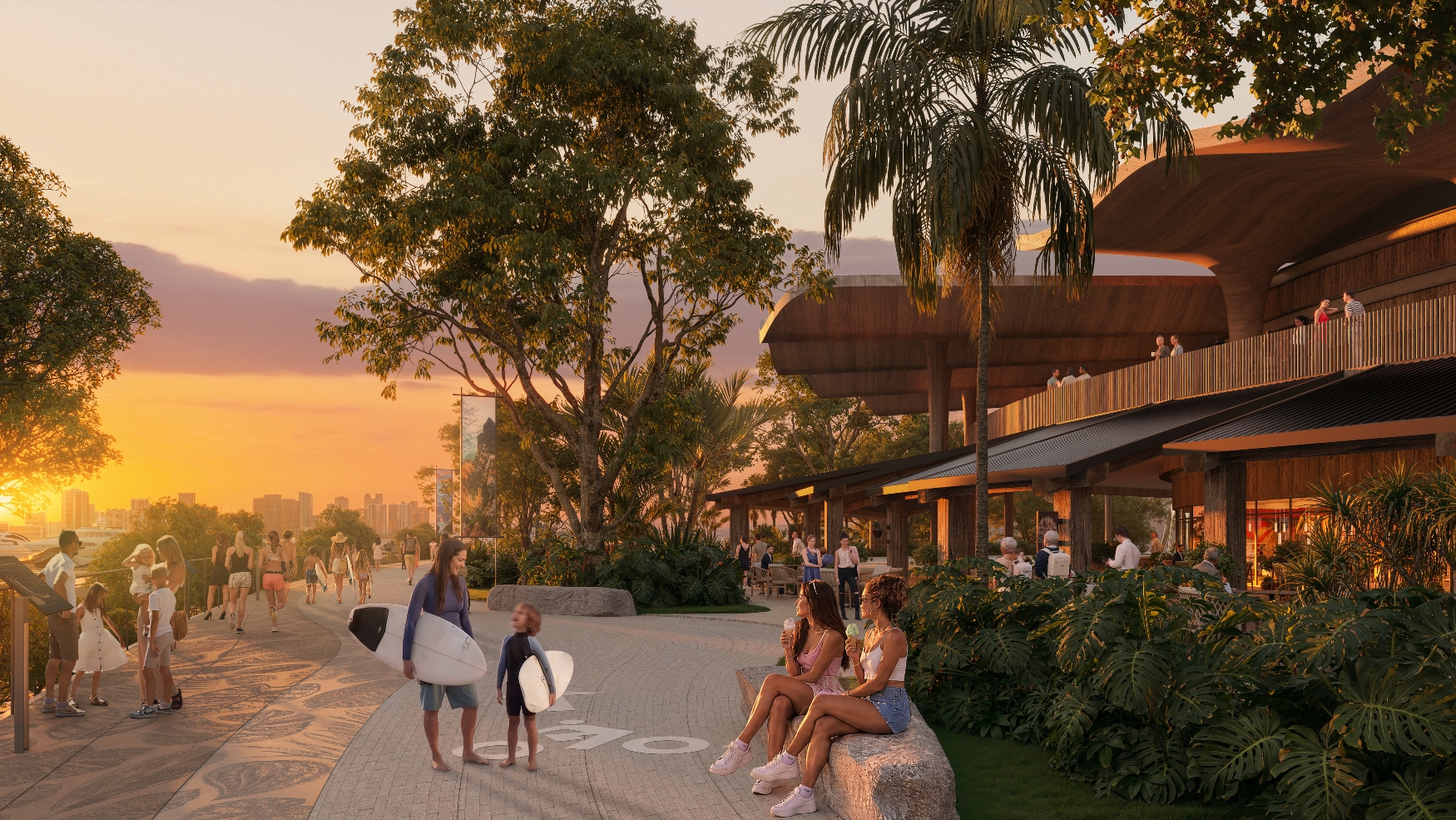
Terra says the marina would occupy a previously dredged basin and require no new dredging. The plan targets Florida Clean Marina certification within 12 months of opening, supported by zero-discharge policies, free pump-out services for slip holders, responsible fueling practices, marine debris prevention and boater education.
Elsewhere on the waterfront, additional restaurants, outdoor terraces, landscaped green spaces and a public kayak launch would provide places for recreation and community programming.
Restoring the Golden Dome and Flipper House
The master plan also calls for restoring the Buckminster Fuller-designed Golden Dome as a venue for performances, exhibitions, festivals and community gatherings. An adjoining landscaped lawn would offer publicly accessible green space year-round.
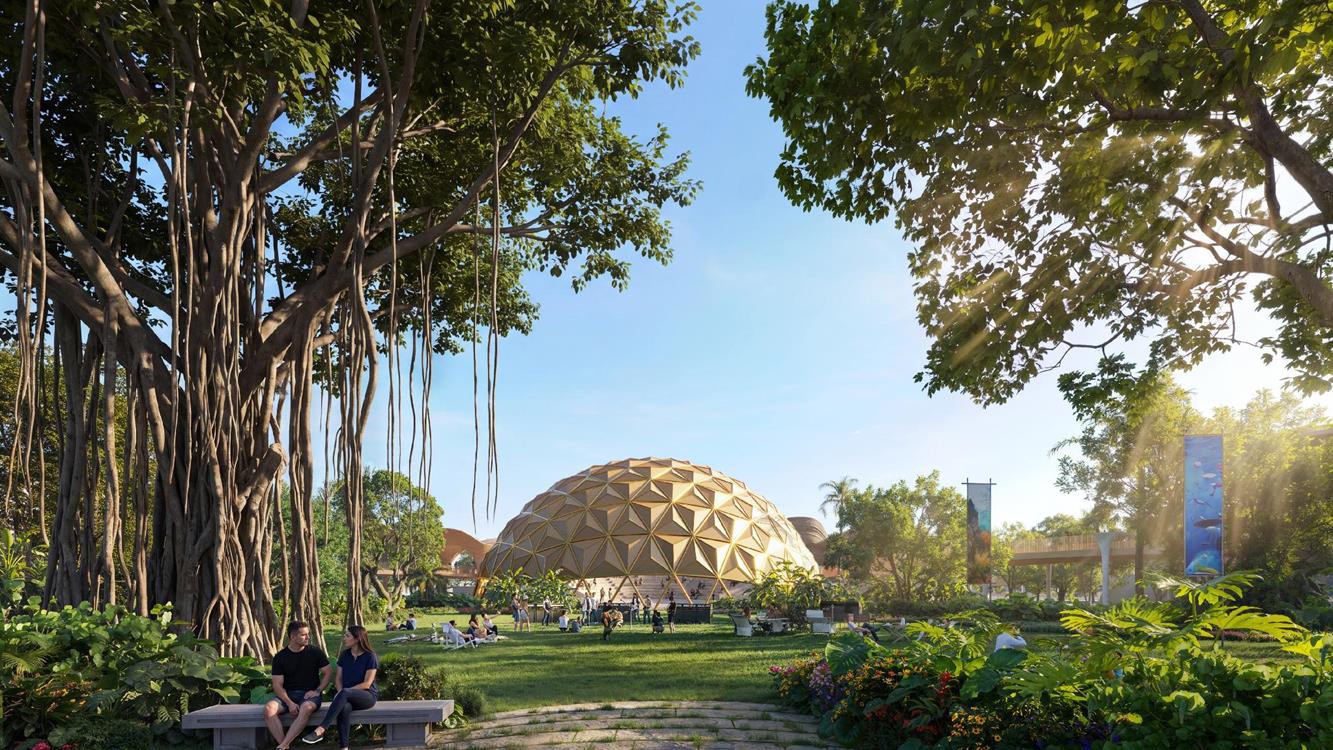
Terra also proposes preserving and restoring the historic Flipper House, featured in the 1960s television series Flipper. Both elements are intended to retain recognizable parts of the Seaquarium’s cultural history within the new destination.
“Miami Seaquarium represents a once-in-a-generation opportunity to reimagine one of our community’s most iconic waterfront properties and create something that delivers lasting benefits for Miami-Dade County residents, visitors and Biscayne Bay,” said David Martin, CEO of Terra.
What Happens Next
Terra, the Miami-based real estate firm selected by a bankruptcy court to lead the property’s transformation, describes the October 21 first-reading vote as an initial step. The final County vote anticipated in November is distinct from the further governmental and regulatory approvals the project still requires.
The announcement does not establish an opening date. For now, Living Bayfront remains a proposed redevelopment whose public access, educational facilities, marina and restoration programs depend on the approvals and implementation ahead.
Sources
This article is based on Terra‘s November 10, 2026 announcement, “Terra Unveils Living Bayfront at Miami Seaquarium Centered on Environmental Benefits, Marine Education, and Expanded Public Access,” and the accompanying renderings supplied for publication. Project dimensions, proposed features, approval status and quotations are attributed to that announcement. All images depict proposed designs, not completed facilities.
Frequently Asked Questions
What is Living Bayfront at Miami Seaquarium?
It is Terra’s proposed redevelopment of the Miami Seaquarium property into a marine-focused waterfront destination with an aquarium, research and education facilities, a public baywalk, marina, dining and recreation.
Will the baywalk be free, and will the aquarium house marine mammals?
Terra proposes a free, year-round, three-quarter-mile Ocean Walk. The company says the planned 83,000-square-foot aquarium will not house marine mammals.
Has the redevelopment received final approval?
No final approval is established in Terra’s November 10, 2026 announcement. It reports unanimous first-reading approval of the Land Use Plan on October 21, with a final County vote anticipated in November and further governmental and regulatory approvals still required.